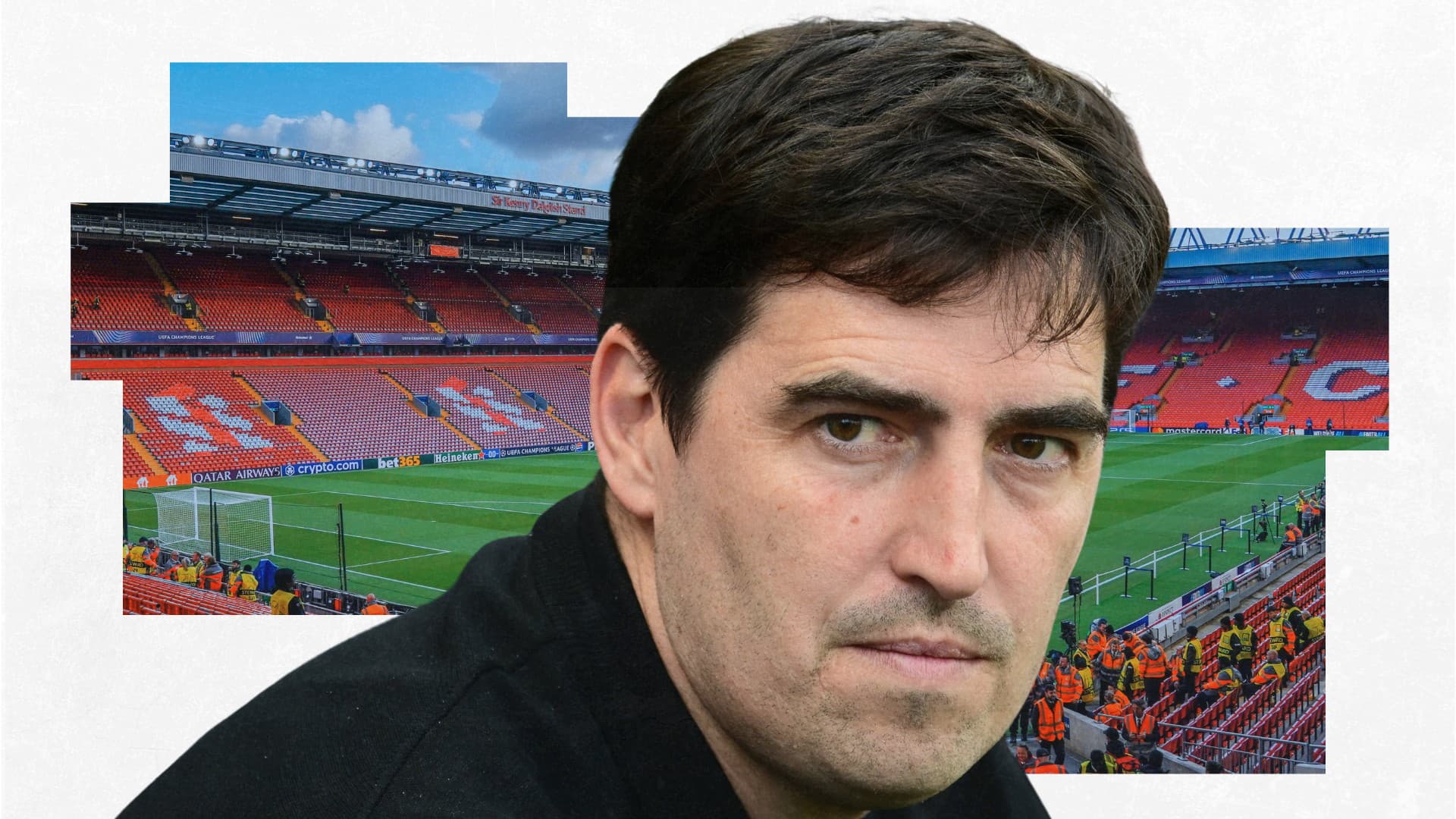
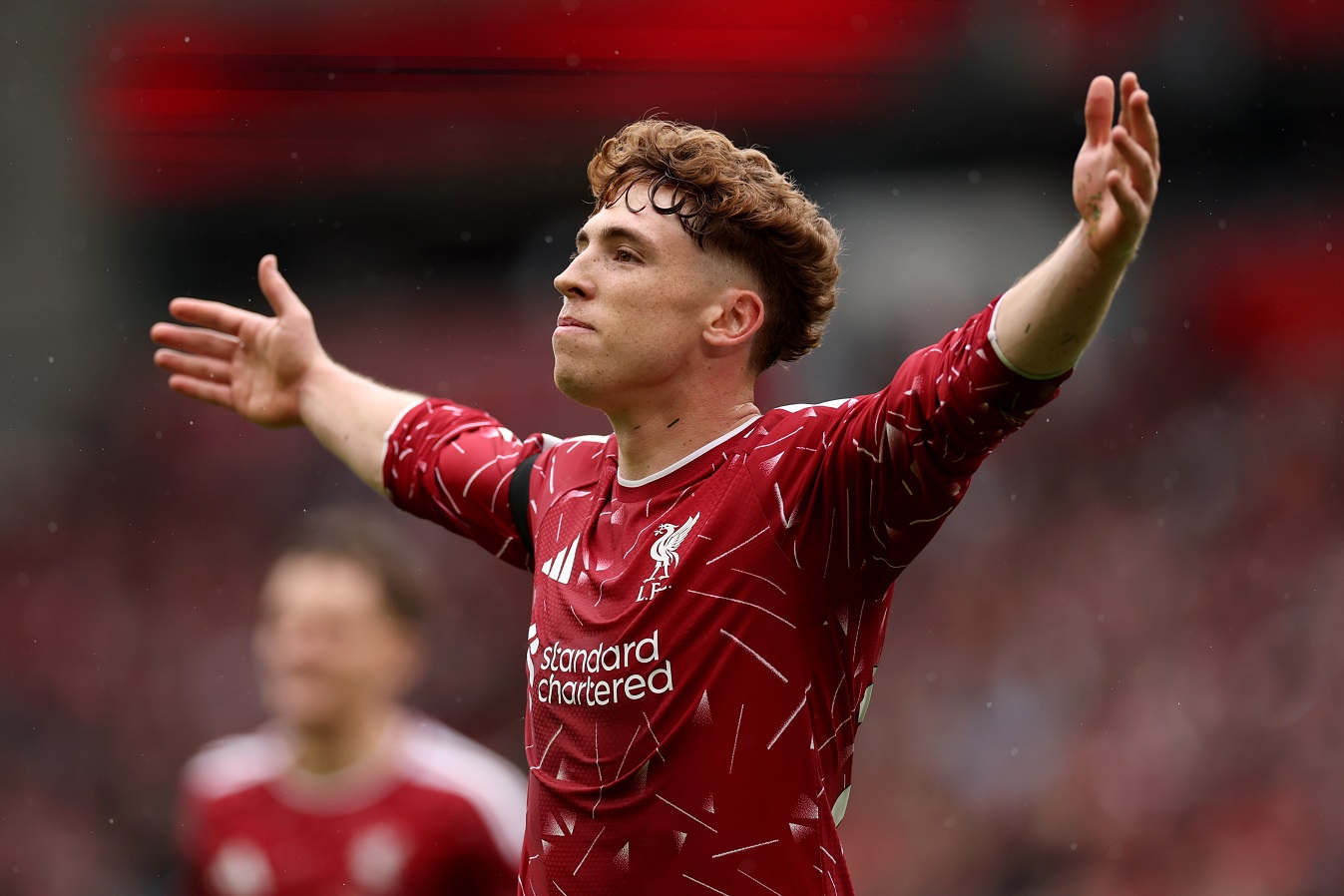
Liverpool’s summer transfer window has divided opinion, but inside Anfield there is reportedly far more satisfaction than frustration. The Reds completed four senior signings during a major period of change under Andoni Iraola, strengthening in defence, attack and long-term squad planning. Want more CaughtOffside coverage? Add us as a preferred source on Google to your […] The post What Liverpool chiefs feel after their summer transfer business following four signings appeared first on CaughtOffside.

Leaving the door open for a return after he retires, Luka Modric revealed that Jose Mourinho was the "most important factor" for him to arrive to Real Madrid. Luka Modric established himself as one of the most influential midfielders in soccer history during his decorated tenure at Real Madrid, leaving a standard that the club has found difficult to replicate. While leaving the door open for a post-retirement return to the Bernabeu, Modric revealed that Jose Mourinho was the “most important factor” in bringing him to the Spanish capital. Following four standout seasons at Tottenham Hotspur where he consolidated his status among Europe’s elite orchestrators, Modric joined Real Madrid in 2012 for a €35 million ($40.6 million USD) fee. Initially, the transfer drew skepticism from critics due to the Croatian’s lower public profile, but as he locked down a starting role, he evolved into a club legend, a trajectory he insists would have been impossible without Mourinho’s intervention. In an interview with Diario Marca, when asked who supporters should credit for his arrival at Real Madrid, Modric singled out the Portuguese manager’s persistence: “The club in general, but I think Mourinho was the most important factor in my arrival, because he did everything, everything in his power so that I would be the signing of that summer.“ Modric elaborated on the manager’s pivotal role in pushing the deal over the finish line. “Madrid brought in (Michael) Essien on loan and only me as a signing. The negotiation with Tottenham was not easy. It was hard and long. And if Mourinho had not been so insistent, maybe Madrid would have withdrawn from the negotiation. But he was insistent and he wanted me. That is why I think he was the most important,” he added. Real Madrid coach Jose Mourinho talks to Luka Modric. (Gonzalo Arroyo Moreno/Getty Images) Modric also acknowledged the role of club president Florentino Perez and expressed deep affection for him, while maintaining that “Mourinho was the first, and I will always be grateful for that treatment, for that affection from day one.” At the time, Mourinho was entering his third season at the helm of Real Madrid having already secured three trophies. However, the 2012-13 campaign proved to be Mourinho’s final year in Madrid after ending without a major trophy and falling in the UEFA Champions League semifinals, leaving Modric wishing for more time under his guidance. “The only pity was that I didn’t play under him for more than a year. But well, that’s life. I learned a lot in that year with him, but I would have liked to play for him for a longer time,” the Croatian midfielder noted. Modric to return to Madrid Currently under contract through June 2027 with AC Milan, Modric laughed off the idea of a playing return to Real Madrid under Mourinho’s current tenure, noting that “it’s too late now.” However, he made clear that he intends to settle in the Spanish capital after his playing days, with an eventual executive or administrative role at Real Madrid topping his list of desires. When asked about returning to the club after hanging up his boots, Modric openly shared his ambitions: “I hope so. I would like to. To be honest, I don’t need to hide it. Madrid is my home and of course one day I would like to return. But we will see how and in what role, if that happens.“ The veteran midfielder emphasized that if he eventually returns, he wants to make a meaningful impact rather than relying on his legacy, adopting a mindset to “work not in Real Madrid, but for Real Madrid.” He echoed Mourinho’s philosophy that any future role should focus on making the club even bigger. Regarding his long-term personal plans, Modric remains committed to returning to Spain, even if his exact post-career path remains undecided. “My intention is to return to Madrid and live there, but then you know how things go. You can never say anything with certainty. But hopefully, hopefully it happens,” he concluded.
Argentina fans are pushing to retire Lionel Messi's No. 10 jersey for good, but a FIFA regulation on squad numbering stands in the way. Lionel Messi‘s retirement from the Argentina national team has reignited a wish among fans on social media: retiring the No. 10 jersey permanently so no other player ever wears it for the Albiceleste again. The idea behind the push is straightforward for those calling for it — leaving the number forever associated with Messi, who wore it for two decades and leaves as the national team’s all-time leading scorer and most-capped player. Doing so would also tie the number permanently to Diego Maradona, the other legendary figure most responsible for turning it into far more than just a shirt number. Regardless of how much support the idea gathers, it runs into a hard regulatory wall. FIFA rules require official squad lists for tournaments like the World Cup and Copa America to use consecutive numbering from 1 to 26, with a number assigned to every single player named to the roster. That means the No. 10 cannot simply be left unused in official competition, no matter how symbolic the gesture would be. The rule leaves Argentina with limited options — the number could theoretically go unused in a friendly, but in any official tournament, someone on the 26-man list would have to wear it. El escudo más lindo de todos también quería dedicarte unas palabras, Capitán 🐐🔟.Gracias, una vez más. Tu legado será infinito. pic.twitter.com/3TZfqVTFLs— 🇦🇷 Selección Argentina ⭐⭐⭐ (@Argentina) September 1, 2026 The Maradona precedent This isn’t the first time this exact request has come up. Argentina previously attempted to retire the No. 10 ahead of the 2002 World Cup as a tribute to Maradona, whose career had already cemented the number’s legendary status in the country. FIFA rejected the request outright, citing the same consecutive-numbering requirement that stands in the way today. As a result, the number continued to be worn by subsequent generations of Argentine players in the years that followed, eventually passing to Messi himself. With that same regulation still in place, any renewed push to retire the No. 10 in his honor would face the identical outcome once again. Who could wear the No. 10 next? Beyond the retirement debate, the more immediate question is who actually inherits the No. 10 shirt when Argentina takes the field again. According to reports, Nico Paz is projected as a candidate, given that the Como playmaker operates in a similar position to Messi and wears the same number in his club. The concern, however, is whether the 22-year-old can handle the weight of that number so early in his international career. For that reason, some believe it might be better suited to a proven World Cup winner rather than a newcomer, with names like Alexis Mac Allister, Julian Alvarez and Enzo Fernandez floated as alternatives who already have the pedigree and experience to carry that symbolic responsibility for the Albiceleste going forward.
Tap a headline to view metadata and excerpt fields in Sportra, then use the article website button to continue on the original publisher page.