Armenia defeated Iceland 2-0 in the World Cup - Qualification Europe. The fixture is part of the Group Stage - 2 stage in the 2020 season. The match was played at Vazgen Sargsyan anvan Hanrapetakan Marzadasht in Yerevan. E. Jorgji officiated the match. The full-time result capped a Armenia vs Iceland meeting in World Cup - Qualification Europe with detailed post-match statistics available on Sportra. This match centre covers lineups, live events, player ratings, team statistics, xG, head-to-head history, and related news for Armenia and Iceland. On Sportra you can view xG, lineups, match statistics, events, player ratings, predictions, head-to-head history, and related news for this fixture.
 World Cup - Qualification Europe
Recorded meetings: 0 (available previous meetings, not necessarily all-time).
Armenia defeated Iceland 2-0 in the World Cup - Qualification Europe. The fixture is part of the Group Stage - 2 stage in the 2020 season. The match was played at Vazgen Sargsyan anvan Hanrapetakan Marzadasht in Yerevan. E. Jorgji officiated the match. The full-time result capped a Armenia vs Iceland meeting in World Cup - Qualification Europe with detailed post-match statistics available on Sportra. This match centre covers lineups, live events, player ratings, team statistics, xG, head-to-head history, and related news for Armenia and Iceland. On Sportra you can view xG, lineups, match statistics, events, player ratings, predictions, head-to-head history, and related news for this fixture.
World Cup - Qualification EuropeRecorded meetings: 0 (available previous meetings, not necessarily all-time).
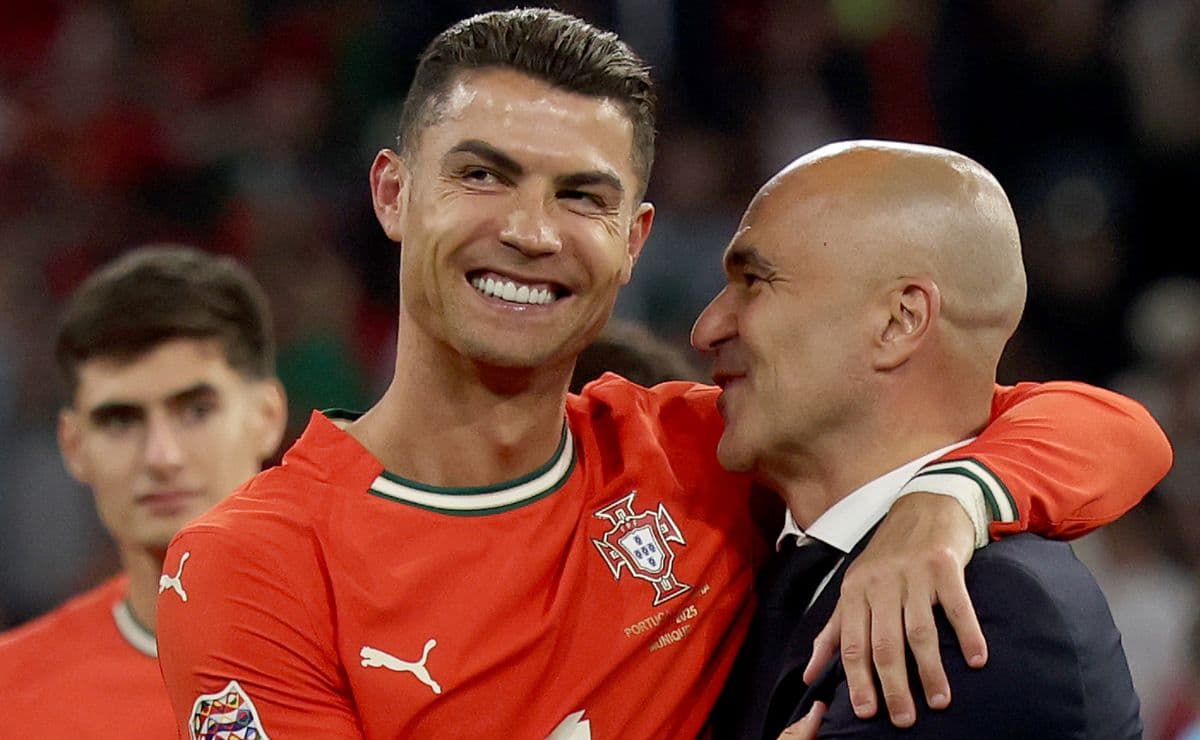
With the tournament already underway and expectations rising around one of the strongest squads in international soccer, fresh reports suggest a significant decision regarding the future of the man leading the Selecao. As Portugal prepares for another ambitious World Cup campaign, a major development involving Cristiano Ronaldo and head coach Roberto Martinez has emerged behind the scenes. With the tournament already underway and expectations rising around one of the strongest squads in international soccer, fresh reports suggest a significant decision regarding the future of the man leading the Selecao. The timing of the reports has naturally generated attention. Portugal enters the competition among the favorites to challenge for the trophy, while Ronaldo embarks on what is his sixth World Cup appearance, hoping to finally add the one major honor that has eluded both him and his country. Portugal arrives at the 2026 World Cup carrying enormous expectations. Drawn into Group K alongside DR Congo, Uzbekistan, and Colombia, the national team possesses the quality and depth required to make a deep run into the tournament. The squad combines experienced leaders with players at the peak of their careers. Alongside Ronaldo, figures such as Bruno Fernandes, Rafael Leao, Bernardo Silva, Vitinha, Joao Neves, Ruben Dias, and Nuno Mendes provide Portugal with strength across every area of the pitch. Cristiano Ronaldo celebrates Pedro Neto’s goal for Portugal vs Nigeria According to FIFA records, Portugal secured qualification impressively, finishing top of its qualifying group and booking a seventh consecutive World Cup appearance. A memorable 9-1 victory over Armenia highlighted the depth available to Martinez, especially considering Ronaldo was absent through suspension. Martinez built strong foundation When Martinez replaced Fernando Santos in January 2023, he inherited one of the most talented generations in Portuguese soccer history. His task was to modernize the team while maintaining the competitiveness that had delivered success in recent years. The Spaniard quickly made an impact. Portugal completed a perfect UEFA Euro 2024 qualifying campaign, winning all ten matches and showcasing an attacking style that many supporters had long wanted to see. Cristiano Ronaldo of Portugal celebrates with the trophy after winning the UEFA Nations League. Although the team was eliminated by France in the quarter-finals of Euro 2024, Martinez responded by guiding Portugal to the UEFA Nations League title in 2025. The victory over Spain in the final gave him his first major trophy with the national team and strengthened his belief in his project. The major decision revealed While Portugal remains focused on World Cup success, reports from multiple outlets suggest that Martinez has already made an important decision regarding his future. According to talkSPORT journalist Alex Crook and several international reports, Roberto Martinez has decided not to renew his contract with Portugal and is expected to leave after the conclusion of the 2026 World Cup, regardless of the team’s performance. The contract was originally signed to cover the entire cycle leading to the World Cup. Reports indicate that Martinez views the tournament as the natural conclusion of that chapter. “Roberto Martínez will leave the Portugal national team after the World Cup, regardless of how they perform. He has already decided not to renew his contract”, Crook said. If confirmed officially, the decision would bring an end to a tenure that began in early 2023 and was designed around delivering success at Euro 2024 and the 2026 World Cup. What it means for Ronaldo and Portugal The revelation adds another layer of intrigue to Portugal’s World Cup campaign. For Ronaldo, who remains the face of Portuguese soccer despite turning 41, the tournament already carries enormous significance. The prospect of competing under a coach who may be overseeing his final matches with the national

Despite helping Cristiano Ronaldo break his trophy drought at Al Nassr, Kingsley Coman will be missing the 2026 World Cup. Kingsley Coman emerged as one of Cristiano Ronaldo’s most dynamic partners during the 2025-26 season, playing a fundamental role in Al Nassr lifting the Saudi Pro League title. However, despite his pivotal contributions to the Saudi side, Coman will be notably absent from the 2026 World Cup. Determined to break Ronaldo’s trophy drought, Al Nassr made waves in the summer transfer window, landing Kingsley Coman from Bayern Munich as a marquee signing. With Sadio Mane anchoring the left wing, Coman was deployed on the right flank, quickly establishing himself as one of the league’s brightest stars in his debut campaign. Across all competitions, Coman racked up 16 goals and 12 assists over 41 appearances with Al Nassr, finishing the year as the team’s third-highest scorer and second-best playmaker. The only players to surpass his goal tally were Cristiano Ronaldo (30) and Joao Felix (26), both of whom occupied central attacking roles rather than playing out wide, adding extra merit to the Frenchman’s stellar production. Why isn’t Coman playing in the 2026 World Cup? Coman’s absence from the 2026 World Cup comes down to a strict tactical decision by manager Didier Deschamps. Despite Coman’s elite form throughout the 2025-26 club season, the France boss first dropped him during the November international break, and the winger hasn’t featured for Les Bleus since. Sagiv Yehezkel of Israel runs with the ball under pressure from Kingsley Coman of France. A primary driver behind the exclusion is France’s youth movement on the flanks. With Desire Doue and Michael Olise emerging as bona fide breakout sensations over the last few seasons, Deschamps opted to round out his winger depth with younger talent like Bradley Barcola, Rayan Cherki, and Maghnes Akliouche, ultimately freezing Coman out of the rotation. Coman’s declining minutes and friction behind the scenes also played a major factor. L’Equipe reported back in 2024 that after logging just 15 minutes during the Euros in Germany, Coman had a “miserable experience” that led him to seriously consider retiring from international duty entirely. After being left out of the UEFA Nations League Final Four in June 2025, Coman did briefly return to the national team for the September and October international windows, appearing against Iceland and Azerbaijan during World Cup qualifying. Ultimately, those performances failed to sway Deschamps, leaving the veteran winger off France’s final World Cup roster.

The 2026 World Cup will feature several key changes to substitution protocols, highlighted by a strict new 10-second rule enforced on players exiting the pitch. The 2026 World Cup is introducing several rule changes that will affect various aspects of the game. While the number of substitutions per team remains the same as in 2022, a new 10-second substitution rule has been approved that could have a significant impact on how games are managed. Each national team will continue to have five substitutions available per match, a rule that became standard during the COVID-19 period and was subsequently made permanent across soccer’s major competitions given its widespread adoption. Those five substitutions must still be used within three tactical windows during the 90 minutes, a restriction designed to prevent excessive time-wasting. Substitutions made at halftime do not count against a window, giving coaches up to four opportunities throughout a standard match to make their five changes. Additional substitutions are available under specific circumstances. Any player who suffers a head injury and cannot continue will be replaced without that change counting against the original five. An additional substitution and window are also granted if a match goes to extra time, meaning knockout stage games could see up to six substitutions per team, or seven in the event of a concussion during the additional period. Hossein Hosseini of IR Iran is brought in for Alireza Beiranvand against England due to a concussion. The new 10-second substitution rule One of the most significant rule changes approved for the 2026 World Cup governs how quickly substitutions must be completed. The player coming off now has a maximum of 10 seconds to exit the field from the nearest touchline once the substitution is signaled. If that 10-second window is exceeded, the team is penalized. The departing player must still leave the pitch, but the incoming substitute will not be permitted to enter. Instead, the replacement must wait a minimum of 60 seconds on the sideline before being allowed onto the field, leaving the offending team down to ten men for at least that duration. Exceptions exist for situations where a player is injured and requires medical assessment or needs to be stretchered off, as well as any security-related concerns about where a player can safely exit. The latter scenario is unlikely to be a factor at the World Cup. Critically, the 60-second minimum waiting period only begins once the substitution violation is identified, and the replacement cannot enter until play stops. This means that even after the minute has elapsed, the substitute must wait for the next stoppage, potentially leaving their team a man short for significantly longer than 60 seconds. Ojo a esto que pasó hoy en Japón-Islandia.Hlynsson se demoró más de 10 segundos en salir de la cancha y el árbitro aplicó la NUEVA REGLA: Islandia jugó UN MINUTO con uno menos. Y justo ahí fue el gol de Japón. En el Mundial dará que hablar. ⚠️🏆 pic.twitter.com/U90nnF3mxU— Ataque Futbolero (@AtaqueFutbolero) May 31, 2026 The rule was already applied in practice during the international friendly between Japan and Iceland on May 31. When Kristian Hlynsson failed to leave the pitch within the 10-second window during a substitution in the 84th minute, Isak Thorvaldsson was held on the sideline and Iceland were reduced to ten men. Play did not stop for two full minutes, during which Japan capitalized and Koki Ogawa scored the winning goal.
In the friendly game between Argentina and Iceland, Lionel Messi had a warm reunion with Daniel Gudjohnsen. Lionel Messi made his highly anticipated return to the pitch in a friendly against Iceland, finding the back of the net in Argentina’s final tune-up before the 2026 World Cup kicks off. However, the biggest highlight came after the final whistle blew, when the Argentine maestro shared a heartwarming post-match exchange with Iceland‘s Daniel Gudjohnsen. As players from both sides began exchanging handshakes at midfield, cameras caught Messi locked in a lively conversation with the young Icelandic attacker. Initially caught off guard, Messi’s face instantly lit up with a massive smile the second he realized he was speaking to the son of his former FC Barcelona teammate, Eidur Gudjohnsen. When asked about the viral moment in the mixed zone, Messi happily shared details of their brief interaction. “He told me, ‘do you remember who I am?’. Truthfully, it surprised me at that moment. Then he told me he was Gudjohnsen’s son. I don’t really remember, to be honest, he was very small. I remember seeing him, being with his father at some training session. But I didn’t remember him, he was too young.” Daniel Gudjohnsen was born in London in March 2006 during his father’s stint at Chelsea, just months before the family relocated to Catalonia. Now playing his club soccer for Malmo, the young forward originally crossed paths with Messi as a baby; fast forward nearly 20 years, and the historic playmaker has now gone from sharing a locker room with the father to competing against the son. Messi’s face when he realized he was talking to Daníel Guðjohnsen, son of his former Barcelona teammate Eiður Guðjohnsen 😂Messi and Eiður played together and won a treble in 2009. Now, Messi is about to play in his sixth World Cup 🤯 pic.twitter.com/9T8NQzkqcn— ESPN FC (@ESPNFC) June 10, 2026 Messi and Gudjohnsen’s father at Barcelona Arriving at the Camp Nou in 2006, Eidur Gudjohnsen spent four incredibly successful seasons with FC Barcelona before departing in 2010. During that golden era, the versatile forward helped the Blaugrana capture a La Liga title, a Copa del Rey, two Spanish Super Cups, a UEFA Champions League trophy, and a UEFA Super Cup. Throughout those formative years, Gudjohnsen had a front-row seat as Lionel Messi skyrocketed from a promising young talent to the best player on the planet. From his vantage point on the bench, the Icelandic striker watched Messi execute his iconic, gravity-defying header against Manchester United to seal a 2-0 victory in the 2009 Champions League final. By lifting that trophy, Gudjohnsen became the first player in Iceland’s history to win a Champions League title, ultimately tallying 19 goals and 10 assists across 114 appearances for Barcelona. He later anchored the legendary Iceland squad that shocked Europe by reaching the Euro 2016 quarterfinals before hanging up his boots in 2017, a retirement that narrowly denied him a pitchside reunion with Messi at the 2018 World Cup where Iceland faced Argentina.
Messi's appearance, his sharpness on the ball, and a remarkable achievement reached during the match ensured that the evening in Alabama became far more significant than a routine pre-tournament friendly. Lionel Messi gave Argentina exactly what it wanted to see ahead of the 2026 World Cup. The captain returned from a recent fitness concern, found the net shortly after coming off the bench, and helped the defending champion secure a comfortable victory over Iceland in its final warm-up match before the tournament. The result itself was encouraging, but there was an even bigger storyline unfolding beneath the surface. Messi’s appearance, his sharpness on the ball, and a remarkable achievement reached during the match ensured that the evening in Alabama became far more significant than a routine pre-tournament friendly. Argentina defeated Iceland 3-0 in Auburn, Alabama, with goals from Valentín Barco, Lionel Messi, and Thiago Almada. The world champion controlled large stretches of the match and ended its preparation schedule on a positive note. Lionel Scaloni opted to manage the workload of several key players. Messi, along with Julian Alvarez, Enzo Fernandez, and Alexis Mac Allister, started the match on the bench as Argentina continued its cautious approach ahead of the competition. Iceland threatened early when Mikael Ellertsson missed a golden opportunity to open the scoring. Argentina quickly took control afterward, and Barco broke the deadlock when a loose ball fell kindly for him on the edge of the area. Lionel Messi of Argentina looks on during the international friendly match between Argentina and Iceland The South American side remained patient throughout the first half. Iceland defended with discipline, but Argentina continued to create opportunities and gradually increased the pressure. Messi returns and changes the game The biggest roar of the night arrived when Messi stepped onto the pitch during the closing stages. After concerns surrounding muscle fatigue suffered while playing for Inter Miami, supporters were eager to see whether the captain was fully ready for another World Cup campaign. The answer arrived almost immediately. Within moments of entering the match, Messi played a superb pass that led to Lautaro Martínez being fouled inside the penalty area. The 38-year-old superstar stepped forward and calmly converted from the spot. The goal extended Argentina’s advantage and removed any lingering doubts about his readiness for the tournament. Con la primera pelota de Messi en el juego… ¡PENAL PARA ARGENTINA! ⚽❗ Lo cobra Messi, Argentina aumenta la ventaja 2-0 ante Islandia en el amistoso. pic.twitter.com/HztiSby31x— ESPN Deportes (@ESPNDeportes) June 10, 2026 His influence did not stop there. The eight-time Ballon d’Or winner later helped create Argentina’s third goal, combining with Rodrigo De Paul before Thiago Almada finished the move to complete a convincing victory. The historic record revealed While the goal helped secure the result, it also carried historic significance. Messi’s strike was his 117th goal in an Argentina shirt and his 199th international appearance. More importantly, it made him the oldest goalscorer in Argentina national team history, breaking a record that had stood for 69 years. The previous mark belonged to Angel Labruna, who scored for Argentina against Brazil in 1957 at the age of 38 years and nine months. Messi surpassed that achievement at 38 years, 11 months, and 18 days old, adding yet another milestone to an extraordinary international career. The record further highlights the longevity that has defined Messi’s career. Nearly two decades after making his senior debut, he continues to deliver decisive moments for his country on football’s biggest stages.
Lionel Messi's World Cup preparations were threatened by a muscle issue, but he looked comfortable in Argentina's friendly win over Iceland. The post Messi ‘felt great’ on return from injury, ‘savouring every moment’ of World Cup defence appeared first on SoccerNews.
Tap a headline to view metadata and excerpt fields in Sportra, then use the article website button to continue on the original publisher page.
With the tournament already underway and expectations rising around one of the strongest squads in international soccer, fresh reports suggest a significant decision regarding the future of the man leading the Selecao. As Portugal prepares for another ambitious World Cup campaign, a major development involving Cristiano Ronaldo and head coach Roberto Martinez has emerged behind the scenes. With the tournament already underway and expectations rising around one of the strongest squads in international soccer, fresh reports suggest a significant decision regarding the future of the man leading the Selecao. The timing of the reports has naturally generated attention. Portugal enters the competition among the favorites to challenge for the trophy, while Ronaldo embarks on what is his sixth World Cup appearance, hoping to finally add the one major honor that has eluded both him and his country. Portugal arrives at the 2026 World Cup carrying enormous expectations. Drawn into Group K alongside DR Congo, Uzbekistan, and Colombia, the national team possesses the quality and depth required to make a deep run into the tournament. The squad combines experienced leaders with players at the peak of their careers. Alongside Ronaldo, figures such as Bruno Fernandes, Rafael Leao, Bernardo Silva, Vitinha, Joao Neves, Ruben Dias, and Nuno Mendes provide Portugal with strength across every area of the pitch. Cristiano Ronaldo celebrates Pedro Neto’s goal for Portugal vs Nigeria According to FIFA records, Portugal secured qualification impressively, finishing top of its qualifying group and booking a seventh consecutive World Cup appearance. A memorable 9-1 victory over Armenia highlighted the depth available to Martinez, especially considering Ronaldo was absent through suspension. Martinez built strong foundation When Martinez replaced Fernando Santos in January 2023, he inherited one of the most talented generations in Portuguese soccer history. His task was to modernize the team while maintaining the competitiveness that had delivered success in recent years. The Spaniard quickly made an impact. Portugal completed a perfect UEFA Euro 2024 qualifying campaign, winning all ten matches and showcasing an attacking style that many supporters had long wanted to see. Cristiano Ronaldo of Portugal celebrates with the trophy after winning the UEFA Nations League. Although the team was eliminated by France in the quarter-finals of Euro 2024, Martinez responded by guiding Portugal to the UEFA Nations League title in 2025. The victory over Spain in the final gave him his first major trophy with the national team and strengthened his belief in his project. The major decision revealed While Portugal remains focused on World Cup success, reports from multiple outlets suggest that Martinez has already made an important decision regarding his future. According to talkSPORT journalist Alex Crook and several international reports, Roberto Martinez has decided not to renew his contract with Portugal and is expected to leave after the conclusion of the 2026 World Cup, regardless of the team’s performance. The contract was originally signed to cover the entire cycle leading to the World Cup. Reports indicate that Martinez views the tournament as the natural conclusion of that chapter. “Roberto Martínez will leave the Portugal national team after the World Cup, regardless of how they perform. He has already decided not to renew his contract”, Crook said. If confirmed officially, the decision would bring an end to a tenure that began in early 2023 and was designed around delivering success at Euro 2024 and the 2026 World Cup. What it means for Ronaldo and Portugal The revelation adds another layer of intrigue to Portugal’s World Cup campaign. For Ronaldo, who remains the face of Portuguese soccer despite turning 41, the tournament already carries enormous significance. The prospect of competing under a coach who may be overseeing his final matches with the national
Despite helping Cristiano Ronaldo break his trophy drought at Al Nassr, Kingsley Coman will be missing the 2026 World Cup. Kingsley Coman emerged as one of Cristiano Ronaldo’s most dynamic partners during the 2025-26 season, playing a fundamental role in Al Nassr lifting the Saudi Pro League title. However, despite his pivotal contributions to the Saudi side, Coman will be notably absent from the 2026 World Cup. Determined to break Ronaldo’s trophy drought, Al Nassr made waves in the summer transfer window, landing Kingsley Coman from Bayern Munich as a marquee signing. With Sadio Mane anchoring the left wing, Coman was deployed on the right flank, quickly establishing himself as one of the league’s brightest stars in his debut campaign. Across all competitions, Coman racked up 16 goals and 12 assists over 41 appearances with Al Nassr, finishing the year as the team’s third-highest scorer and second-best playmaker. The only players to surpass his goal tally were Cristiano Ronaldo (30) and Joao Felix (26), both of whom occupied central attacking roles rather than playing out wide, adding extra merit to the Frenchman’s stellar production. Why isn’t Coman playing in the 2026 World Cup? Coman’s absence from the 2026 World Cup comes down to a strict tactical decision by manager Didier Deschamps. Despite Coman’s elite form throughout the 2025-26 club season, the France boss first dropped him during the November international break, and the winger hasn’t featured for Les Bleus since. Sagiv Yehezkel of Israel runs with the ball under pressure from Kingsley Coman of France. A primary driver behind the exclusion is France’s youth movement on the flanks. With Desire Doue and Michael Olise emerging as bona fide breakout sensations over the last few seasons, Deschamps opted to round out his winger depth with younger talent like Bradley Barcola, Rayan Cherki, and Maghnes Akliouche, ultimately freezing Coman out of the rotation. Coman’s declining minutes and friction behind the scenes also played a major factor. L’Equipe reported back in 2024 that after logging just 15 minutes during the Euros in Germany, Coman had a “miserable experience” that led him to seriously consider retiring from international duty entirely. After being left out of the UEFA Nations League Final Four in June 2025, Coman did briefly return to the national team for the September and October international windows, appearing against Iceland and Azerbaijan during World Cup qualifying. Ultimately, those performances failed to sway Deschamps, leaving the veteran winger off France’s final World Cup roster.
The 2026 World Cup will feature several key changes to substitution protocols, highlighted by a strict new 10-second rule enforced on players exiting the pitch. The 2026 World Cup is introducing several rule changes that will affect various aspects of the game. While the number of substitutions per team remains the same as in 2022, a new 10-second substitution rule has been approved that could have a significant impact on how games are managed. Each national team will continue to have five substitutions available per match, a rule that became standard during the COVID-19 period and was subsequently made permanent across soccer’s major competitions given its widespread adoption. Those five substitutions must still be used within three tactical windows during the 90 minutes, a restriction designed to prevent excessive time-wasting. Substitutions made at halftime do not count against a window, giving coaches up to four opportunities throughout a standard match to make their five changes. Additional substitutions are available under specific circumstances. Any player who suffers a head injury and cannot continue will be replaced without that change counting against the original five. An additional substitution and window are also granted if a match goes to extra time, meaning knockout stage games could see up to six substitutions per team, or seven in the event of a concussion during the additional period. Hossein Hosseini of IR Iran is brought in for Alireza Beiranvand against England due to a concussion. The new 10-second substitution rule One of the most significant rule changes approved for the 2026 World Cup governs how quickly substitutions must be completed. The player coming off now has a maximum of 10 seconds to exit the field from the nearest touchline once the substitution is signaled. If that 10-second window is exceeded, the team is penalized. The departing player must still leave the pitch, but the incoming substitute will not be permitted to enter. Instead, the replacement must wait a minimum of 60 seconds on the sideline before being allowed onto the field, leaving the offending team down to ten men for at least that duration. Exceptions exist for situations where a player is injured and requires medical assessment or needs to be stretchered off, as well as any security-related concerns about where a player can safely exit. The latter scenario is unlikely to be a factor at the World Cup. Critically, the 60-second minimum waiting period only begins once the substitution violation is identified, and the replacement cannot enter until play stops. This means that even after the minute has elapsed, the substitute must wait for the next stoppage, potentially leaving their team a man short for significantly longer than 60 seconds. Ojo a esto que pasó hoy en Japón-Islandia.Hlynsson se demoró más de 10 segundos en salir de la cancha y el árbitro aplicó la NUEVA REGLA: Islandia jugó UN MINUTO con uno menos. Y justo ahí fue el gol de Japón. En el Mundial dará que hablar. ⚠️🏆 pic.twitter.com/U90nnF3mxU— Ataque Futbolero (@AtaqueFutbolero) May 31, 2026 The rule was already applied in practice during the international friendly between Japan and Iceland on May 31. When Kristian Hlynsson failed to leave the pitch within the 10-second window during a substitution in the 84th minute, Isak Thorvaldsson was held on the sideline and Iceland were reduced to ten men. Play did not stop for two full minutes, during which Japan capitalized and Koki Ogawa scored the winning goal.
In the friendly game between Argentina and Iceland, Lionel Messi had a warm reunion with Daniel Gudjohnsen. Lionel Messi made his highly anticipated return to the pitch in a friendly against Iceland, finding the back of the net in Argentina’s final tune-up before the 2026 World Cup kicks off. However, the biggest highlight came after the final whistle blew, when the Argentine maestro shared a heartwarming post-match exchange with Iceland‘s Daniel Gudjohnsen. As players from both sides began exchanging handshakes at midfield, cameras caught Messi locked in a lively conversation with the young Icelandic attacker. Initially caught off guard, Messi’s face instantly lit up with a massive smile the second he realized he was speaking to the son of his former FC Barcelona teammate, Eidur Gudjohnsen. When asked about the viral moment in the mixed zone, Messi happily shared details of their brief interaction. “He told me, ‘do you remember who I am?’. Truthfully, it surprised me at that moment. Then he told me he was Gudjohnsen’s son. I don’t really remember, to be honest, he was very small. I remember seeing him, being with his father at some training session. But I didn’t remember him, he was too young.” Daniel Gudjohnsen was born in London in March 2006 during his father’s stint at Chelsea, just months before the family relocated to Catalonia. Now playing his club soccer for Malmo, the young forward originally crossed paths with Messi as a baby; fast forward nearly 20 years, and the historic playmaker has now gone from sharing a locker room with the father to competing against the son. Messi’s face when he realized he was talking to Daníel Guðjohnsen, son of his former Barcelona teammate Eiður Guðjohnsen 😂Messi and Eiður played together and won a treble in 2009. Now, Messi is about to play in his sixth World Cup 🤯 pic.twitter.com/9T8NQzkqcn— ESPN FC (@ESPNFC) June 10, 2026 Messi and Gudjohnsen’s father at Barcelona Arriving at the Camp Nou in 2006, Eidur Gudjohnsen spent four incredibly successful seasons with FC Barcelona before departing in 2010. During that golden era, the versatile forward helped the Blaugrana capture a La Liga title, a Copa del Rey, two Spanish Super Cups, a UEFA Champions League trophy, and a UEFA Super Cup. Throughout those formative years, Gudjohnsen had a front-row seat as Lionel Messi skyrocketed from a promising young talent to the best player on the planet. From his vantage point on the bench, the Icelandic striker watched Messi execute his iconic, gravity-defying header against Manchester United to seal a 2-0 victory in the 2009 Champions League final. By lifting that trophy, Gudjohnsen became the first player in Iceland’s history to win a Champions League title, ultimately tallying 19 goals and 10 assists across 114 appearances for Barcelona. He later anchored the legendary Iceland squad that shocked Europe by reaching the Euro 2016 quarterfinals before hanging up his boots in 2017, a retirement that narrowly denied him a pitchside reunion with Messi at the 2018 World Cup where Iceland faced Argentina.
Messi's appearance, his sharpness on the ball, and a remarkable achievement reached during the match ensured that the evening in Alabama became far more significant than a routine pre-tournament friendly. Lionel Messi gave Argentina exactly what it wanted to see ahead of the 2026 World Cup. The captain returned from a recent fitness concern, found the net shortly after coming off the bench, and helped the defending champion secure a comfortable victory over Iceland in its final warm-up match before the tournament. The result itself was encouraging, but there was an even bigger storyline unfolding beneath the surface. Messi’s appearance, his sharpness on the ball, and a remarkable achievement reached during the match ensured that the evening in Alabama became far more significant than a routine pre-tournament friendly. Argentina defeated Iceland 3-0 in Auburn, Alabama, with goals from Valentín Barco, Lionel Messi, and Thiago Almada. The world champion controlled large stretches of the match and ended its preparation schedule on a positive note. Lionel Scaloni opted to manage the workload of several key players. Messi, along with Julian Alvarez, Enzo Fernandez, and Alexis Mac Allister, started the match on the bench as Argentina continued its cautious approach ahead of the competition. Iceland threatened early when Mikael Ellertsson missed a golden opportunity to open the scoring. Argentina quickly took control afterward, and Barco broke the deadlock when a loose ball fell kindly for him on the edge of the area. Lionel Messi of Argentina looks on during the international friendly match between Argentina and Iceland The South American side remained patient throughout the first half. Iceland defended with discipline, but Argentina continued to create opportunities and gradually increased the pressure. Messi returns and changes the game The biggest roar of the night arrived when Messi stepped onto the pitch during the closing stages. After concerns surrounding muscle fatigue suffered while playing for Inter Miami, supporters were eager to see whether the captain was fully ready for another World Cup campaign. The answer arrived almost immediately. Within moments of entering the match, Messi played a superb pass that led to Lautaro Martínez being fouled inside the penalty area. The 38-year-old superstar stepped forward and calmly converted from the spot. The goal extended Argentina’s advantage and removed any lingering doubts about his readiness for the tournament. Con la primera pelota de Messi en el juego… ¡PENAL PARA ARGENTINA! ⚽❗ Lo cobra Messi, Argentina aumenta la ventaja 2-0 ante Islandia en el amistoso. pic.twitter.com/HztiSby31x— ESPN Deportes (@ESPNDeportes) June 10, 2026 His influence did not stop there. The eight-time Ballon d’Or winner later helped create Argentina’s third goal, combining with Rodrigo De Paul before Thiago Almada finished the move to complete a convincing victory. The historic record revealed While the goal helped secure the result, it also carried historic significance. Messi’s strike was his 117th goal in an Argentina shirt and his 199th international appearance. More importantly, it made him the oldest goalscorer in Argentina national team history, breaking a record that had stood for 69 years. The previous mark belonged to Angel Labruna, who scored for Argentina against Brazil in 1957 at the age of 38 years and nine months. Messi surpassed that achievement at 38 years, 11 months, and 18 days old, adding yet another milestone to an extraordinary international career. The record further highlights the longevity that has defined Messi’s career. Nearly two decades after making his senior debut, he continues to deliver decisive moments for his country on football’s biggest stages.
Lionel Messi's World Cup preparations were threatened by a muscle issue, but he looked comfortable in Argentina's friendly win over Iceland. The post Messi ‘felt great’ on return from injury, ‘savouring every moment’ of World Cup defence appeared first on SoccerNews.
Tap a headline to view metadata and excerpt fields in Sportra, then use the article website button to continue on the original publisher page.