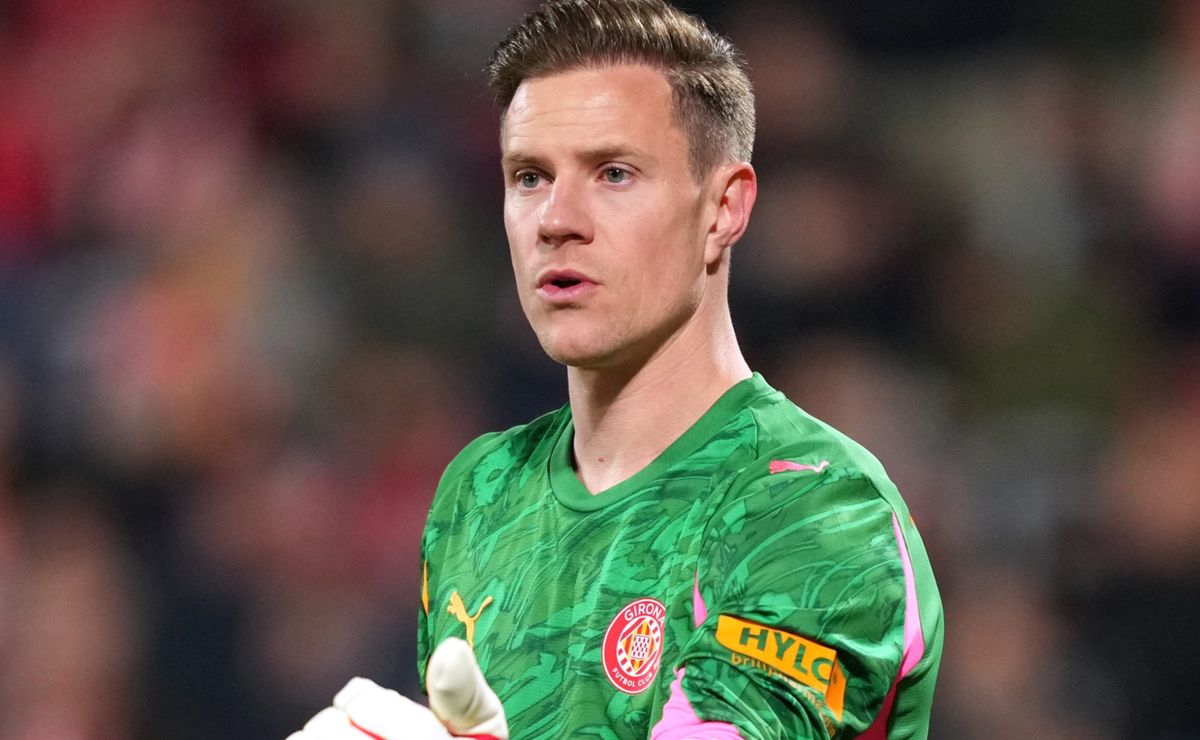
Marc-André ter Stegen isn't part of Germany at the 2026 World Cup. Injuries can play a huge role in shaping competitions like the 2026 World Cup. For Germany, that became an issue in a very important position long ago, as Marc-André ter Stegen will not represent his country. Ter Stegen is missing the competition because he was not called up by Julian Nagelsmann. However, the manager’s decision was not technical. It was an injury that ruled the goalkeeper out. In just his second match at Girona, Ter Stegen suffered a severe tear in his left hamstring in January that required surgery. The timeline was too tight for him to make it back in time, and he ultimately could not recover before the squad was announced. Ter Stegen’s season It was a completely unexpected nightmare season for Ter Stegen. While still at Barcelona last year, a back injury became more difficult to deal with and required surgery that kept him out almost until the end of the campaign. Neuer was called back by Nagelsmann after retiring from Germany (Alexander Hassenstein/Getty Images) With Joan García now established in the lineup, the goalkeeper looked for a different club to get more minutes and keep his place in Germany, deciding to join Girona on loan with that goal in mind. While Girona finished La Liga in the relegation zone, that may well have been because Ter Stegen was almost never able to play. The goalkeeper started in the 1-1 draw with Getafe and the 1-0 loss to Real Oviedo before the injury forced him out. The replacement After it was confirmed that Ter Stegen would miss nearly four months, Nagelsmann saw Oliver Baumann of TSG Hoffenheim as the replacement. However, that did not happen in the end. The manager instead opted to convince Manuel Neuer to come out of Germany retirement and join the squad.
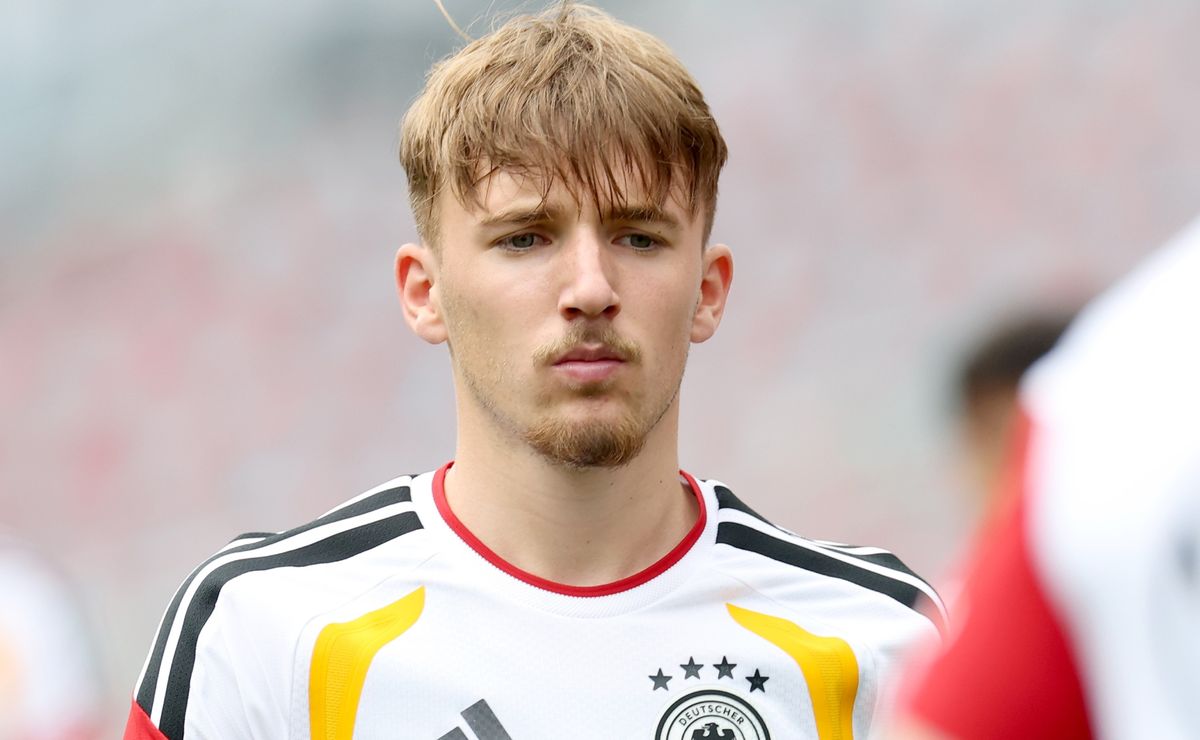
Germany will compete in the 2026 FIFA World Cup without Lennart Karl. Germany begin their 2026 FIFA World Cup Group E campaign on Sunday against tournament debutants Curacao at NRG Stadium in Houston, Texas. However, the European giants will be without Lennart Karl because of injury. The 18-year-old attacking midfielder was included by head coach Julian Nagelsmann in the 26-man squad that traveled to North America to compete for the trophy, but a muscle injury suffered during training on June 5 ended his chances of participating in the tournament. Karl earned his place with Germany thanks to his performances for Bayern Munich. After making his professional debut in the Bundesliga at just 17 years old, he quickly established himself as an important option for the German side, appearing in 40 matches during the 2025-26 season while recording nine goals and eight assists. Those numbers convinced Nagelsmann to call Karl into the national team, where he made his debut during the March FIFA window by coming on in the second half against Switzerland. After that, he made two more appearances, against Ghana and Finland, before the muscle injury sidelined him. Germany coach Julian Nagelsmann. As a result, Lennart Karl missed the opportunity to become the second-youngest player to appear in a World Cup for Germany. He would have made his potential tournament debut at 18 years and 109 days old, narrowly missing the record held by Youssoufa Moukoko, who played at Qatar 2022 at 18 years and three days old. Other Germany absences for the 2026 World Cup Lennart Karl’s injury was a significant blow for Germany. Not only did they lose a promising young talent who could have provided solutions at key moments during the tournament, but the timing of the setback also came just days before the competition began. However, other stars had already been ruled out because of physical issues. The first was Marc-Andre ter Stegen. Earlier this year, the goalkeeper decided to leave Barcelona — where he had lost his place in the starting lineup to Joan Garcia — in search of greater opportunities elsewhere. His destination was Girona, another La Liga club. However, he was barely able to play any official matches there because of a muscle injury suffered in February that sidelined him until May. Without regular playing time at club level, Julian Nagelsmann ultimately left him out of the World Cup squad and instead opted to bring back Manuel Neuer. The other major absentee for Germany is Serge Gnabry. The Bayern Munich forward was a key figure for the national team and appeared to have secured a place not only in the squad but also in the starting lineup. However, a serious adductor injury suffered in late April ruled him out of the tournament.
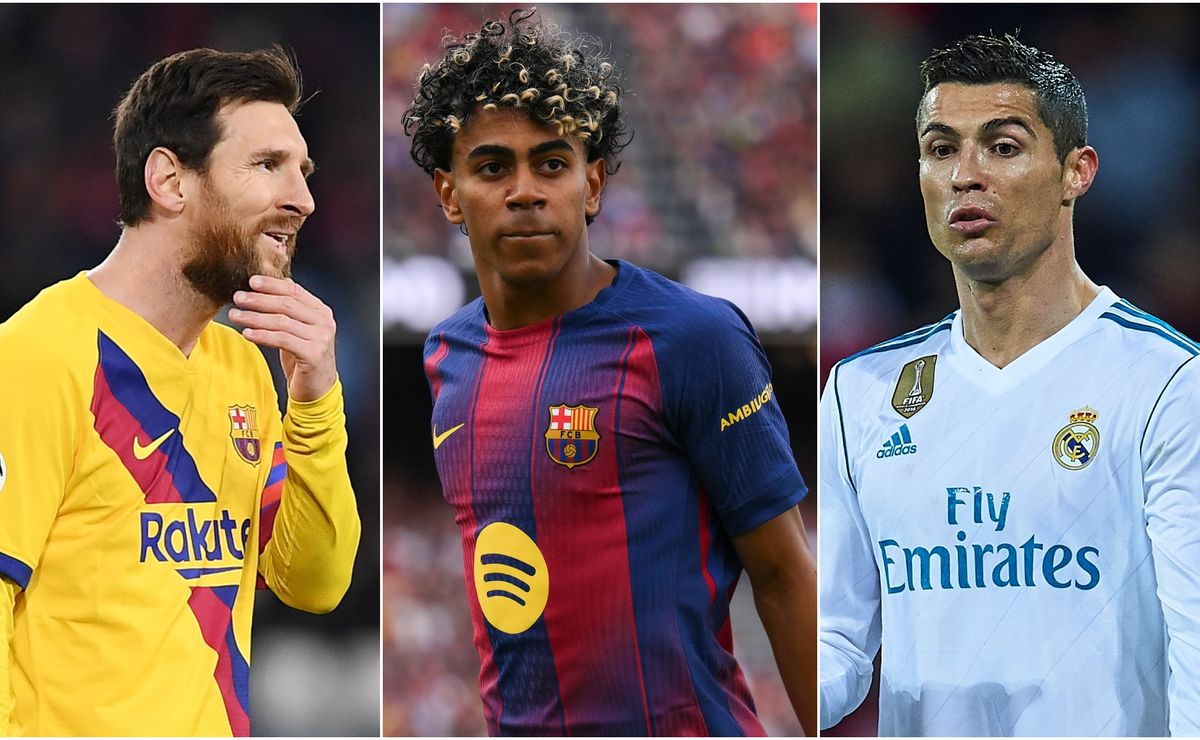
La Liga named Lamine Yamal its Player of the Year, an honor previously won by both Lionel Messi and Cristiano Ronaldo. Just as Lionel Messi and Cristiano Ronaldo dominated La Liga for years, this new era appears destined to belong to Lamine Yamal. The young Barcelona winger was named the league’s best player of the season after a standout campaign. “A wonderkid! Barcelona star, Lamine Yamal wins La Liga Player of the Season,” the Spanish league announced Friday on its official social media accounts alongside a photo of the 18-year-old holding the trophy. The same post highlighted four other players as Yamal’s main challengers. Kylian Mbappe finished second after an impressive season with Real Madrid despite the club’s lack of silverware and his injury struggles. Also featured among the contenders were Villarreal’s Nicolas Pepe, Mallorca’s Vedat Muriqi, and Real Betis’ Pablo Fornals. Lamine Yamal played a decisive role in Barcelona’s title-winning campaign, recording 16 goals and 12 assists in 28 matches — an average of one goal contribution per game. Despite dealing with a groin issue early in the season and a hamstring injury that sidelined him during the final stretch of the campaign, the winger established himself as the team’s primary attacking threat. He even carried much of the offensive burden during the absences of Robert Lewandowski and Raphinha, the other star attackers in the squad. A WONDERKID! 🪄@FCBarcelona star, Lamine Yamal wins #LALIGAEASPORTS 𝐏𝐋𝐀𝐘𝐄𝐑 𝐎𝐅 𝐓𝐇𝐄 𝐒𝐄𝐀𝐒𝐎𝐍!#LALIGAPOTS | #PREMIOSANUALESLALIGA— LALIGA English (@LaLigaEN) June 5, 2026 Yamal follows in Messi’s footsteps In previous years, Lamine Yamal had already shown flashes of brilliance with Barcelona, earning the La Liga U-23 Player of the Season award in both 2024 and 2025. This year, however, he took another step forward and claimed the league’s top individual honor, which had been awarded to Raphinha the previous season. In doing so, Yamal surpassed Lionel Messi as the youngest player ever to win the award. The Argentine forward first claimed the honor at age 21 after starring during the 2008-09 season. However, when comparing the two, Lamine still has a long way to go. Messi holds the record for the most La Liga Player of the Year awards with nine, including a streak of five consecutive wins. After his first recognition in 2009, he also won the award in 2010, 2011, 2012, 2013, 2015, 2017, 2018, and 2019. Cristiano Ronaldo trails far behind Despite enjoying a brilliant nine-year spell with Real Madrid, Cristiano Ronaldo struggled to establish himself as La Liga’s dominant individual star and spent much of that era competing with Lionel Messi’s overwhelming influence. As a result, CR7 won the league’s Player of the Year award only once during his nine seasons in Spain, claiming the honor in 2014.

FC Barcelona captain Marc-Andre ter Stegen’s loan spell at Girona ended in heartbreak, with the German goalkeeper watching on as the club he had joined to rebuild his career were relegated to the Se...

According to SPORT, RCD Mallorca’s relegation from La Liga has significantly simplified the potential departure of former FC Barcelona winger Jan Virgili, one of the most sought-after players in the...

At the end of a ‘crazy, crazy day’, Elche were safe. But opponents, Girona, were down with Mallorca and OviedoEder Sarabia wasn’t out there to see the tightest, tensest battle there has ever been end with liberation at last, but his mum and dad were and he wasn’t far away. Suspended for the final night of a season like no other, Elche’s coach was hidden down in the dressing room instead, watching the game that he knew was “us or them” on a TV set perched precariously upon a metal crate. There, as staff ran in and out delivering messages until it was his turn to set off on a sprint, he saw the match that defined five teams’ fate finish 1-1. Mobile in hand, alerts beeping, most of all he saw suffering. “Terrible, terrible, terrible,” he called it later, but by then at least it was done. Elche were safe. Their opponents, Girona, were down. Real Mallorca, like Real Oviedo, were going with them.“Crazy, crazy day, crazy match, a lot of emotions: this league was really crazy,” Sarabia said. He had spent much of it surrounded by clothes on hooks and flags taped to walls; like everyone else, he had also spent it, he said, “on the edge of the precipice”. From the visitors’ dressing room at Montilivi, he had seen Álvaro Rodríguez score the kind of goal that wins cups in cartoons, tearfully dedicating it to his late dad, and Arnau Martínez equalise. He had seen cameras zoom in on his parents in the stands and wondered how Manu, a former footballer who doesn’t so much watch games as broadcast them, looked so calm when they were a goal from losing it all. He had seen Thomas Lemar hit Elche’s bar, “+7” appear on the screen, and his goalkeeper catch a cross on 95.55, Matías Dituro triumphantly holding the ball like Rafiki on Pride Rock, but it still wasn’t over. Continue reading...