Goal efficiency
How clinical and direct the player was in front of goal — volume, accuracy, and conversion.


Primera División RFEF - Group 5 · Goalkeeper · #0 · Spain · 24 yrs
Company is a goalkeeper. Company is a Spanish international, 24 years old, goalkeeper. Company was born in Potries, Spain on 2001-02-06. Company's Sportra profile tracks season statistics across Tercera División RFEF - Promotion - Play-offs, Primera División RFEF - Group 5, Segunda División RFEF - Play-offs, Tercera División RFEF - Group 14. Company's page brings together career clubs, trophies, injury history, multi-competition stats, and related news headlines. On Sportra you can explore Company season statistics, transfer history, trophies, injury updates, and related news across every competition tracked in the profile.
Goalkeeper · #0
| Date | Type | From | To |
|---|---|---|---|
| 2024-07-01 | Free |  Quintanar del Rey Quintanar del Rey |  Torrent Torrent |
| 2023-07-01 | Free |  Villanovense VIL Villanovense VIL | Quintanar del Rey |
| 2022-07-01 | Free |  Atzeneta Atzeneta | Villanovense VIL |
Season intelligence
Profile as Goalkeeper: balanced output without a single dominant trait. Archetype: Modern goalkeeper.
Scaled 0–99 from season output — map to fantasy, comparisons, or scouting cards.
Per-90 rates, efficiency ratios, and Sportra indices from season totals.
How clinical and direct the player was in front of goal — volume, accuracy, and conversion.
Playmaking output: assists, key passes, and custom chance-creation signals.
Minutes, availability, and how central they were to the team.
Every tracked category for this league and season, grouped by Sportra.
Company is a goalkeeper. Company is a Spanish international, 24 years old, goalkeeper. Company was born in Potries, Spain on 2001-02-06. Company's Sportra profile tracks season statistics across Tercera División RFEF - Promotion - Play-offs, Primera División RFEF - Group 5, Segunda División RFEF - Play-offs, Tercera División RFEF - Group 14. Company's page brings together career clubs, trophies, injury history, multi-competition stats, and related news headlines. On Sportra you can explore Company season statistics, transfer history, trophies, injury updates, and related news across every competition tracked in the profile.
Goalkeeper · #0
| Date | Type | From | To |
|---|---|---|---|
| 2024-07-01 | Free | Quintanar del Rey | Torrent |
| 2023-07-01 | Free | Villanovense VIL | Quintanar del Rey |
| 2022-07-01 | Free | Atzeneta | Villanovense VIL |
Season intelligence
Profile as Goalkeeper: balanced output without a single dominant trait. Archetype: Modern goalkeeper.
Scaled 0–99 from season output — map to fantasy, comparisons, or scouting cards.
Per-90 rates, efficiency ratios, and Sportra indices from season totals.
How clinical and direct the player was in front of goal — volume, accuracy, and conversion.
Playmaking output: assists, key passes, and custom chance-creation signals.
Minutes, availability, and how central they were to the team.
Every tracked category for this league and season, grouped by Sportra.
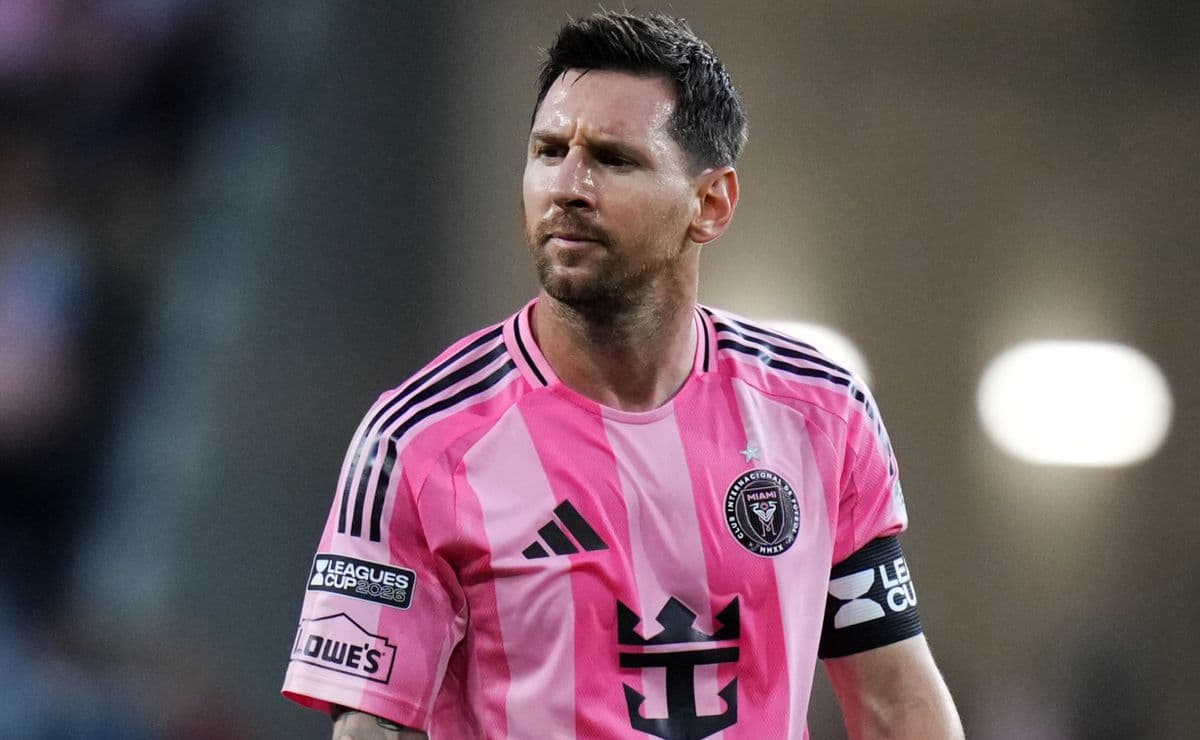
Inter Miami posted a heartfelt message on social media in honor of the passing of Lionel Messi's father. Inter Miami paid tribute to Lionel Messi‘s father, Jorge, in a message posted to the club’s official X account Saturday afternoon. “Our hearts are with our captain, Leo, and the entire Messi family,” the club wrote, accompanying the message with a black graphic bearing the club crest. The post came after Inter Miami had remained largely silent on social media for much of Saturday following news of Jorge Messi’s passing, with the club also adding a black ribbon to its crest across its social profiles as a mark of mourning. Jorge’s connection to Inter Miami ran deeper than being Lionel’s father — he played a central role in the nearly three-year negotiation that brought Messi to the club in 2023, according to owner Jorge Mas, even personally informing Barcelona president Joan Laporta of Lionel’s decision to leave for Miami. As expected, Messi will not be part of Inter Miami’s squad for Saturday’s Leagues Cup clash against Monterrey, having traveled to Argentina to be with his family during this difficult time. Our hearts are with our captain, Leo, and the entire Messi family. pic.twitter.com/nJ3umEpirU— Inter Miami CF (@InterMiamiCF) August 8, 2026 The tributes have extended well beyond Inter Miami, with messages of support pouring in from Argentina’s national team, Barcelona, Real Madrid, CONMEBOL and Newell’s Old Boys, among others, as the soccer world mourns alongside the Messi family. When could Messi return? Messi’s return to the pitch remains uncertain, with three upcoming matches floated as possible comeback points. Wednesday’s Leagues Cup clash with Club Leon on August 12 appears unlikely given the short turnaround, while Saturday’s MLS match against Nashville SC on August 15 is a more realistic possibility. The August 19 meeting with Philadelphia Union, however, is widely seen as the most likely option, giving Messi more time with his family before returning to full training and competition.

In an unseasonable black bomber jacket, with heavy duty company beside him, David Sullivan took his seat. Against the advice of the stadium’s operators, unbowed by serious allegations placed against his name and the weight of public opinion, West Ham’s major shareholder, the former co-chair, sat with arms crossed, always conspicuous by his presence.By beating Portsmouth in relative comfort, West Ham, the club where Sullivan’s name is no longer above the door, had secured a heartening Carabao Cup passage to the second round. There, they will be reunited with their former Premier League peers. The serious Championship business begins next Sunday at Burnley. Whether Sullivan travels north for that remains to be seen. It cannot be ruled out. Continue reading...

The fallout from the abandoned World Cup investment proposal continues to divide the governing body, with major soccer powers questioning the direction of the organization. Gianni Infantino’s future at FIFA has become increasingly uncertain after England changed its position ahead of the 2027 presidential elections, adding further pressure to a leadership battle that has shaken world soccer. The fallout from the abandoned World Cup investment proposal continues to divide the governing body, with major soccer powers questioning the direction of the organization. The crisis has grown beyond the original controversy surrounding FIFA Forward Enterprise (FFE), the proposed company that would have allowed private investors to purchase a stake in future World Cup commercial revenues. While the plan has been withdrawn, the damage to Infantino’s relationships with several important stakeholders appears far from resolved. FIFA crisis deepens after abandoned World Cup investment plan Infantino faced intense criticism after his proposal to create a new commercial entity and raise around $4.2 billion through private investment triggered opposition from multiple soccer organizations. The plan would have involved selling approximately 20 percent of FIFA Forward Enterprise, a company designed to oversee commercial rights connected to competitions such as the World Cup and Club World Cup. The proposal quickly became one of the biggest political challenges of Infantino’s presidency since he took over FIFA in 2016. UEFA, CONCACAF and the Asian Soccer Confederation all expressed concerns about the lack of consultation, with UEFA describing the initiative as a “shabby, back room, opaque deal.” FIFA President Gianni Infantino. Although Infantino eventually abandoned the project, UEFA made it clear that the decision alone was not enough to repair the damage. “First, the proposals to sell off the major competitions had to be withdrawn and secondly, assurances have to be made that such attempts to disfigure the game in this way will never be made again. These conditions have not been met,” UEFA said in a statement. The European governing body has maintained that it has lost confidence in Infantino’s leadership and has even discussed possible future action, including a potential boycott of FIFA competitions. England FA reveals positon on Infantino’s re-election bid The biggest development came when the English Football Association formally withdrew its support for Infantino’s candidacy for another term as FIFA president. The decision means England will no longer back Infantino’s attempt to remain in charge from 2027 to 2031. The FA’s position followed similar moves from Wales, Serbia, Sweden and Finland, with several national associations distancing themselves from the FIFA president after the failed investment proposal. The English federation reportedly decided that Infantino’s apology and FIFA’s internal response did not change its concerns. “The FA has sent a letter withdrawing its support for Infantino in reaction to the plan to sell off stakes in the World Cup to private investors,” BBC Sport reported. Julian Alvarez #9 of Argentina celebrates with teammates after scoring a goal. The decision represents a major setback for Infantino because England remains one of the most influential national associations in world soccer. While the number of federations publicly opposing him remains limited compared with FIFA’s 211 members, the growing criticism from established soccer nations has increased pressure ahead of the election. UEFA considers next steps as Infantino fights to stay in power UEFA now faces a difficult challenge in trying to remove Infantino before the 2027 election. A vote of no confidence would require support from a majority of FIFA’s 211 members, meaning European opposition alone would not be enough. Another possibility would be finding a rival candidate capable of challenging Infantino during the election. CONCACAF president Victor Mo

CONMEBOL spoke out for the first time about Gianni Infantino's collapsed FIFA plan to sell a stake in the World Cup. CONMEBOL spoke out for the first time on Gianni Infantino‘s collapsed FIFA plan, joining UEFA’s stance against the initiative in a statement released by its council. The South American confederation called for football institutions to be respected and warned it would not accompany any move that bypasses established governance procedures. The plan in question, known as FIFA Forward Enterprise, was a commercial initiative pushed by Infantino that sought to sell stakes in World Cup rights and other FIFA-organized competitions to private investors. The proposal aimed to boost annual funding to member federations from $8 million to $20 million, a 150% increase, starting in January 2027. But it quickly drew criticism over its rushed timeline, the absence of review by FIFA’s own governing bodies and concerns that handing commercial control of the game’s biggest events to private interests could compromise the sport’s integrity. Opposition mounted fast. UEFA threatened that none of its national teams would take part in FIFA competitions while the plan remained on the table, while Concacaf and the Asian Football Confederation soon joined that resistance. Comunicado: O futebol vem em primeiro lugar. Conselho da CONMEBOL faz um chamado à preservação da institucionalidade.https://t.co/wE0NyVlDcq— CONMEBOL.com (@CONMEBOL) August 6, 2026 Together, the three confederations represented 136 of FIFA’s 211 member federations, well past the 106 votes needed to block the initiative. Facing that unified front, Infantino withdrew the proposal on July 31, saying it had generated divisions and would not move forward regardless of the level of support it still had. CONMEBOL joins the discussion CONMEBOL‘s statement, issued days later, did not mention Infantino by name but left little doubt about where it stands. “Football always comes first,” the council said, while stressing that the sport’s future can only be built on respect for institutionality, governance and democratic procedures. The confederation added that those responsible for running football’s organizations must always prioritize dialogue and adherence to the rules, effectively aligning itself with UEFA and the other confederations that forced Infantino to abandon the project. “CONMEBOL’s council calls for preserving the unity of football’s family, acting with institutional responsibility, strengthening dialogue and fully respecting governance mechanisms,” the statement closed.
nfluential figures, notably Arsene Wenger, have publicly questioned the organization's strategic direction, with the Frenchman making a deliberate decision to distance himself from the initiative amid the ongoing administrative crisis. FIFA President Gianni Infantino is currently navigating a significant institutional controversy following the collapse of a major World Cup proposal due to widespread international criticism. The subsequent fallout represents one of the most substantial leadership challenges of his tenure. Influential figures, notably Arsene Wenger, have publicly questioned the organization’s strategic direction, with the Frenchman making a deliberate decision to distance himself from the initiative amid the ongoing administrative crisis. The FIFA president’s attempt to introduce private investment into the World Cup’s commercial structure sparked an immediate backlash from soccer authorities around the world. While Infantino eventually abandoned the plan, the damage to his reputation and relationships with several national teams and confederations appears far from resolved. The controversy began after Infantino pushed forward a proposal to create a new commercial entity known as FIFA Forward Enterprise (FFE), which would manage some of FIFA’s biggest revenue streams, including World Cup broadcasting rights, sponsorship deals and ticket sales. The plan reportedly aimed to raise around $4.2 billion by selling approximately 20 percent of the company to private investors, based on a valuation of nearly $20 billion. However, the idea immediately divided soccer leaders, with many accusing FIFA of attempting to commercialize the sport’s biggest tournament without sufficient consultation. Statement attributable to the FIFA PresidentThe FIFA Forward Enterprise project was intended to provide a basis for further strengthening our FIFA Member Associations and our sport worldwide, especially in those countries where support is most needed. And more so, as we said…— FIFA Media (@fifamedia) July 31, 2026 Infantino then revealed in a statement that the proposal had caused too much disagreement among soccer stakeholders, so he decided it was better to abandon it rather than allow further divisions that could harm FIFA’s original goals. The FIFA president apologized for the controversy and confirmed the project would no longer move forward. However, the decision did little to calm the growing criticism, with several major federations distancing themselves from his leadership. What did Arsene Wenger say about FIFA’s controversy? Amid the growing uncertainty, Arsene Wenger finally addressed his position on the failed proposal, making it clear that he had no involvement in the controversial project and only learned about it through media reports. Wenger, who currently serves as FIFA’s Chief of Global Football Development, explained that his responsibilities focus on soccer development, youth programs and improving the global structure of the sport. He emphasized that his role had nothing to do with the proposed commercial changes. “I was not involved in this strategic plan and first became aware of the project through media reports,” Wenger said in a statement. FIFA President, Gianni Infantino and Arsene Wenger interact The former Arsenal manager then delivered his strongest message regarding the proposal, supporting the decision to abandon it: “The decision to withdraw the project was absolutely necessary and beyond question, because I firmly believe in an independent FIFA that serves our game with commitment, transparency, and integrity,” Wenger added. Wenger’s statement became one of the most significant reactions from within FIFA because of his status as one of the organization’s most recognizable figures. However, he stopped short of directly calling for Infantino to resign or criticizing the FIFA president personally. Infantino’s future at FIFA under pressure Infantino has led FIFA since 2016 and built significant support am
CONCACAF issued a strong statement against Gianni Infantino after announcing it will not move forward with the FIFA Forward Enterprise project. CONCACAF joined UEFA in taking direct aim at Gianni Infantino after FIFA withdrew its plan to sell a stake in the World Cup to private investors. In an official statement released Saturday, CONCACAF welcomed the retreat but went further than simply celebrating the outcome, framing the episode as proof that Infantino’s leadership needs to be put under the microscope. “This recent unilateral and flagrant act of poor governance and leadership reflects a pattern of similar errors and conduct. It’s time for a comprehensive review of this leadership,” the confederation said. The statement didn’t shy away from assigning blame either. CONCACAF argued that a proposal of this scale doesn’t get as far as it did by accident, calling it “the reflection of a leadership that has stopped putting football first,” and stressed that the concern isn’t unique to the confederation. CONCACAF also pushed back on the idea that FIFA operates like a private business, laying out what it sees as a basic obligation that comes with running the sport’s governing body. “FIFA is not a private company. It is an institution that holds football and its members in trust,” the statement read. Concacaf and its 41 Member Associations welcome the withdrawal of the proposed FIFA Forward Enterprise (FFE).https://t.co/H2KdBi1jJG— Concacaf Media (@ConcacafMedia) August 1, 2026 The statement closed on a note of unity, praising the “courage and unity” shown by its member associations throughout the week and crediting the media for bringing the proposal “out of the shadows“. CONCACAF’s intervention adds another heavyweight voice to the growing list of confederations demanding answers from FIFA’s president, layering fresh pressure onto the organization just as UEFA issued its own declaration of no confidence in Infantino. Could Infantino lose the presidency? Nothing is confirmed, and Infantino hasn’t resigned or announced any plans to step aside. But the fallout from the FIFA Forward Enterprise collapse has left him increasingly isolated, with reports suggesting even FIFA Secretary General Mattias Grafström has been pushing internally for his resignation. Infantino is still expected to seek re-election when FIFA’s presidency is decided in May 2027, but UEFA officials have reportedly been searching for a heavyweight candidate capable of mounting a serious challenge. Nasser Al-Khelaifi, the PSG president with deep ties across UEFA’s Executive Committee, had emerged as a name UEFA officials privately discussed as a potential rival. However, Al-Khelaifi has ruled that out entirely, with his spokesperson saying: “Nasser has absolutely no ambition, no intention, no interest in the FIFA role.”
UEFA backed Gianni Infantino's decision to walk back the plan to sell a stake in the World Cup to private investors, but noted that confidence in FIFA has been lost. UEFA didn’t hold back after FIFA confirmed it was scrapping its plan to sell a stake in the World Cup to private investors. In an official statement released Saturday, European football’s governing body welcomed the U-turn but made clear the episode has done lasting damage to its relationship with Gianni Infantino, declaring outright that “the current FIFA leadership has not only lost UEFA’s confidence but also that of many other members of the football family“. The statement didn’t stop at expressing disappointment. UEFA went further, framing the whole saga as a breach of trust that demands consequences. “We cannot keep going on like this with secret schemes on fast track timescales, cooked up by faceless individuals and of dubious benefit to the game. We must identify those responsible and hold them to account,” the organization said, signaling that it isn’t treating FIFA‘s retreat as the end of the matter. UEFA also announced it plans to work with its member associations and other confederations in the coming weeks to examine how the proposal was allowed to advance as far as it did, describing the review as something that should be “thorough and fundamental” with “no option off the table“. The plan, which had been unanimously rejected by UEFA’s national associations along with CONCACAF and the Asian Football Confederation (AFC), collapsed after mounting opposition from multiple continental bodies and the resignation of Infantino’s own senior advisor, Carlos Cordeiro. UEFA welcomes FIFA’s withdrawal of plans to sell a stake in the World Cup— UEFA (@UEFA) August 1, 2026 Despite the sharp tone, UEFA framed the outcome as a shared win for the sport rather than a victory over FIFA itself, calling it “a victory for the whole game” while cautioning that “the task of rebuilding trust in FIFA has only just begun“. What was Infantino’s plan? The proposal at the center of the fallout was the FIFA Forward Enterprise (FFE), a new company FIFA wanted to create to manage the commercial and event rights tied to its biggest competitions, including the World Cup. The plan would have brought in private investors to take a minority stake in that structure, with J.P. Morgan valuing the venture at roughly $20 billion and the deal aiming to raise around $4.2 billion. In exchange, Infantino promised to immediately raise the annual bonus each member federation receives from $8 million to $20 million. The proposal gave FIFA’s 211 member associations a tight window to weigh in aunque it was quickly rejected by UEFA, with CONCACAF and the AFC soon following suit, stripping the project of a significant chunk of votes right from the start.
European football's governing body UEFA said Saturday that the president of the sport’s global governing body, FIFA chief Gianni Infantino, had “lost” their "confidence" after his bid to spin off the commercial rights to the World Cup and other competitions into a semi-private company. Infantino had earlier dropped the plan, but the furious backlash it triggered appeared set to upend his presidency.
Plan for sale of commercial rights to World Cup causes chaos with Uefa, AFC and Concacaf leading the oppositionIt has been a week that has rocked football. The news caught everyone by surprise. When reports first emerged on Tuesday afternoon that Fifa, world football’s governing body, was to launch a vehicle to control the commercial rights to the World Cup, and would sell a stake of this company to investors, even members of the central decision-making body, the Fifa Council, hadn’t known about it. But it was equally the case that the story – first broken by the Times – caught Gianni Infantino, the Fifa president, unawares. Fifa were rushed into announcing a plan they had wanted to keep under wraps for longer, and in the full glare of global media interest. Continue reading...
As tensions continue to rise between FIFA and UEFA, Spain and Portugal have become central figures in a dispute that could reshape the future of international soccer, although the full implications remain unclear. Gianni Infantino is facing mounting pressure after FIFA’s controversial commercial proposal triggered fresh uncertainty around the 2030 World Cup. As tensions continue to rise between FIFA and UEFA, Spain and Portugal have become central figures in a dispute that could reshape the future of international soccer, although the full implications remain unclear. The growing conflict stems from FIFA‘s proposal to establish FIFA Forward Enterprise (FFE), a new commercial subsidiary designed to manage the governing body’s major competitions. While FIFA insists the project would generate billions for soccer development, critics argue the plan risks changing the identity of the World Cup and weakening trust between the sport’s governing bodies. The controversy began after FIFA unveiled plans to create FIFA Forward Enterprise, a company valued at roughly $20 billion, which would oversee commercial rights linked to the World Cup and other FIFA tournaments. Under the proposal, up to 20% of the company could be sold to private investors, with FIFA hoping to raise approximately $4.2 billion. According to FIFA, the additional revenue would significantly increase financial support for its 211 member associations, with some federations eligible to receive as much as $40 million if they approve the proposal before the September deadline. FIFA President Gianni Infantino speaks about the 2026 World Cup with U.S. President Donald Trump Spain and Portugal find themselves at the heart of the dispute The situation has become especially sensitive because Spain, Portugal and Morocco are scheduled to host the 2030 World Cup, while Uruguay, Argentina and Paraguay will stage the tournament’s opening centenary matches. Although Spain and Portugal have not individually announced they are withdrawing, Spanish newspaper El Español indicates that both countries are considering abandoning their hosting role if FIFA refuses to change course. The reports are directly connected to UEFA’s collective position, rather than independent decisions by the two countries. Because both federations belong to UEFA, they are expected to follow the confederation’s stance if the dispute remains unresolved. Joao Felix #11 of Portugal competes for the ball against Pedro Porro #12 of Spain. UEFA threatens boycott as FIFA refuses to back down The major turning point came when all 55 UEFA member associations unanimously voted to oppose FIFA’s proposal, warning they would boycott FIFA competitions if the project continues. According to UEFA: “The World Cup cannot be treated as an investment product.” The governing body added: “It is one of football’s greatest sporting legacies. It has been built over generations by players, national teams and supporters across every continent. No part of it should ever be surrendered to private investors. The World Cup is not for sale.” That position means Spain and Portugal could ultimately be prevented from participating in, or even hosting, the very tournament they are preparing to stage, should UEFA carry out its threat and FIFA move forward with the proposal. Such a scenario would be unprecedented in World Cup history. FIFA President, Gianni Infantino in conversation with UEFA President Aleksander Ceferin As criticism intensified, FIFA publicly defended the proposal and rejected suggestions that it intends to privatize the World Cup. FIFA stated: “Nobody is selling football. This is not something FIFA would ever entertain.” The organization also insisted that the consultation process would continue despite widespread opposition. FIFA added: “Everyone has the right to express their opposition and to seek further clarification, but no single entity can claim to represent all 211 Member Associations around the world.” Statement on behalf o
What began as a plan designed to reshape the governing body's financial future has rapidly evolved into a crisis that could alter the landscape of international soccer for years to come. Gianni Infantino is facing one of the biggest challenges of his presidency after FIFA’s controversial commercial proposal ignited an extraordinary reaction across European soccer. What began as a plan designed to reshape the governing body’s financial future has rapidly evolved into a crisis that could alter the landscape of international soccer for years to come. The proposal has triggered widespread criticism from governing bodies, leagues, player representatives and politicians, with many arguing that soccer’s most prestigious tournament should remain protected from outside commercial ownership. While FIFA insists the initiative is designed to strengthen the global game, opposition continues to grow as more details emerge. Earlier this week, FIFA unveiled plans to establish a new commercial entity known as FIFA Forward Enterprise (FFE), which would oversee the organization’s major competitions, including the World Cup. Under the proposal, FIFA would retain majority ownership while selling up to 20% of the company to private investors, with the venture reportedly valued at $20 billion. The governing body hopes to raise approximately $4.2 billion, arguing that the additional funding would be redistributed among its 211 member associations to improve soccer development worldwide. According to FIFA, every association would receive significantly increased financial support if the proposal is approved before the September deadline. The FIFA World Cup Winner’s Trophy Infantino defended the initiative, insisting it remains optional rather than compulsory for member associations. “It’s part of a democratic process — a consultation process — and, above all, it is an opportunity but not an obligation,” Infantino said. He also described the proposal as “a golden opportunity to turbocharge the development of the game globally.” UEFA’s historic decision revealed The mystery surrounding Europe’s response ended on Thursday following an emergency virtual meeting involving all 55 UEFA member associations. Every single UEFA member voted unanimously to support a boycott of FIFA competitions, including future men’s and women’s World Cups, if FIFA proceeds with selling ownership stakes in its tournaments to private investors. The unprecedented decision represents one of the strongest collective actions ever taken against FIFA by a continental confederation. Following the meeting, UEFA released a lengthy statement explaining why it believes the proposal threatens the future governance of soccer. “The World Cup cannot be treated as an investment product. It is one of soccer’s greatest sporting legacies… No part of it should ever be surrendered to private investors. The World Cup is not for sale.” Statement on behalf of UEFA and its 55 National Associations— UEFA (@UEFA) July 30, 2026 UEFA also confirmed the consequences if FIFA refuses to abandon the project. “No UEFA national team will participate in any FIFA competition for so long as these proposals remain alive, unless this proposal has been abandoned in its entirety.” Europe warns soccer cannot become an investment asset UEFA’s criticism went well beyond procedural concerns, arguing that allowing outside investors into FIFA competitions would permanently change how soccer is governed. According to the European governing body, investor involvement would place commercial expectations ahead of sporting priorities, influencing everything from tournament formats to scheduling decisions. FIFA President, Gianni Infantino in conversation with UEFA President Aleksander Ceferin “The moment external investors acquire ownership interests in FIFA competitions, soccer changes forever,” UEFA wrote. The organization added that “football’s future cannot be dictated by the expectations of those whose first duty is to maximise
Fifa’s 25-page sales deck produced by JP MorganReference made to doubling global tournamentsFifa’s sales pitch to persuade members to approve the sale of the World Cup’s commercial rights clearly states that its plans for financial growth will be achieved by staging more tournaments, having higher ticket prices and debt financing.A 25-page sales deck titled “Fifa Forward Enterprise Member Materials”, that has been seen by the Guardian, makes the case for the creation of a new company to run Fifa’s commercial operations, 20% of which would be sold to Joshua Kushner, a US investor who is the brother of Donald Trump’s son-in-law, Jared Kushner. Continue reading...
After lifting the trophy 60 years ago, some still supplemented their income by performing in working men’s clubs and as after dinner speakersWith each passing World Cup I am reminded of the times I spent in the company of those wonderful “Boys of 66”. What a privilege it was getting to know them in a much simpler era when, unlike today’s mollycoddled stars, household names remained unaffected by money and fame.Where were you on 30 July 1966, the day England won the World Cup? I was at my nan and grandad’s house. They had a minute television which seemed no bigger than a matchbox. Intermittently the picture, which was in black and white, would roll around the screen. It was infuriating. My grandad talked about needing to get the “horizontal hold fixed” (unless you are of a certain age you will need to Google that). I was nine years old. Continue reading...
Tap a headline to view metadata and excerpt fields in Sportra, then use the article website button to continue on the original publisher page.
Inter Miami posted a heartfelt message on social media in honor of the passing of Lionel Messi's father. Inter Miami paid tribute to Lionel Messi‘s father, Jorge, in a message posted to the club’s official X account Saturday afternoon. “Our hearts are with our captain, Leo, and the entire Messi family,” the club wrote, accompanying the message with a black graphic bearing the club crest. The post came after Inter Miami had remained largely silent on social media for much of Saturday following news of Jorge Messi’s passing, with the club also adding a black ribbon to its crest across its social profiles as a mark of mourning. Jorge’s connection to Inter Miami ran deeper than being Lionel’s father — he played a central role in the nearly three-year negotiation that brought Messi to the club in 2023, according to owner Jorge Mas, even personally informing Barcelona president Joan Laporta of Lionel’s decision to leave for Miami. As expected, Messi will not be part of Inter Miami’s squad for Saturday’s Leagues Cup clash against Monterrey, having traveled to Argentina to be with his family during this difficult time. Our hearts are with our captain, Leo, and the entire Messi family. pic.twitter.com/nJ3umEpirU— Inter Miami CF (@InterMiamiCF) August 8, 2026 The tributes have extended well beyond Inter Miami, with messages of support pouring in from Argentina’s national team, Barcelona, Real Madrid, CONMEBOL and Newell’s Old Boys, among others, as the soccer world mourns alongside the Messi family. When could Messi return? Messi’s return to the pitch remains uncertain, with three upcoming matches floated as possible comeback points. Wednesday’s Leagues Cup clash with Club Leon on August 12 appears unlikely given the short turnaround, while Saturday’s MLS match against Nashville SC on August 15 is a more realistic possibility. The August 19 meeting with Philadelphia Union, however, is widely seen as the most likely option, giving Messi more time with his family before returning to full training and competition.
In an unseasonable black bomber jacket, with heavy duty company beside him, David Sullivan took his seat. Against the advice of the stadium’s operators, unbowed by serious allegations placed against his name and the weight of public opinion, West Ham’s major shareholder, the former co-chair, sat with arms crossed, always conspicuous by his presence.By beating Portsmouth in relative comfort, West Ham, the club where Sullivan’s name is no longer above the door, had secured a heartening Carabao Cup passage to the second round. There, they will be reunited with their former Premier League peers. The serious Championship business begins next Sunday at Burnley. Whether Sullivan travels north for that remains to be seen. It cannot be ruled out. Continue reading...
The fallout from the abandoned World Cup investment proposal continues to divide the governing body, with major soccer powers questioning the direction of the organization. Gianni Infantino’s future at FIFA has become increasingly uncertain after England changed its position ahead of the 2027 presidential elections, adding further pressure to a leadership battle that has shaken world soccer. The fallout from the abandoned World Cup investment proposal continues to divide the governing body, with major soccer powers questioning the direction of the organization. The crisis has grown beyond the original controversy surrounding FIFA Forward Enterprise (FFE), the proposed company that would have allowed private investors to purchase a stake in future World Cup commercial revenues. While the plan has been withdrawn, the damage to Infantino’s relationships with several important stakeholders appears far from resolved. FIFA crisis deepens after abandoned World Cup investment plan Infantino faced intense criticism after his proposal to create a new commercial entity and raise around $4.2 billion through private investment triggered opposition from multiple soccer organizations. The plan would have involved selling approximately 20 percent of FIFA Forward Enterprise, a company designed to oversee commercial rights connected to competitions such as the World Cup and Club World Cup. The proposal quickly became one of the biggest political challenges of Infantino’s presidency since he took over FIFA in 2016. UEFA, CONCACAF and the Asian Soccer Confederation all expressed concerns about the lack of consultation, with UEFA describing the initiative as a “shabby, back room, opaque deal.” FIFA President Gianni Infantino. Although Infantino eventually abandoned the project, UEFA made it clear that the decision alone was not enough to repair the damage. “First, the proposals to sell off the major competitions had to be withdrawn and secondly, assurances have to be made that such attempts to disfigure the game in this way will never be made again. These conditions have not been met,” UEFA said in a statement. The European governing body has maintained that it has lost confidence in Infantino’s leadership and has even discussed possible future action, including a potential boycott of FIFA competitions. England FA reveals positon on Infantino’s re-election bid The biggest development came when the English Football Association formally withdrew its support for Infantino’s candidacy for another term as FIFA president. The decision means England will no longer back Infantino’s attempt to remain in charge from 2027 to 2031. The FA’s position followed similar moves from Wales, Serbia, Sweden and Finland, with several national associations distancing themselves from the FIFA president after the failed investment proposal. The English federation reportedly decided that Infantino’s apology and FIFA’s internal response did not change its concerns. “The FA has sent a letter withdrawing its support for Infantino in reaction to the plan to sell off stakes in the World Cup to private investors,” BBC Sport reported. Julian Alvarez #9 of Argentina celebrates with teammates after scoring a goal. The decision represents a major setback for Infantino because England remains one of the most influential national associations in world soccer. While the number of federations publicly opposing him remains limited compared with FIFA’s 211 members, the growing criticism from established soccer nations has increased pressure ahead of the election. UEFA considers next steps as Infantino fights to stay in power UEFA now faces a difficult challenge in trying to remove Infantino before the 2027 election. A vote of no confidence would require support from a majority of FIFA’s 211 members, meaning European opposition alone would not be enough. Another possibility would be finding a rival candidate capable of challenging Infantino during the election. CONCACAF president Victor Mo
CONMEBOL spoke out for the first time about Gianni Infantino's collapsed FIFA plan to sell a stake in the World Cup. CONMEBOL spoke out for the first time on Gianni Infantino‘s collapsed FIFA plan, joining UEFA’s stance against the initiative in a statement released by its council. The South American confederation called for football institutions to be respected and warned it would not accompany any move that bypasses established governance procedures. The plan in question, known as FIFA Forward Enterprise, was a commercial initiative pushed by Infantino that sought to sell stakes in World Cup rights and other FIFA-organized competitions to private investors. The proposal aimed to boost annual funding to member federations from $8 million to $20 million, a 150% increase, starting in January 2027. But it quickly drew criticism over its rushed timeline, the absence of review by FIFA’s own governing bodies and concerns that handing commercial control of the game’s biggest events to private interests could compromise the sport’s integrity. Opposition mounted fast. UEFA threatened that none of its national teams would take part in FIFA competitions while the plan remained on the table, while Concacaf and the Asian Football Confederation soon joined that resistance. Comunicado: O futebol vem em primeiro lugar. Conselho da CONMEBOL faz um chamado à preservação da institucionalidade.https://t.co/wE0NyVlDcq— CONMEBOL.com (@CONMEBOL) August 6, 2026 Together, the three confederations represented 136 of FIFA’s 211 member federations, well past the 106 votes needed to block the initiative. Facing that unified front, Infantino withdrew the proposal on July 31, saying it had generated divisions and would not move forward regardless of the level of support it still had. CONMEBOL joins the discussion CONMEBOL‘s statement, issued days later, did not mention Infantino by name but left little doubt about where it stands. “Football always comes first,” the council said, while stressing that the sport’s future can only be built on respect for institutionality, governance and democratic procedures. The confederation added that those responsible for running football’s organizations must always prioritize dialogue and adherence to the rules, effectively aligning itself with UEFA and the other confederations that forced Infantino to abandon the project. “CONMEBOL’s council calls for preserving the unity of football’s family, acting with institutional responsibility, strengthening dialogue and fully respecting governance mechanisms,” the statement closed.
nfluential figures, notably Arsene Wenger, have publicly questioned the organization's strategic direction, with the Frenchman making a deliberate decision to distance himself from the initiative amid the ongoing administrative crisis. FIFA President Gianni Infantino is currently navigating a significant institutional controversy following the collapse of a major World Cup proposal due to widespread international criticism. The subsequent fallout represents one of the most substantial leadership challenges of his tenure. Influential figures, notably Arsene Wenger, have publicly questioned the organization’s strategic direction, with the Frenchman making a deliberate decision to distance himself from the initiative amid the ongoing administrative crisis. The FIFA president’s attempt to introduce private investment into the World Cup’s commercial structure sparked an immediate backlash from soccer authorities around the world. While Infantino eventually abandoned the plan, the damage to his reputation and relationships with several national teams and confederations appears far from resolved. The controversy began after Infantino pushed forward a proposal to create a new commercial entity known as FIFA Forward Enterprise (FFE), which would manage some of FIFA’s biggest revenue streams, including World Cup broadcasting rights, sponsorship deals and ticket sales. The plan reportedly aimed to raise around $4.2 billion by selling approximately 20 percent of the company to private investors, based on a valuation of nearly $20 billion. However, the idea immediately divided soccer leaders, with many accusing FIFA of attempting to commercialize the sport’s biggest tournament without sufficient consultation. Statement attributable to the FIFA PresidentThe FIFA Forward Enterprise project was intended to provide a basis for further strengthening our FIFA Member Associations and our sport worldwide, especially in those countries where support is most needed. And more so, as we said…— FIFA Media (@fifamedia) July 31, 2026 Infantino then revealed in a statement that the proposal had caused too much disagreement among soccer stakeholders, so he decided it was better to abandon it rather than allow further divisions that could harm FIFA’s original goals. The FIFA president apologized for the controversy and confirmed the project would no longer move forward. However, the decision did little to calm the growing criticism, with several major federations distancing themselves from his leadership. What did Arsene Wenger say about FIFA’s controversy? Amid the growing uncertainty, Arsene Wenger finally addressed his position on the failed proposal, making it clear that he had no involvement in the controversial project and only learned about it through media reports. Wenger, who currently serves as FIFA’s Chief of Global Football Development, explained that his responsibilities focus on soccer development, youth programs and improving the global structure of the sport. He emphasized that his role had nothing to do with the proposed commercial changes. “I was not involved in this strategic plan and first became aware of the project through media reports,” Wenger said in a statement. FIFA President, Gianni Infantino and Arsene Wenger interact The former Arsenal manager then delivered his strongest message regarding the proposal, supporting the decision to abandon it: “The decision to withdraw the project was absolutely necessary and beyond question, because I firmly believe in an independent FIFA that serves our game with commitment, transparency, and integrity,” Wenger added. Wenger’s statement became one of the most significant reactions from within FIFA because of his status as one of the organization’s most recognizable figures. However, he stopped short of directly calling for Infantino to resign or criticizing the FIFA president personally. Infantino’s future at FIFA under pressure Infantino has led FIFA since 2016 and built significant support am
CONCACAF issued a strong statement against Gianni Infantino after announcing it will not move forward with the FIFA Forward Enterprise project. CONCACAF joined UEFA in taking direct aim at Gianni Infantino after FIFA withdrew its plan to sell a stake in the World Cup to private investors. In an official statement released Saturday, CONCACAF welcomed the retreat but went further than simply celebrating the outcome, framing the episode as proof that Infantino’s leadership needs to be put under the microscope. “This recent unilateral and flagrant act of poor governance and leadership reflects a pattern of similar errors and conduct. It’s time for a comprehensive review of this leadership,” the confederation said. The statement didn’t shy away from assigning blame either. CONCACAF argued that a proposal of this scale doesn’t get as far as it did by accident, calling it “the reflection of a leadership that has stopped putting football first,” and stressed that the concern isn’t unique to the confederation. CONCACAF also pushed back on the idea that FIFA operates like a private business, laying out what it sees as a basic obligation that comes with running the sport’s governing body. “FIFA is not a private company. It is an institution that holds football and its members in trust,” the statement read. Concacaf and its 41 Member Associations welcome the withdrawal of the proposed FIFA Forward Enterprise (FFE).https://t.co/H2KdBi1jJG— Concacaf Media (@ConcacafMedia) August 1, 2026 The statement closed on a note of unity, praising the “courage and unity” shown by its member associations throughout the week and crediting the media for bringing the proposal “out of the shadows“. CONCACAF’s intervention adds another heavyweight voice to the growing list of confederations demanding answers from FIFA’s president, layering fresh pressure onto the organization just as UEFA issued its own declaration of no confidence in Infantino. Could Infantino lose the presidency? Nothing is confirmed, and Infantino hasn’t resigned or announced any plans to step aside. But the fallout from the FIFA Forward Enterprise collapse has left him increasingly isolated, with reports suggesting even FIFA Secretary General Mattias Grafström has been pushing internally for his resignation. Infantino is still expected to seek re-election when FIFA’s presidency is decided in May 2027, but UEFA officials have reportedly been searching for a heavyweight candidate capable of mounting a serious challenge. Nasser Al-Khelaifi, the PSG president with deep ties across UEFA’s Executive Committee, had emerged as a name UEFA officials privately discussed as a potential rival. However, Al-Khelaifi has ruled that out entirely, with his spokesperson saying: “Nasser has absolutely no ambition, no intention, no interest in the FIFA role.”
UEFA backed Gianni Infantino's decision to walk back the plan to sell a stake in the World Cup to private investors, but noted that confidence in FIFA has been lost. UEFA didn’t hold back after FIFA confirmed it was scrapping its plan to sell a stake in the World Cup to private investors. In an official statement released Saturday, European football’s governing body welcomed the U-turn but made clear the episode has done lasting damage to its relationship with Gianni Infantino, declaring outright that “the current FIFA leadership has not only lost UEFA’s confidence but also that of many other members of the football family“. The statement didn’t stop at expressing disappointment. UEFA went further, framing the whole saga as a breach of trust that demands consequences. “We cannot keep going on like this with secret schemes on fast track timescales, cooked up by faceless individuals and of dubious benefit to the game. We must identify those responsible and hold them to account,” the organization said, signaling that it isn’t treating FIFA‘s retreat as the end of the matter. UEFA also announced it plans to work with its member associations and other confederations in the coming weeks to examine how the proposal was allowed to advance as far as it did, describing the review as something that should be “thorough and fundamental” with “no option off the table“. The plan, which had been unanimously rejected by UEFA’s national associations along with CONCACAF and the Asian Football Confederation (AFC), collapsed after mounting opposition from multiple continental bodies and the resignation of Infantino’s own senior advisor, Carlos Cordeiro. UEFA welcomes FIFA’s withdrawal of plans to sell a stake in the World Cup— UEFA (@UEFA) August 1, 2026 Despite the sharp tone, UEFA framed the outcome as a shared win for the sport rather than a victory over FIFA itself, calling it “a victory for the whole game” while cautioning that “the task of rebuilding trust in FIFA has only just begun“. What was Infantino’s plan? The proposal at the center of the fallout was the FIFA Forward Enterprise (FFE), a new company FIFA wanted to create to manage the commercial and event rights tied to its biggest competitions, including the World Cup. The plan would have brought in private investors to take a minority stake in that structure, with J.P. Morgan valuing the venture at roughly $20 billion and the deal aiming to raise around $4.2 billion. In exchange, Infantino promised to immediately raise the annual bonus each member federation receives from $8 million to $20 million. The proposal gave FIFA’s 211 member associations a tight window to weigh in aunque it was quickly rejected by UEFA, with CONCACAF and the AFC soon following suit, stripping the project of a significant chunk of votes right from the start.
European football's governing body UEFA said Saturday that the president of the sport’s global governing body, FIFA chief Gianni Infantino, had “lost” their "confidence" after his bid to spin off the commercial rights to the World Cup and other competitions into a semi-private company. Infantino had earlier dropped the plan, but the furious backlash it triggered appeared set to upend his presidency.
Plan for sale of commercial rights to World Cup causes chaos with Uefa, AFC and Concacaf leading the oppositionIt has been a week that has rocked football. The news caught everyone by surprise. When reports first emerged on Tuesday afternoon that Fifa, world football’s governing body, was to launch a vehicle to control the commercial rights to the World Cup, and would sell a stake of this company to investors, even members of the central decision-making body, the Fifa Council, hadn’t known about it. But it was equally the case that the story – first broken by the Times – caught Gianni Infantino, the Fifa president, unawares. Fifa were rushed into announcing a plan they had wanted to keep under wraps for longer, and in the full glare of global media interest. Continue reading...
As tensions continue to rise between FIFA and UEFA, Spain and Portugal have become central figures in a dispute that could reshape the future of international soccer, although the full implications remain unclear. Gianni Infantino is facing mounting pressure after FIFA’s controversial commercial proposal triggered fresh uncertainty around the 2030 World Cup. As tensions continue to rise between FIFA and UEFA, Spain and Portugal have become central figures in a dispute that could reshape the future of international soccer, although the full implications remain unclear. The growing conflict stems from FIFA‘s proposal to establish FIFA Forward Enterprise (FFE), a new commercial subsidiary designed to manage the governing body’s major competitions. While FIFA insists the project would generate billions for soccer development, critics argue the plan risks changing the identity of the World Cup and weakening trust between the sport’s governing bodies. The controversy began after FIFA unveiled plans to create FIFA Forward Enterprise, a company valued at roughly $20 billion, which would oversee commercial rights linked to the World Cup and other FIFA tournaments. Under the proposal, up to 20% of the company could be sold to private investors, with FIFA hoping to raise approximately $4.2 billion. According to FIFA, the additional revenue would significantly increase financial support for its 211 member associations, with some federations eligible to receive as much as $40 million if they approve the proposal before the September deadline. FIFA President Gianni Infantino speaks about the 2026 World Cup with U.S. President Donald Trump Spain and Portugal find themselves at the heart of the dispute The situation has become especially sensitive because Spain, Portugal and Morocco are scheduled to host the 2030 World Cup, while Uruguay, Argentina and Paraguay will stage the tournament’s opening centenary matches. Although Spain and Portugal have not individually announced they are withdrawing, Spanish newspaper El Español indicates that both countries are considering abandoning their hosting role if FIFA refuses to change course. The reports are directly connected to UEFA’s collective position, rather than independent decisions by the two countries. Because both federations belong to UEFA, they are expected to follow the confederation’s stance if the dispute remains unresolved. Joao Felix #11 of Portugal competes for the ball against Pedro Porro #12 of Spain. UEFA threatens boycott as FIFA refuses to back down The major turning point came when all 55 UEFA member associations unanimously voted to oppose FIFA’s proposal, warning they would boycott FIFA competitions if the project continues. According to UEFA: “The World Cup cannot be treated as an investment product.” The governing body added: “It is one of football’s greatest sporting legacies. It has been built over generations by players, national teams and supporters across every continent. No part of it should ever be surrendered to private investors. The World Cup is not for sale.” That position means Spain and Portugal could ultimately be prevented from participating in, or even hosting, the very tournament they are preparing to stage, should UEFA carry out its threat and FIFA move forward with the proposal. Such a scenario would be unprecedented in World Cup history. FIFA President, Gianni Infantino in conversation with UEFA President Aleksander Ceferin As criticism intensified, FIFA publicly defended the proposal and rejected suggestions that it intends to privatize the World Cup. FIFA stated: “Nobody is selling football. This is not something FIFA would ever entertain.” The organization also insisted that the consultation process would continue despite widespread opposition. FIFA added: “Everyone has the right to express their opposition and to seek further clarification, but no single entity can claim to represent all 211 Member Associations around the world.” Statement on behalf o
What began as a plan designed to reshape the governing body's financial future has rapidly evolved into a crisis that could alter the landscape of international soccer for years to come. Gianni Infantino is facing one of the biggest challenges of his presidency after FIFA’s controversial commercial proposal ignited an extraordinary reaction across European soccer. What began as a plan designed to reshape the governing body’s financial future has rapidly evolved into a crisis that could alter the landscape of international soccer for years to come. The proposal has triggered widespread criticism from governing bodies, leagues, player representatives and politicians, with many arguing that soccer’s most prestigious tournament should remain protected from outside commercial ownership. While FIFA insists the initiative is designed to strengthen the global game, opposition continues to grow as more details emerge. Earlier this week, FIFA unveiled plans to establish a new commercial entity known as FIFA Forward Enterprise (FFE), which would oversee the organization’s major competitions, including the World Cup. Under the proposal, FIFA would retain majority ownership while selling up to 20% of the company to private investors, with the venture reportedly valued at $20 billion. The governing body hopes to raise approximately $4.2 billion, arguing that the additional funding would be redistributed among its 211 member associations to improve soccer development worldwide. According to FIFA, every association would receive significantly increased financial support if the proposal is approved before the September deadline. The FIFA World Cup Winner’s Trophy Infantino defended the initiative, insisting it remains optional rather than compulsory for member associations. “It’s part of a democratic process — a consultation process — and, above all, it is an opportunity but not an obligation,” Infantino said. He also described the proposal as “a golden opportunity to turbocharge the development of the game globally.” UEFA’s historic decision revealed The mystery surrounding Europe’s response ended on Thursday following an emergency virtual meeting involving all 55 UEFA member associations. Every single UEFA member voted unanimously to support a boycott of FIFA competitions, including future men’s and women’s World Cups, if FIFA proceeds with selling ownership stakes in its tournaments to private investors. The unprecedented decision represents one of the strongest collective actions ever taken against FIFA by a continental confederation. Following the meeting, UEFA released a lengthy statement explaining why it believes the proposal threatens the future governance of soccer. “The World Cup cannot be treated as an investment product. It is one of soccer’s greatest sporting legacies… No part of it should ever be surrendered to private investors. The World Cup is not for sale.” Statement on behalf of UEFA and its 55 National Associations— UEFA (@UEFA) July 30, 2026 UEFA also confirmed the consequences if FIFA refuses to abandon the project. “No UEFA national team will participate in any FIFA competition for so long as these proposals remain alive, unless this proposal has been abandoned in its entirety.” Europe warns soccer cannot become an investment asset UEFA’s criticism went well beyond procedural concerns, arguing that allowing outside investors into FIFA competitions would permanently change how soccer is governed. According to the European governing body, investor involvement would place commercial expectations ahead of sporting priorities, influencing everything from tournament formats to scheduling decisions. FIFA President, Gianni Infantino in conversation with UEFA President Aleksander Ceferin “The moment external investors acquire ownership interests in FIFA competitions, soccer changes forever,” UEFA wrote. The organization added that “football’s future cannot be dictated by the expectations of those whose first duty is to maximise
Fifa’s 25-page sales deck produced by JP MorganReference made to doubling global tournamentsFifa’s sales pitch to persuade members to approve the sale of the World Cup’s commercial rights clearly states that its plans for financial growth will be achieved by staging more tournaments, having higher ticket prices and debt financing.A 25-page sales deck titled “Fifa Forward Enterprise Member Materials”, that has been seen by the Guardian, makes the case for the creation of a new company to run Fifa’s commercial operations, 20% of which would be sold to Joshua Kushner, a US investor who is the brother of Donald Trump’s son-in-law, Jared Kushner. Continue reading...
After lifting the trophy 60 years ago, some still supplemented their income by performing in working men’s clubs and as after dinner speakersWith each passing World Cup I am reminded of the times I spent in the company of those wonderful “Boys of 66”. What a privilege it was getting to know them in a much simpler era when, unlike today’s mollycoddled stars, household names remained unaffected by money and fame.Where were you on 30 July 1966, the day England won the World Cup? I was at my nan and grandad’s house. They had a minute television which seemed no bigger than a matchbox. Intermittently the picture, which was in black and white, would roll around the screen. It was infuriating. My grandad talked about needing to get the “horizontal hold fixed” (unless you are of a certain age you will need to Google that). I was nine years old. Continue reading...
Tap a headline to view metadata and excerpt fields in Sportra, then use the article website button to continue on the original publisher page.