

Attacker · #0 · England · 42 yrs
M. Owen is an attacker. M. Owen is a English international, 42 years old, attacker. M. Owen was born in Chester, England on 1979-12-14. M. Owen is 173 cm cm tall and weighs 70 kg kg. M. Owen's page brings together career clubs, trophies, injury history, multi-competition stats, and related news headlines. On Sportra you can explore M. Owen season statistics, transfer history, trophies, injury updates, and related news across every competition tracked in the profile.
Attacker · #0
| Season | Team |
|---|---|
| 2012 |  Stoke City STO Stoke City STO |
| 2011 |  Manchester United MUN Manchester United MUN |
| 2010 | Manchester United MUN |
| 2009 | Manchester United MUN |
| 2008 |  England ENG England ENG |
| Date | Type | From | To |
|---|---|---|---|
| 2012-09-04 | Free | Manchester United MUN | Stoke City STO |
| 2009-07-03 | Free |  Newcastle NEW Newcastle NEW | Manchester United MUN |
| 2005-08-01 | € 17M |  Real Madrid REA Real Madrid REA | Newcastle NEW |
M. Owen is an attacker. M. Owen is a English international, 42 years old, attacker. M. Owen was born in Chester, England on 1979-12-14. M. Owen is 173 cm cm tall and weighs 70 kg kg. M. Owen's page brings together career clubs, trophies, injury history, multi-competition stats, and related news headlines. On Sportra you can explore M. Owen season statistics, transfer history, trophies, injury updates, and related news across every competition tracked in the profile.
Attacker · #0
| Season | Team |
|---|---|
| 2012 | Stoke City STO |
| 2011 | Manchester United MUN |
| 2010 | Manchester United MUN |
| 2009 | Manchester United MUN |
| 2008 | England ENG |
| Date | Type | From | To |
|---|---|---|---|
| 2012-09-04 | Free | Manchester United MUN | Stoke City STO |
| 2009-07-03 | Free | Newcastle NEW | Manchester United MUN |
| 2005-08-01 | € 17M | Real Madrid REA | Newcastle NEW |
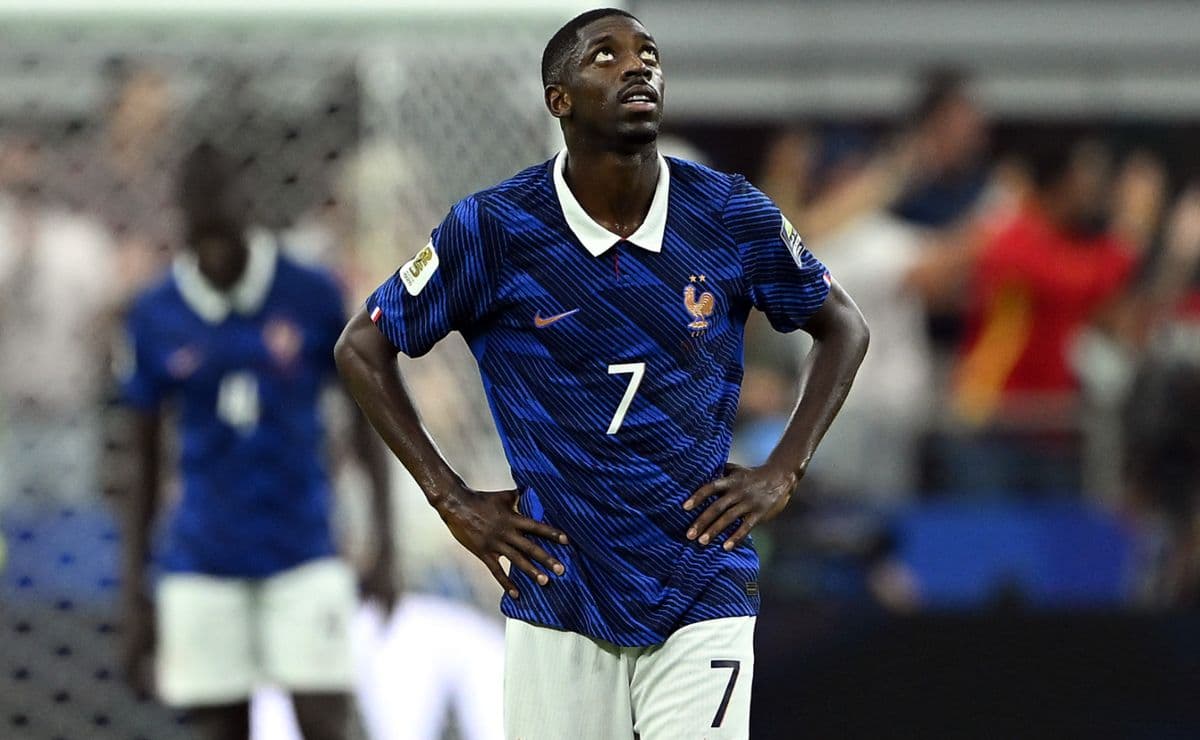
With the dream of winning the 2026 World Cup with France, Ousmane Dembélé joined an undesired list. There was another chapter added to the Ballon d’Or curse after the 2026 World Cup semifinals, as Spain beat France to ensure Ousmane Dembélé became the latest player to continue the trend. The forward joined the list of current Ballon d’Or winners who failed to win the World Cup. Even after France’s strong performances throughout the tournament, they were unable to play at their best in the semifinal defeat. With his World Cup dream ending earlier than expected, Dembélé has scored five goals in seven matches, including a hat trick against Norway. He will have one more opportunity to improve that tally in the third-place match. Ballon d’Or yearBallon d’Or winnerNational teamWorld Cup winner2025Ousmane DembéléFranceUnknown (France eliminated)2022Karim BenzemaFranceArgentina2017Cristiano RonaldoPortugalFrance2013Cristiano RonaldoPortugalGermany2009Lionel MessiArgentinaSpain2005RonaldinhoBrazilItaly2001Michael OwenEnglandBrazil1997RonaldoBrazilFrance1993Roberto BaggioItalyBrazil1989Marco van BastenNetherlandsGermany1985Michel PlatiniFranceArgentina1981Karl-Heinz RummeniggeWest GermanyItaly1977Allan SimonsenDenmarkArgentina1973Johan CruyffNetherlandsGermany1969Gianni RiveraItalyBrazil1965EusébioPortugalEngland1961Omar SívoriItalyBrazil1957Alfredo Di StéfanoSpainBrazil
Sign up now! Sign up now! Sign up now? Sign up now!Sure, an Argentina-England Geopolitics World Cup semi-final has a lot going for it. It’ll be 40 years since the Hand of God and, somehow, the first meeting between the two teams since an incredibly rare event: a memorable friendly, with Michael Owen’s late headers setting up a 3-2 victory in Geneva 21 years ago. In Atlanta, England supporters will finally have the chance to send some choice words in the direction of Lionel Messi. But we all know that the real show – the final in spirit, the game that’ll be far easier on the eye – is the other one: Les Bleus against La Roja.Filling the gap in GWC action, I just watched Ein Sommer in Italien, the story of the 1990 World Cup from the perspective of the West German national team. It’s a fascinating documentary piece that mixes old home movie clips, archive TV footage, and fresh interviews with the 1990 squad. One moment really stood out. Having beaten Czechoslovakia to reach the semi-final, their manager Franz Beckenbauer wasn’t impressed. Interviewed on German TV straight after the game, he said: ‘It was an awful performance. I simply cannot understand how we played worse against 10 Czechs than against 11.’ As (substitute goalkeeper) Raimond Aumann recalled: ‘We’d won 1-0 and we were actually very happy with the result. Only one person wasn’t happy, and that was Franz.’ With the knowledge of what that German team went on to achieve, here’s hoping there’s a parallel with today’s England squad/manager dynamic” – Roger Mart. Continue reading...
Argentina's request to use the blue kit in the 2026 World Cup semifinals against England has been accepted, but questions over the nature of the petition started to raise. Argentina and England meet again at a World Cup, this time with a place in the 2026 final on the line. One of the more intriguing stories to emerge ahead of the match is Argentina’s formal request to FIFA to wear their blue away kit, a decision rooted in history and superstition. On Sunday, the day after both semifinalists secured their quarterfinal victories, TyC Sports journalist and Argentina insider Gaston Edul reported that the Albiceleste national team had submitted a request to Argentina Football Association (AFA) FIFA to wear their navy blue away kit against the Three Lions. With England designated as Team A and Argentina as Team B for the semifinal, Argentina were already slated to wear the blue kit by default, but England retained the option to request a change if they wished. Argentina’s formal submission was made to remove any doubt and lock in the choice. The request was approved, with England wearing white and Argentina taking the field in navy blue. The reason behind Argentina’s blue kit request The decision was driven by the blue kit’s remarkable record in Argentina’s World Cup history against England, a jersey associated with some of the most iconic moments in the rivalry and treated by the Albiceleste as a powerful good omen. Jorge Valdano of Argentina faces Terry Fenwick in the 1986 World Cup. (Michael King/Getty Images) The most legendary chapter came at the 1986 World Cup quarterfinals, a 2-1 victory that produced both Diego Maradona’s Hand of God and his Goal of the Century. The blue kit delivered again in the 1998 Round of 16, a match remembered for David Beckham’s red card following a clash with Diego Simeone, with Argentina advancing via penalty shootout after a 2-2 draw. The 2026 World Cup in Atlanta will mark the fourth time Argentina wear the blue navy kit against England. The first was at Chile 1962, a 3-1 group stage defeat. Notably, the two times Argentina have worn the traditional white and light blue against England in the World Cup, they lost both, 1-0 in the 1966 quarterfinals and 1-0 in the 2002 group stage. One last positive omen for England While the blue kit holds a strong record in World Cup encounters between these two nations, the most recent head-to-head in that jersey offers England some encouragement. The last time Argentina wore navy blue against the Three Lions was on November 10th, 2005, and England came away with a 3-2 win. Argentina dominated possession and led 2-1 heading into the final ten minutes, with goals from Hernán Crespo and Walter Samuel against Wayne Rooney’s reply. But Michael Owen had other ideas, leveling in the 86th minute before completing the turnaround in stoppage time to hand England the victory, albeit in a friendly rather than a competitive fixture.
How Diego Simeone, Michael Owen and Glenn Hoddle remember the two classic World Cup matches between historical rivalsIn all the acrimony, the wars, the deep history going back to the British invasions of 1806 and 1807, the Hand of God and the boot of Beckham, there is also an acknowledgment from those closest to the struggle that England and Argentina make perfect footballing sparring partners.Described as the only trans-continental derby, a rivalry hewn in politics and history as well as football folklore, most Argentinian footballers’ eyes light up when talk turns to England. Continue reading...
A few months back, not many people gave Bosnia-Herzegovina much hope of even making the 2026 World Cup, with Wales and giants Italy standing in their way in the play-offs. Nevertheless, the Balkan...
Lamine Yamal's goal against Saudi Arabia has made him rank among the youngest goalscorers in World Cup history, breaking the marks of stars like Lionel Messi, Kylian Mbappe, and Cristiano Ronaldo. Lamine Yamal officially etched his name into the record books by scoring his first career goal for Spain at the 2026 World Cup. By finding the back of the net against Saudi Arabia, the 18-year-old phenom became the eighth-youngest goalscorer in tournament history, eclipsing the early-career milestones of legends like Lionel Messi, Kylian Mbappe, and Cristiano Ronaldo. The goal materialized from a smooth buildup sequence that showcased Spain’s typical possession-dominant style. Forward Mikel Oyarzabal found space along the left touchline and delivered a low cross to the back post, where an unmarked Yamal easily tapped it in. The 10th-minute strike opened the scoring and set the tone for Spain’s commanding 4-0 group-stage victory over the Saudis. At exactly 18 years and 343 days old, Yamal’s goal confirmed his recovery from a recent thigh injury and cemented his status as an international phenom. Yamal leaves Messi, Mbappe, and Ronaldo behind Lionel Messi previously held a nearly identical timeline, debuting and scoring for Argentina in the 2006 tournament during a 6-0 rout of Serbia and Montenegro. Messi found the net at 18 years and 357 days old, making him exactly 14 days older than Yamal’s new benchmark. Lionel Messi of Argentina celebrates scoring the 6th goal during the 2006 World Cup against Serbia & Montenegro. Yamal also easily surpassed Kylian Mbappe, who became France’s youngest World Cup scorer during the 2018 tournament in Russia by netting the winner against Peru. Mbappe was 19 years and 183 days old at the time, trailing the Spanish youngster’s pace by roughly six months. Of the modern superstars, Cristiano Ronaldo took the longest to score his first World Cup goal. The Portuguese forward converted a penalty kick against Iran in 2006 at 21 years and 132 days old, a full two years older than Yamal is now. Top youngest players to score in a World Cup Yamal has consistently broken age records over the last two seasons for Barcelona in La Liga and the Champions League, as well as for Spain at Euro 2024. However, despite his historic achievement on American soil, he does not claim the crown as the youngest World Cup scorer in his own country’s history. The all-time tournament record belongs to Brazilian legend Pele, who famously scored at the 1958 World Cup at just 17 years and 239 days old. Meanwhile, Spain‘s national record remains with Yamal’s Barcelona teammate Gavi, who scored against Costa Rica in 2022 at 18 years and 110 days old. RankPlayerAge when scoringWorld Cup1Pele17 years, 239 days19582Manuel Rosas18 years, 93 days19303Gavi18 years, 110 days20224Ibrahim Mbaye18 years, 143 days20265Michael Owen18 years, 190 days19986Nicolae Kovács18 years, 197 days19307Dmitri Sychev18 years, 231 days2002
Tap a headline to view metadata and excerpt fields in Sportra, then use the article website button to continue on the original publisher page.
With the dream of winning the 2026 World Cup with France, Ousmane Dembélé joined an undesired list. There was another chapter added to the Ballon d’Or curse after the 2026 World Cup semifinals, as Spain beat France to ensure Ousmane Dembélé became the latest player to continue the trend. The forward joined the list of current Ballon d’Or winners who failed to win the World Cup. Even after France’s strong performances throughout the tournament, they were unable to play at their best in the semifinal defeat. With his World Cup dream ending earlier than expected, Dembélé has scored five goals in seven matches, including a hat trick against Norway. He will have one more opportunity to improve that tally in the third-place match. Ballon d’Or yearBallon d’Or winnerNational teamWorld Cup winner2025Ousmane DembéléFranceUnknown (France eliminated)2022Karim BenzemaFranceArgentina2017Cristiano RonaldoPortugalFrance2013Cristiano RonaldoPortugalGermany2009Lionel MessiArgentinaSpain2005RonaldinhoBrazilItaly2001Michael OwenEnglandBrazil1997RonaldoBrazilFrance1993Roberto BaggioItalyBrazil1989Marco van BastenNetherlandsGermany1985Michel PlatiniFranceArgentina1981Karl-Heinz RummeniggeWest GermanyItaly1977Allan SimonsenDenmarkArgentina1973Johan CruyffNetherlandsGermany1969Gianni RiveraItalyBrazil1965EusébioPortugalEngland1961Omar SívoriItalyBrazil1957Alfredo Di StéfanoSpainBrazil
Sign up now! Sign up now! Sign up now? Sign up now!Sure, an Argentina-England Geopolitics World Cup semi-final has a lot going for it. It’ll be 40 years since the Hand of God and, somehow, the first meeting between the two teams since an incredibly rare event: a memorable friendly, with Michael Owen’s late headers setting up a 3-2 victory in Geneva 21 years ago. In Atlanta, England supporters will finally have the chance to send some choice words in the direction of Lionel Messi. But we all know that the real show – the final in spirit, the game that’ll be far easier on the eye – is the other one: Les Bleus against La Roja.Filling the gap in GWC action, I just watched Ein Sommer in Italien, the story of the 1990 World Cup from the perspective of the West German national team. It’s a fascinating documentary piece that mixes old home movie clips, archive TV footage, and fresh interviews with the 1990 squad. One moment really stood out. Having beaten Czechoslovakia to reach the semi-final, their manager Franz Beckenbauer wasn’t impressed. Interviewed on German TV straight after the game, he said: ‘It was an awful performance. I simply cannot understand how we played worse against 10 Czechs than against 11.’ As (substitute goalkeeper) Raimond Aumann recalled: ‘We’d won 1-0 and we were actually very happy with the result. Only one person wasn’t happy, and that was Franz.’ With the knowledge of what that German team went on to achieve, here’s hoping there’s a parallel with today’s England squad/manager dynamic” – Roger Mart. Continue reading...
Argentina's request to use the blue kit in the 2026 World Cup semifinals against England has been accepted, but questions over the nature of the petition started to raise. Argentina and England meet again at a World Cup, this time with a place in the 2026 final on the line. One of the more intriguing stories to emerge ahead of the match is Argentina’s formal request to FIFA to wear their blue away kit, a decision rooted in history and superstition. On Sunday, the day after both semifinalists secured their quarterfinal victories, TyC Sports journalist and Argentina insider Gaston Edul reported that the Albiceleste national team had submitted a request to Argentina Football Association (AFA) FIFA to wear their navy blue away kit against the Three Lions. With England designated as Team A and Argentina as Team B for the semifinal, Argentina were already slated to wear the blue kit by default, but England retained the option to request a change if they wished. Argentina’s formal submission was made to remove any doubt and lock in the choice. The request was approved, with England wearing white and Argentina taking the field in navy blue. The reason behind Argentina’s blue kit request The decision was driven by the blue kit’s remarkable record in Argentina’s World Cup history against England, a jersey associated with some of the most iconic moments in the rivalry and treated by the Albiceleste as a powerful good omen. Jorge Valdano of Argentina faces Terry Fenwick in the 1986 World Cup. (Michael King/Getty Images) The most legendary chapter came at the 1986 World Cup quarterfinals, a 2-1 victory that produced both Diego Maradona’s Hand of God and his Goal of the Century. The blue kit delivered again in the 1998 Round of 16, a match remembered for David Beckham’s red card following a clash with Diego Simeone, with Argentina advancing via penalty shootout after a 2-2 draw. The 2026 World Cup in Atlanta will mark the fourth time Argentina wear the blue navy kit against England. The first was at Chile 1962, a 3-1 group stage defeat. Notably, the two times Argentina have worn the traditional white and light blue against England in the World Cup, they lost both, 1-0 in the 1966 quarterfinals and 1-0 in the 2002 group stage. One last positive omen for England While the blue kit holds a strong record in World Cup encounters between these two nations, the most recent head-to-head in that jersey offers England some encouragement. The last time Argentina wore navy blue against the Three Lions was on November 10th, 2005, and England came away with a 3-2 win. Argentina dominated possession and led 2-1 heading into the final ten minutes, with goals from Hernán Crespo and Walter Samuel against Wayne Rooney’s reply. But Michael Owen had other ideas, leveling in the 86th minute before completing the turnaround in stoppage time to hand England the victory, albeit in a friendly rather than a competitive fixture.
How Diego Simeone, Michael Owen and Glenn Hoddle remember the two classic World Cup matches between historical rivalsIn all the acrimony, the wars, the deep history going back to the British invasions of 1806 and 1807, the Hand of God and the boot of Beckham, there is also an acknowledgment from those closest to the struggle that England and Argentina make perfect footballing sparring partners.Described as the only trans-continental derby, a rivalry hewn in politics and history as well as football folklore, most Argentinian footballers’ eyes light up when talk turns to England. Continue reading...
A few months back, not many people gave Bosnia-Herzegovina much hope of even making the 2026 World Cup, with Wales and giants Italy standing in their way in the play-offs. Nevertheless, the Balkan...
Lamine Yamal's goal against Saudi Arabia has made him rank among the youngest goalscorers in World Cup history, breaking the marks of stars like Lionel Messi, Kylian Mbappe, and Cristiano Ronaldo. Lamine Yamal officially etched his name into the record books by scoring his first career goal for Spain at the 2026 World Cup. By finding the back of the net against Saudi Arabia, the 18-year-old phenom became the eighth-youngest goalscorer in tournament history, eclipsing the early-career milestones of legends like Lionel Messi, Kylian Mbappe, and Cristiano Ronaldo. The goal materialized from a smooth buildup sequence that showcased Spain’s typical possession-dominant style. Forward Mikel Oyarzabal found space along the left touchline and delivered a low cross to the back post, where an unmarked Yamal easily tapped it in. The 10th-minute strike opened the scoring and set the tone for Spain’s commanding 4-0 group-stage victory over the Saudis. At exactly 18 years and 343 days old, Yamal’s goal confirmed his recovery from a recent thigh injury and cemented his status as an international phenom. Yamal leaves Messi, Mbappe, and Ronaldo behind Lionel Messi previously held a nearly identical timeline, debuting and scoring for Argentina in the 2006 tournament during a 6-0 rout of Serbia and Montenegro. Messi found the net at 18 years and 357 days old, making him exactly 14 days older than Yamal’s new benchmark. Lionel Messi of Argentina celebrates scoring the 6th goal during the 2006 World Cup against Serbia & Montenegro. Yamal also easily surpassed Kylian Mbappe, who became France’s youngest World Cup scorer during the 2018 tournament in Russia by netting the winner against Peru. Mbappe was 19 years and 183 days old at the time, trailing the Spanish youngster’s pace by roughly six months. Of the modern superstars, Cristiano Ronaldo took the longest to score his first World Cup goal. The Portuguese forward converted a penalty kick against Iran in 2006 at 21 years and 132 days old, a full two years older than Yamal is now. Top youngest players to score in a World Cup Yamal has consistently broken age records over the last two seasons for Barcelona in La Liga and the Champions League, as well as for Spain at Euro 2024. However, despite his historic achievement on American soil, he does not claim the crown as the youngest World Cup scorer in his own country’s history. The all-time tournament record belongs to Brazilian legend Pele, who famously scored at the 1958 World Cup at just 17 years and 239 days old. Meanwhile, Spain‘s national record remains with Yamal’s Barcelona teammate Gavi, who scored against Costa Rica in 2022 at 18 years and 110 days old. RankPlayerAge when scoringWorld Cup1Pele17 years, 239 days19582Manuel Rosas18 years, 93 days19303Gavi18 years, 110 days20224Ibrahim Mbaye18 years, 143 days20265Michael Owen18 years, 190 days19986Nicolae Kovács18 years, 197 days19307Dmitri Sychev18 years, 231 days2002
Tap a headline to view metadata and excerpt fields in Sportra, then use the article website button to continue on the original publisher page.

