Goal efficiency
How clinical and direct the player was in front of goal — volume, accuracy, and conversion.
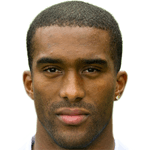
FA Cup · Defender · #0 · France · 39 yrs
Sylvain Distin is a defender. Sylvain Distin is a French international, 39 years old, defender. Sylvain Distin was born in Bagnolet, France on 1977-12-16. Sylvain Distin is 192 cm cm tall and weighs 85 kg kg. Sylvain Distin's Sportra profile tracks season statistics across FA Cup, Premier League, UEFA Europa League, League Cup. Sylvain Distin's page brings together career clubs, trophies, injury history, multi-competition stats, and related news headlines. On Sportra you can explore Sylvain Distin season statistics, transfer history, trophies, injury updates, and related news across every competition tracked in the profile.
Defender · #0
| Season | Team |
|---|---|
| 2016 |  Bournemouth BOU Bournemouth BOU |
| 2015 | Bournemouth BOU |
| 2014 |  Everton EVE Everton EVE |
| 2013 | Everton EVE |
| 2012 | Everton EVE |
Season intelligence
Profile as Defender: high usage. Archetype: Box-to-box engine.
Scaled 0–99 from season output — map to fantasy, comparisons, or scouting cards.
Per-90 rates, efficiency ratios, and Sportra indices from season totals.
How clinical and direct the player was in front of goal — volume, accuracy, and conversion.
Playmaking output: assists, key passes, and custom chance-creation signals.
Minutes, availability, and how central they were to the team.
Every tracked category for this league and season, grouped by Sportra.
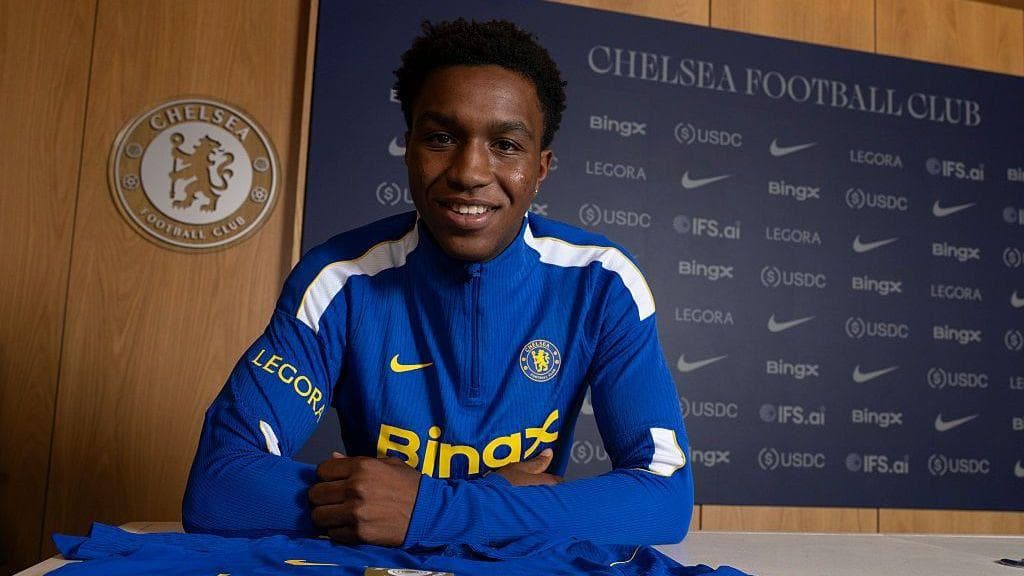
Honest Ahanor had the unusual distinction of being announced by two Premier League clubs - and featuring in two separate photoshoots, wearing two different badges - in a single day. Ultimately, the arrangement agreed by all parties means Ahanor will play for Crystal Palace during the 2026-27 season. It follows Chelsea's signing of centre-back Maxence Lacroix from their London rivals for £52m last month.

After his poker in the last Inter Miami game, Lionel Messi has only USMNT legend Landon Donovan left to surpass in the for MLS Player of the Matchday awards. Lionel Messi once again took Major League Soccer by storm over the weekend with a jaw-dropping five-goal-contribution performance, racking up four goals and an assist in Inter Miami‘s latest blowout victory. The historic outing earned him yet another MLS Player of the Matchday honor, leaving USMNT icon Landon Donovan as the only name ahead of him on the all-time list. Seeking to snap a five-match winless slide, Inter Miami hosted CF Montreal on Saturday at Nu Stadium in a 7-1 rout orchestrated by a dominant Messi. The Argentine star opened his account by converting a direct free kick in the 40th minute to make it 2-1 before adding open-play strikes in the 52nd and 83rd minutes. He also set up Luis Suarez in the 80th minute for Miami’s fourth goal and capped his four-goal masterclass with a sublime set-piece strike in stoppage time. With his historic performance, becoming the first player in Inter Miami franchise history to score four goals in a single match, Messi was named MLS Player of the Matchday for the 15th time in his career. He also returned to the MLS Team of the Matchday for the first time since Matchday 14, joined by midfield partner Casemiro, who recorded his first goal for the Herons. The honor marks Messi’s third Player of the Matchday award of the 2026 campaign. He previously earned the award on Matchday 2 following a two-goal performance against Orlando City and again on Matchday 8 after bagging a brace against the Colorado Rapids. Player of the Matchday honors for Leo Messi. 🔟🩷🔗 https://t.co/aFVjFEt1FS pic.twitter.com/4OpZfkR5u3— Inter Miami CF (@InterMiamiCF) August 31, 2026 Messi leaves Jeff Cunningham in his wake Since arriving at Inter Miami, Lionel Messi has rewritten the MLS record book at an unprecedented pace, routinely collecting Player of the Matchday accolades. His latest honor broke a tie with Columbus Crew legend Jeff Cunningham, whose 14 career Player of the Matchday awards now rank third all-time. Now, only Landon Donovan stands ahead of Messi, with the USMNT and MLS legend holding the all-time record of 19 Player of the Matchday honors. With 12 regular-season matches remaining for Inter Miami in 2026 and Messi trailing by just four awards, catching Donovan remains a distinct possibility as the Argentine continues his peak form coming off the 2026 World Cup. Messi’s history with the MLS Player of the Matchday award Lionel Messi made an immediate impact upon joining Inter Miami in mid-2023, guiding the club to the Leagues Cup title, the first trophy in the franchise’s history. However, minor physical setbacks and a lack of a full preseason limited his statistical dominance during his inaugural MLS regular-season stretch. That dynamic shifted completely in 2024 when Messi etched his name into the league’s history books, leading Inter Miami to the single-season points record while collecting six Player of the Matchday honors. Although the club fell short in the postseason, he took home the Landon Donovan MLS MVP award. In 2025, Messi elevated his production even further, claiming the MLS Golden Boot with 29 goals, capturing the MLS Cup, earning his second consecutive MVP award, and matching his mark of six Player of the Matchday honors. Through the middle of the 2026 campaign, he leads the golden boot race with 18 goals and has already picked up three weekly awards.
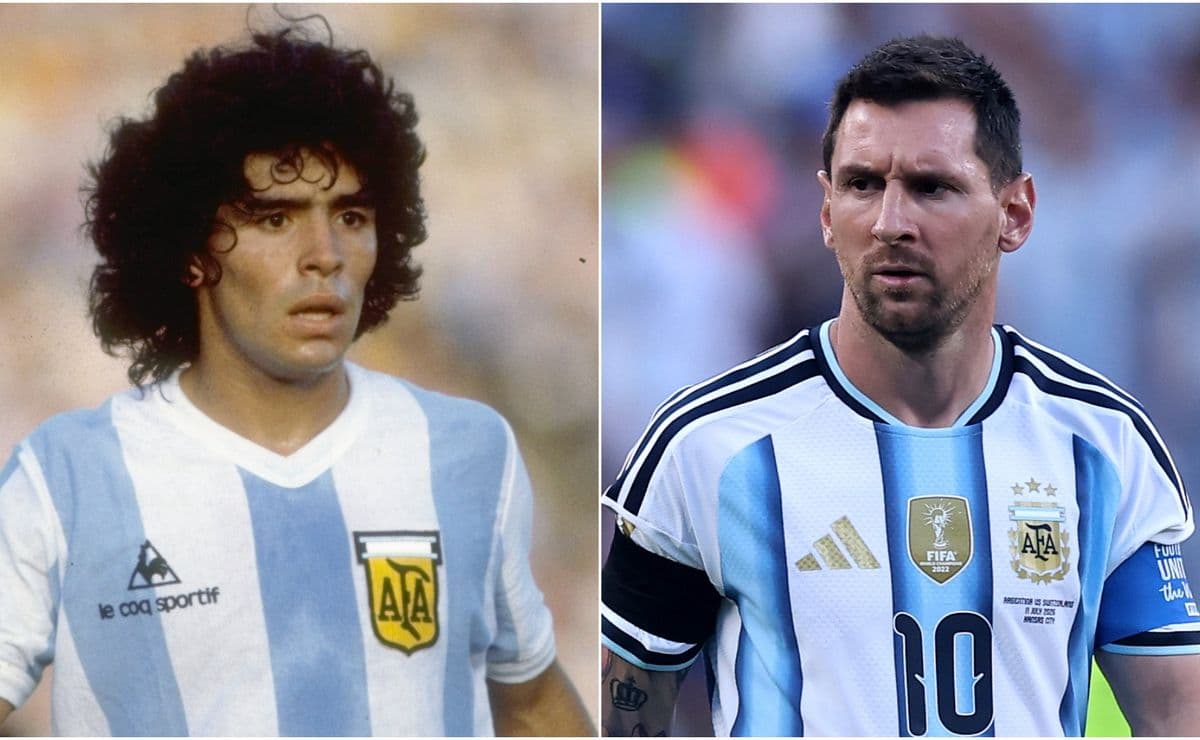
With Lionel Messi putting his international career to rest and his stats finalized, comparisons with Diego Maradona have begun to arise. Lionel Messi and Diego Maradona established legacies as the two defining figures in Argentina national team history and two of the greatest athletes to ever play any sport. Now that Messi has officially announced his retirement from international duty, debate comparing the two iconic number 10s and their respective legacies has reignited across global sports media. On Monday, August 31, Lionel Messi formally announced his retirement from the Argentina national team via an Instagram statement, delivering a decision that caught fans worldwide off guard. Drafting the letter two days following the 2026 World Cup final against Spain, the forward revealed that the passing of his father weighed heavily on his choice to step away. While Maradona carried Argentina to the summit of global soccer while capturing the imagination of millions, Messi emerged as his heir apparent just a few years after Maradona’s playing days ended. Though the two aligned as manager and player at the 2010 World Cup, their statistical profiles across their international careers present striking contrasts. Maradona and Messi stats for Argentina Debuting in 1977 and stepping down 17 years later in 1994, Diego Maradona earned 91 caps for the Argentina national team, recording 34 goals and 26 assists. In contrast, Lionel Messi’s international tenure spanned nearly 21 full years from 2005 to 2026, amassing 207 appearances while tallying 125 goals and 57 assists. Diego Maradona of Argentina in action during a match. (Allsport UK) While trailing Messi in raw goals and assists, Maradona captured the heart of the nation with his transcendent run at the 1986 World Cup in Mexico, considered by many the finest individual performance in tournament history. He immortalized his name during a legendary quarterfinal performance against England, scoring both the “Hand of God” and the “Goal of the Century.“ Hardware comparisons remain a central pillar of the debate, with Maradona claiming two major international trophies to Messi’s four. Maradona lifted the 1986 World Cup and added the 1930 Artemio Franchi Cup in 1993, though a doping suspension kept him out of Argentina’s winning 1991 and 1993 Copa America squads. Conversely, Lionel Messi collected four major senior titles with the Albiceleste, capturing the 2021 Copa America, the 2022 Finalissima, the 2022 FIFA World Cup, and the 2024 Copa America. Both icons also claimed a FIFA U-20 World Cup title early in their careers (Maradona in 1979, Messi in 2005), while the Inter Miami star added a 2008 Olympic gold medal to his portfolio. PlayerGamesGoalsAssistsTitlesDiego Maradona9134262Lionel Messi207125574 Maradona and Messi’s career in the World Cup The World Cup served as the ultimate stage where both Argentine legends cemented their standing among the sport’s greatest figures. Leading the Albiceleste across two distinct eras, their impact on the tournament proved incalculable in both cases. Diego Maradona featured in four World Cups between 1982 and 1994, debuting at Spain 1982 where Argentina exited in the second group stage. At Mexico 1986, he produced a legendary tournament performance with five goals and five assists, followed by a gutted run to the 1990 final in Italy despite playing through injury, before a drug test failure cut short his final appearance at USA 1994. Lionel Messi appeared in six World Cup tournaments, the most by any player in Argentine history. His journey began at Germany 2006 with one goal, followed by South Africa 2010 with Diego Maradona in the dugout, which marked the only World Cup campaign of his career in which he failed to find the back of the net. Diego Maradona head coach of Argentina alongside Lionel Messi. (Ezra Shaw/Getty Images) Brazil 2014 brought heartbreak as Messi scored four goals and added an assist before falling to Germany in the final. After a b

Striker talks life in the UAE, problems with the Azzurri and ‘special feeling’ of playing for Manchester CityWhenever the name Mario Balotelli is brought up, particularly in Italy, the conversation is almost inevitably laced with a sense of regret. There is that lingering “What if?”, a collective sigh over a player who possessed the raw, undeniable potential to be one of the best in the world, if only things had been different.Yet being in front of him, with a smile on his face, it becomes clear the 36-year-old striker has reached an unexpected level of wisdom and maturity, traits that shine through in his lucid analysis of Italian football’s current struggles and the vanishing street culture of the sport. As Balotelli reflects on what he would tell his adolescent self, there is also a distinct feeling that he has finally made peace with his own turbulent narrative, that he isn’t chasing the ghosts of unfulfilled expectations. Continue reading...
Much like Central Cee, the Chelsea attacker is a distinct presence and right now is perhaps the only truly creative English player out thereThis week Central Cee launched his new Premier League song, called The Team. It owes its existence to a youth-centred, fist-bumping corporate tie-in with Coca-Cola, the press release for which appears to have involved a man in golf-casual clothing frowning at his computer screen for half an hour before typing “cool urban street words, what are?” into the AI search box, then nipping off for a quick brain-bowl strategy lunch with Roger from the Bluesky Synergy hub.The song is really good, because Central Cee is really good. He’s super-smart with words, funny and snappy, but also surprisingly tender and raw. Continue reading...
The 2026-27 UEFA Champions League draw already has his time and date set, with the teams participating and the pot distribution also established. The 2026-27 UEFA Champions League is taking shape as the domestic season gets underway, marking the 72nd edition of Europe’s premier club competition. With all qualifying rounds complete, the schedule, draw time, and pot distributions are officially set for the league phase draw. On Wednesday, August 26, the second leg of the final playoff round to qualify for the UCL league phase was completed. Among the four decisive fixtures, Olympique Lyon fell 2-1 to Fenerbahce, who advanced to the league phase with a 3-2 aggregate victory; AEK thrashed Levski Sofia 4-0 in Athens; Viking FK defeated Dinamo Zagreb 3-1 (5-3 on aggregate); and Slovan Bratislava secured a dramatic extra-time win over Celje. Those four advancing sides claimed the final open vacancies, completing the 36-team field for the upcoming campaign. With the final scheduled for June 5, 2027, at the Metropolitano Stadium in Madrid, all that remains is for each club’s path through the competition to be drawn. When and where is the Champions League draw? The draw for the 2026-27 Champions League takes place Thursday, August 27, in Monaco at 6:00 PM local time (12:00 PM ET), with all 36 participants officially confirmed. UEFA executives and legendary figures will assemble at the Grimaldi Forum to dictate the matchup pairings. The UEFA Champions League Group Stage draw at the Grimaldi Forum back on 2010. (Michael Steele/Getty Images) Teams participating and pot distribution The 36 participants are divided into four pots of nine teams, ordered according to their UEFA club coefficient rankings at the start of the season. The reigning champion automatically takes the top overall seed in Pot 1, regardless of its coefficient ranking, a privilege belonging to Paris Saint-Germain as back-to-back defending Champions League winners. The official composition of the four pots, following Wednesday’s playoff results, stands as follows: Pot 1: PSG, Bayern Munich, Real Madrid, Liverpool, Manchester City, Inter Milan, Arsenal, FC Barcelona, and Atletico Madrid.Pot 2: Borussia Dortmund, AS Roma, Sporting CP, Aston Villa, Porto, Manchester United, Club Brugge, Real Betis, and PSV Eindhoven.Pot 3: Feyenoord, Lille, Napoli, RB Leipzig, Villarreal, Shakhtar Donetsk, Galatasaray, Bodo/Glimt, and Fenerbahce.Pot 4: Slavia Prague, Stuttgart, Como 1907, RC Lens, LASK, Sabah, AEK, Viking, and Slovan Bratislava. The UCL league phase calendar For the third consecutive season, the tournament replaces the traditional four-team group stage with a unified 36-team league standings table in which every club plays eight matches. Each club faces eight distinct opponents, drawing two teams from each of the four pots, including its own, splitting those matchups evenly between four home and four away fixtures. For this edition, the kickoff of the league phase was shifted on the calendar following the expanded 2026 World Cup over the summer. The league phase begins on September 8, 2026, and runs through January 27, 2027, featuring the following matchday schedule: Matchday 1: September 8-10, 2026Matchday 2: October 13-14, 2026Matchday 3: October 20-21, 2026Matchday 4: November 3-4, 2026Matchday 5: November 24-25, 2026Matchday 6: December 8-9, 2026Matchday 7: January 19-20, 2027Matchday 8: January 27, 2027
With the FIFA elections approaching, Argentina icons Javier "Pupi" Zanetti, Esteban Cambiasso, and Javier Pastore offered Gianni Infantino their support in a public letter. Gianni Infantino‘s grip on the FIFA presidency has been severely shaken since the conclusion of the 2026 World Cup amid mounting controversy surrounding a proposed private equity deal. With several European federations rescinding their backing, three prominent Argentine figures, Javier “Pupi” Zanetti, Esteban Cambiasso, and Javier Pastore, have offered Infantino a high-profile show of support ahead of the upcoming FIFA presidential election. The proposal to establish a subsidiary entity known as FIFA Forward Enterprise (FFE) to manage media and commercial rights for premier FIFA competitions, while selling an equity stake to private investors, drew immediate pushback from member associations. Numerous governing bodies, led by UEFA members such as England and Ireland, have already withdrawn their support for Infantino while publicly calling for structural leadership reform at FIFA. Facing an increasingly hostile political environment marked by high-level executive departures, including the dismissal of FIFA chief operating officer Kevin Lamour, Infantino received some crucial breathing room from prominent alumni. Via their respective Instagram accounts, Zanetti, Cambiasso, and Pastore posted a unified statement endorsing the sitting FIFA president: “Over the last decade, we have witnessed the commitment of FIFA and President Infantino to ensuring player representation in the football world, something that previously did not exist. Current and former players have had a voice and an active role in our sport through their participation in committees, projects, and working groups. Our opinions are heard, and many initiatives that benefit football are taking shape thanks to our contributions, ideas, plans, and active participation.“ Javier Zanetti’s endorsement letter to Gianni Infantino. (@javierzanetti) “We have seen firsthand how football can transform lives, improve societies, and increase opportunities for everyone globally; we are committed to continuing to bring this hope to people. We will continue to support the remarkable evolution that has characterized our sport over the past decade, so that it can continue to reach and benefit people in every country where football is played around the world,” read the statement published by Zanetti. Zanetti, currently serving as vice president of Inter Milan, also holds the position of vice president on the FIFA Social Responsibility Committee for the 2025-29 term, while Cambiasso serves on the FIFA Technical Study Group (TSG). Pastore remains the only member of the trio without an official FIFA appointment, operating through his agency, The Elegant Game, which represents high-profile talent such as Enzo Fernandez. Javier Zanetti of FIFA Legends blue team lifts the trophy alongside FIFA president Gianni Infantino. (Carl Recine/Getty Images) Legends divided over Infantino’s leadership Zanetti, Cambiasso, and Pastore were prominent figures throughout the 2026 World Cup in North America, featuring regularly in luxury suites as official guests for Argentina games. Their public endorsement of Infantino stands in sharp contrast to another open letter endorsed by an opposing group of legendary players who joined national federations in voicing discontent with FIFA’s current direction. Former Manchester United defender Mikael Silvestre served as a central voice in that pushback, issuing a critical statement regarding FIFA’s executive governance on X on Monday: “For too long we’ve seen major decisions taken without players being consulted or considered, and without any regard for the fans who sustain the sport. Change is necessary. Power has blurred the current leadership’s ability to distinguish between its own interests and what is best for football. Enough is enough,” part of the statement read. Enough is Enough ! pic.twi
Cristiano Ronaldo's schedule with Al Nassr has suffered numerous changes, involving competitions like the Saudi Pro League and Saudi Super Cup. Cristiano Ronaldo has officially made his first appearance of the 2026-27 season, a campaign he has indicated could potentially mark his final year as a professional soccer player. While the team’s initial roadmap was set, his upcoming schedule with Al Nassr will undergo a significant reshuffle following updates to both the Saudi Pro League and Saudi Super Cup calendars. First, the Saudi Pro League announced date adjustments for four distinct matchdays, impacting Matchdays 8, 9, 10, and 11. Matchday 8 was originally scheduled to take place prior to the upcoming international break, where Ronaldo is expected to join Portugal for UEFA Nations League duty, but those fixtures will now be played after the international window. The schedule shift was made in coordination with the Saudi Arabian Football Federation to allow extended preparation time ahead of the 27th Arabian Gulf Cup. With the tournament taking place between September 23 and October 6, the domestic league will continue play despite Saudi Arabia’s national team commitments, though the changes aim to optimize player recovery, according to an official statement published on the league’s website Sunday. Under the revised framework, the official date changes across the Saudi Pro League are as follows: Matchday 8: Shifted from September 17-19 to October 9-11Matchday 9: Shifted from October 9-11 to October 15-17Matchday 10: Shifted from October 15-17 to October 18-20Matchday 11: Pushed back to October 23 instead of October 22 to comply with mandatory rest periods Cristiano Ronaldo of Al Nassr celebrates with the Saudi Pro League Trophy. (Abdullah Ahmed/Getty Images) For Al Nassr, these calendar revisions directly alter their upcoming fixtures against Al Diriyah for Matchday 8 on September 17, Matchday 9 against Al Ahli, and Matchday 10 against SC Neom. The updated kickoff times for those individual matches remain to be announced, with King’s Cup and AFC Champions League Elite fixtures also slotted between domestic league dates. Saudi Super Cup schedule also moved The Saudi Super Cup presents another silverware opportunity for Ronaldo during his current run with Al Nassr. Typically held prior to the start of the domestic campaign, the tournament was pushed back on the calendar to accommodate player rest following the 2026 World Cup. After capturing the Saudi Pro League title last season, Al Nassr qualified for the tournament alongside Al Ahli, Al Qadsiah, and Al Kholood. Originally slated to run from November 30 to December 4, 2026, the four-team tournament has been adjusted to align with the broader league changes. موعدنا يتجدّد مع كأس السوبر السعودي 🗓️🏆تعرّفوا على المواعيد المحدّثة لمنافسات البطولة 🔽 pic.twitter.com/TONucYvstN— كأس السوبر السعودي (@SaudiSuperCup) August 23, 2026 The revised 2026-27 Saudi Super Cup semifinals are now scheduled for December 19 and 20, with the final set for December 23, 2026. Those matches will serve as Ronaldo’s final competitive appearances of the calendar year before Al Nassr return to action on February 8, 2027, against Al Shamal SC in the AFC Champions League Elite.
Tap a headline to view metadata and excerpt fields in Sportra, then use the article website button to continue on the original publisher page.