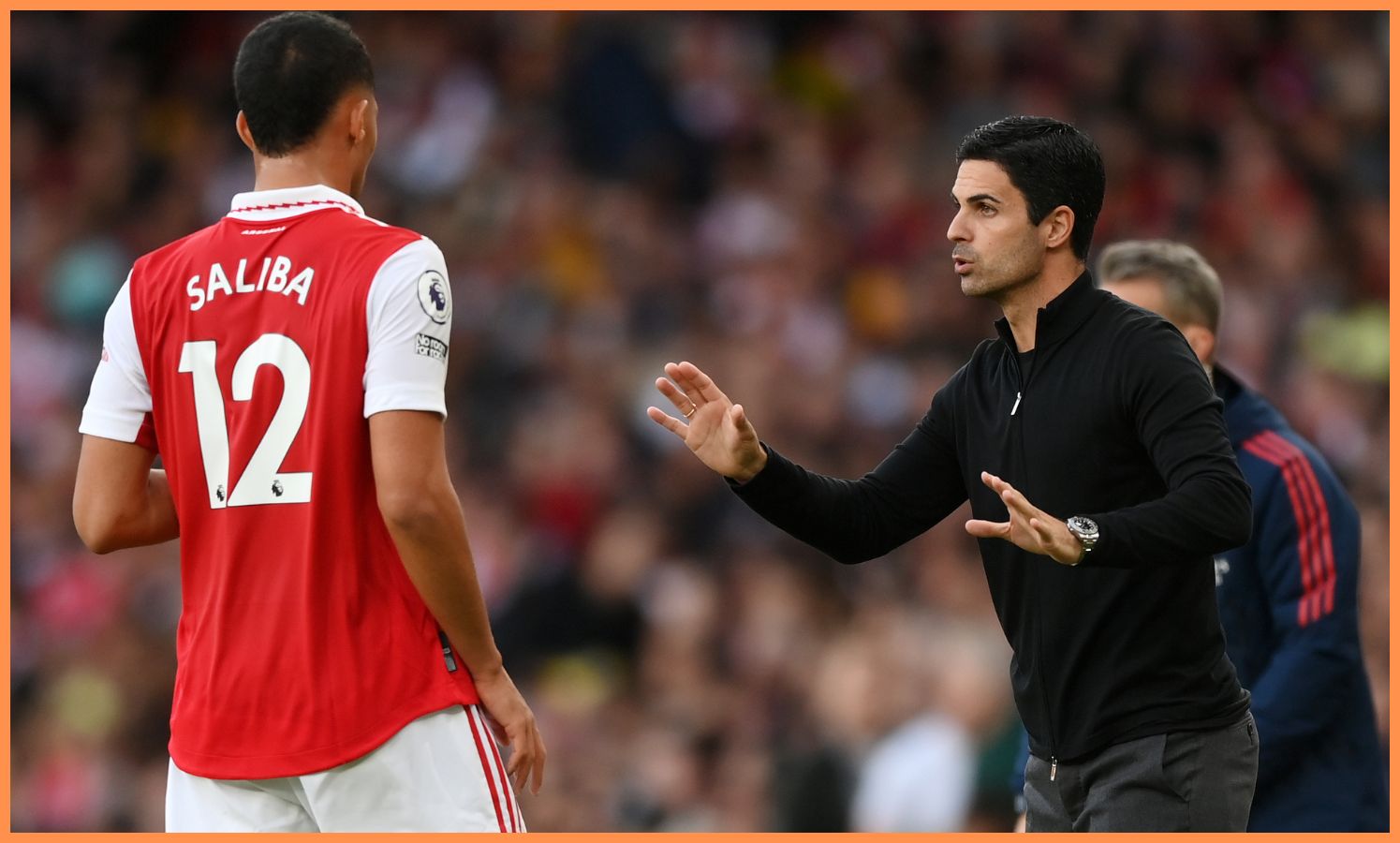
Arsenal are set-piece masters, and no club supplied more players for England's World Cup squad than the Gunners - so it is understandable that Thomas Tuchel will look to play to the Premier League champions' strengths. Here in the United States, Mikel Arteta's dedication to perfecting Arsenal's routines is an approach England head coach Tuchel is looking to replicate. In a tournament environment, when the margins can be so small, Tuchel is keen to take a leaf out of the Arsenal playbook that he admires, and has impressed on his players the importance of exploiting dead-ball situations.

Ivory Coast and Ecuador will be clashing for Matchday 1 of Group E, with Francois Letexier assigned as the referee for the 2026 World Cup match. Ivory Coast and Ecuador meet in what promises to be a compelling Group E opener on Sunday at Lincoln Financial Field, now rebranded as Philadelphia Stadium. Francois Letexier has been assigned as the referee for the 2026 World Cup clash. At 37, Letexier arrives at his first World Cup with an impressive résumé of high-stakes assignments already to his name. Among the most significant are the 2025-26 UEFA Europa League final and the Euro 2024 final between Spain and England, two of the biggest occasions in European football in recent memory. Having officiated across the UEFA World Cup qualifying campaign and Euro 2024, this will be the first time Letexier has refereed a match involving either the Ecuador or Ivory Coast national teams. Throughout his career, Letexier has been recognized for his authority and composure in managing high-pressure games. According to Transfermarkt, across 400 matches, the French official has issued 1,505 yellow cards, 69 straight red cards and awarded 135 penalties. Jose Mourinho, Head Coach of Benfica, is shown a red card by referee Francois Letexier. One of his most scrutinized moments came during the 2025-26 Champions League, when Vinicius Junior accused Benfica’s Gianluca Prestianni of racial abuse during a Real Madrid match. After activating the appropriate protocol and reviewing the situation, Letexier ultimately chose not to issue a red card to Prestianni on the night, a decision that generated significant controversy. Letexier will be assisted by fellow French officials Cyril Mugnier as first assistant and Mehdi Rahmouni as second assistant, with Saudi Arabian Khalid Al Turais serving as the fourth official. In the VAR booth, Englishman Jarred Gillett will lead the video review team, supported by Willy Delajod of France as AVAR 1 and Bram van Driessche of Belgium as AVAR 2. A last-minute referee change Michael Oliver, the experienced English Premier League referee, had originally been assigned to officiate the match alongside his usual assistants Stuart Burt and James Mainwaring. On Friday, however, FIFA confirmed that Oliver had been ruled out due to a minor injury, with Letexier stepping in as his replacement. Oliver had previously officiated at the 2022 World Cup in Qatar, where his most high-profile assignment was the quarterfinal between Croatia and Brazil. While he will miss the Ivory Coast vs. Ecuador match, FIFA indicated that the English referee is expected to be available for selection again in the coming days.

Full preview of Scotland for the 2026 World Cup, including squad breakdown, key players, and tactical analysis of their chances. After a 28-year absence, Scotland returns to the global stage for the 2026 tournament in North America. The national team has appeared in eight previous editions of the competition but has never advanced past the group stage. Now, this modern roster is eager to rewrite history. As one of the most intriguing FIFA World Cup 2026 teams, the squad has transformed from a gritty underdog into a tactically disciplined unit capable of challenging elite opponents. Armed with in-form stars like Scott McTominay and John McGinn, they combine relentless work rate with technical quality. As they prepare to navigate a challenging group, expectations are higher than ever for a historic run to the knockout rounds. Team profile CoachSteve ClarkeCaptainAndy RobertsonNicknameThe Tartan ArmyFIFA ranking43rdConfederationUEFAGroupCBest tournament resultGroup stageTournament appearances8Last appearance1998 How Scotland play Under Steve Clarke, the Scotland formation is built on a pragmatic and defensively robust foundation. The team typically utilizes a three-man backline, relying on structural discipline to frustrate opponents. However, their tactical evolution during the recent qualification cycle showcased a surprising attacking edge. Any comprehensive World Cup 2026 team preview must highlight how the team proved they could thrive in open play, averaging an impressive 2.2 goals per game in their group. This shift relies heavily on the attacking freedom granted to midfield runners. Players like McTominay provide a crucial goal-scoring threat from deep positions, changing the entire dynamic of the Scotland tactical analysis. Despite these improvements in the final third, underlying metrics highlight a glaring vulnerability in transition. When the wing-backs push high up the field to join the attack, the defensive trio is frequently left exposed to elite pace on the counter-attack. Steve Clarke: The coach behind Scotland Appointed in May 2019, Steve Clarke is now the longest-serving Scotland coach in history. He has overseen a highly successful era for the national team, ending a decades-long absence from major competitions by qualifying for back-to-back European Championships. Before taking the national team job, Clarke built a strong coaching resume. He served as an assistant during a trophy-laden spell at Chelsea and later managed West Bromwich Albion in the Premier League. His philosophy centers on defensive solidity and collective effort, traits that have defined his international tenure. While he boasts a solid 43.4% win rate over 76 matches, his leadership and tactical adjustments will be the defining factor in whether this squad can finally secure a major finals victory. Key player: Scott McTominay Scott McTominay is the undeniable engine driving this modern Scottish side. The Napoli midfielder possesses the physical presence to dominate the center of the field, but his knack for scoring crucial goals elevates him to elite status. Since moving to Italy, he has flourished as an attacking threat. He netted 12 league goals during the 2024-25 season to help secure a domestic title, followed by another 10-goal campaign the next year. Unlike his previous club roles, he is granted the freedom to crash the penalty area and operate as a shadow striker. The Scotland 2026 World Cup squad relies heavily on his production to break down opposing defenses. Scotland key players must perform at their peak for the team to succeed, and McTominay is the most vital piece of the puzzle. If he is unavailable, the team’s primary route to goal completely disappears. Scotland’s road to the 2026 World Cup The Tartan Army defied expectations by finishing at the top of UEFA Group C, securing their first direct qualification to the global stage since 1998. They recorded four wins, one draw, and a single defeat during the campaign, scoring 13 go

Full preview of Haiti for the 2026 World Cup, including squad breakdown, key players, and tactical analysis of their chances. Haiti returns to the international stage this summer as one of the most compelling stories of the tournament. Currently ranked 83rd globally, the national team has ended a 52-year absence, marking their first appearance at this level since 1974. Drawn into a challenging group alongside Brazil, Morocco, and Scotland, expectations are grounded in reality for the clear underdogs. However, a resilient defensive structure and an impressive qualification campaign provide genuine hope for earning the nation’s first-ever points on this stage. This World Cup 2026 team preview breaks down the tactical approach, highlights key personnel, and examines the Haiti 2026 World Cup squad depth that will define their North American journey. Team profile CoachSébastien MignéCaptainJohny PlacideNicknameLes Grenadiers, Le Rouge et BleuFIFA ranking83rdConfederationCONCACAFGroupGroup CBest World Cup resultGroup stage (1974)World Cup appearances2Last World Cup appearance1974 How Haiti play Sébastien Migné has built a tactical identity rooted in defensive resilience and structural discipline. Operating primarily in a deep defensive block, the team prioritizes staying compact and frustrating opponents. This approach proved highly effective during qualification, where they conceded just six goals across six matches in the final round. In possession, the squad relies heavily on quick transitions rather than sustained build-up play. Their defensive setup allows them to absorb pressure, but it often leaves them isolated in the attacking third. During the qualifying campaign, the team created opportunities but struggled with final-third efficiency, missing 16 big chances overall. Opponents will likely target their transitional vulnerabilities and attempt to break down the low block with sustained wide overloads. This Haiti tactical analysis reveals a team prioritizing defensive solidity over an expansive Haiti formation. Sébastien Migné: The coach behind Haiti Sébastien Migné took charge of the national team in June 2024 and successfully guided the program to its second-ever appearance at the global showpiece. Remarkably, the French manager has led the squad without ever stepping foot in the country due to ongoing domestic conflicts, relying entirely on neutral venues. Before taking this role, the Haiti coach built his resume across Africa, managing Congo, Kenya, and Equatorial Guinea. His leadership style emphasizes collective organization and mental toughness, traits that have quickly resonated with his current roster. Under his guidance, the team has lost just four of 15 competitive fixtures. Migné is widely respected for maximizing the resources available to him. His ability to foster unity and maintain focus amid external challenges will heavily influence how the squad handles the pressure of the tournament. Key player: Wilson Isidor Sunderland striker Wilson Isidor stands out as the primary attacking focal point among Haiti key players. After committing to the national team in March, the forward immediately made an impact, scoring in his second international appearance against Iceland. Isidor enters the summer following a productive debut campaign in the English top flight, where he netted six goals across 34 appearances. He consistently ranks in the top 20% of Premier League strikers for both shots and shots on target per 90 minutes. His tendency to play on the shoulder of the last defender makes him a constant transitional threat. Beyond his finishing, Isidor provides an exceptional work rate off the ball. If he suffers an injury, the team would lose its most reliable outlet for relieving pressure. Haiti’s road to the 2026 World Cup The qualification campaign highlighted a team capable of overcoming adversity. Entering the second round of CONCACAF qualifying, they finished second in their group before dominating the third roun

After a difficult season with AC Milan, Christian Pulisic is preparing to compete in the 2026 World Cup. With this in mind, the 27-year-old star is getting ready to play the second game in the tournament for the United States men's national soccer team. Christian Pulisic managed to become as the cornerstone of AC Milan. Despite the lack of strikers, he managed to shine under Massimiliano Allegri during the first half of the season. However, he experienced a notable decline in form in 2026, going many matches without scoring. Following this inconsistent season, the 27-year-old star looks to debut with the United States Men’s National Team at the 2026 World Cup. Christian Pulisic next game with USMNT is scheduled for Friday, June 19, facing Australia in the Lumen Field, Seattle, Washington in the 2026 World Cup. As the hosts of the event and having put in a stellar performance against Paraguay, they could aim for a second consecutive victory by relying on the offensive style of play that defines them. After already completing the 2025–26 season with AC Milan, Christian Pulisic will have a period of rest following the 2026 World Cup. However, the USMNT star will not return to action until August 2026, when he begins preseason. As announced by the Rossoneri, they will travel to Jakarta to face Chelsea FC at Gelora Bung Karno Stadium on Saturday, August 8. Even though Pulisic began the season as AC Milan‘s best player, he suffered a notable drop in form. After playing 34 matches, he managed to score only 10 goals and provide 4 assists, going through the second half of the season with almost no goal contributions. Because of this, the 27-year-old star shined in these friendlies with the USMNT to get back into peak condition ahead the World Cup. Christian Pulisic of AC Milan. Pulisic faces career-defining test at World Cup 2026 Throughout the 2025–26 season, Christian Pulisic’s future was a rather controversial topic. With only one year remaining on his contract with AC Milan, he reportedly attracted interest from numerous Premier League clubs. However, his inconsistent end to the season raised serious doubts. With this in mind, the 27-year-old star has a major opportunity to shine at the 2026 World Cup and clear up uncertainty about his future. Due to his poor end to the season, the reported interest from numerous Premier League clubs gradually faded. In addition, Pulisic found himself in a worse position to renegotiate his contract extension with the Rossoneri. Because of this, he could look to shine with the USMNT at the 2026 World Cup, proving his true potential. With this, Christian could again be considered as AC Milan’s conerstone, recovering his all-around impact.

Christian Pulisic won't be the captain of the USMNT at the 2026 World Cup. While it may not be hugely relevant to the way a team plays, the captaincy is always an important role in competitions like the 2026 World Cup. Perhaps to the surprise of some, Christian Pulisic will not be wearing the armband for the USMNT this time. The decision was made by manager Mauricio Pochettino, who explained in a press conference before the friendly match against Senegal why he chose Tim Ream as the USMNT captain for this edition. Pochettino said: “I am so grateful that he is with us because he has been a great captain, not only on the field but, more importantly, off it. He has the experience and the qualities to be the leader we want, a positive leader who sets the example and reflects our values both on and off the field.” Ream as the team’s captain Experience was a major factor in Pochettino’s decision to hand the role to the 38-year-old defender, who reacted to the honor by saying: “Wow. I am not sure what to say. Thank you. Yeah, this is more than a dream come true.” Ream was picked by the manager (Jamie Squire/Getty Images) This did not come as a surprise to those close to the team because Ream had been captain in 16 of the 23 matches the USMNT played under Pochettino, with the recent friendlies adding to that total. Ream said: “At the same time, it’s not going to change what I do, or who I am, and how I help the group. Thank you. It’s the highest honor for me, with this group and for the World Cup, and I’m not going to take that for granted.” Ream’s career Ream has enjoyed a long career that began with the New York Red Bulls in 2010 before he moved to the Premier League with Bolton Wanderers. The defender later joined Fulham, where he played more than 300 matches, including seasons in the Championship. His current club is Charlotte FC after signing in 2024. His 82 appearances for the USMNT also helped him earn the captaincy.

Full preview of the United States for the 2026 World Cup, including squad breakdown, key players, and tactical analysis of their chances. The United States enters the 2026 tournament carrying the massive expectations of a host nation eager for a deep run. Currently ranked 16th globally following a challenging recent international window, the squad features a core group of players entering their prime years. Competing on home soil provides a distinct advantage, but it also amplifies the pressure on a roster heavily populated by talent from Europe’s top leagues. This World Cup 2026 team preview explores whether the USMNT can finally bridge the gap to the global elite. We will break down the tactical approach, highlight the United States key players, and analyze their path through the group stage. Team profile CoachMauricio PochettinoCaptainTim ReamNicknameUSMNT, The Stars and Stripes, The YanksFIFA ranking16thConfederationCONCACAFGroupGroup DBest tournament resultSemi-finals (3rd Place, 1930)Tournament appearances11Last appearance2022 How the United States play A thorough United States tactical analysis reveals a high-intensity, attack-minded approach under their new leadership. The team typically operates in a fluid 3-4-2-1 shape when in possession, relying heavily on advancing full-backs to provide width and support the lone striker. Out of possession, the shape shifts into a structured 4-2-3-1. Tyler Adams drops into a deep midfield role to shield the back line, win the ball, and quickly launch counter-attacks. The United States formation is built on man-oriented pressing and rapid transitions, aiming to force turnovers high up the pitch. This high-octane style proved entertaining during recent international windows but carries inherent risks. Advanced opponents with strong technical security can exploit the spaces left by overlapping full-backs. Ultimately, the effectiveness of this aggressive pressing system against elite FIFA World Cup 2026 teams will heavily influence the hosts’ tournament lifespan. Mauricio Pochettino: The coach behind the United States Mauricio Pochettino was appointed as the United States coach in September 2024, bringing a wealth of elite European experience to the national team. Before stepping into international management, the Argentine built a strong reputation during successful stints with Tottenham Hotspur and Paris Saint-Germain, where he secured a Ligue 1 title. He most recently spent a season managing Chelsea in the Premier League. Known for demanding high physical output and tactical discipline, he has quickly worked to instill a ruthless mentality within the squad. His leadership and experience managing top-tier talent are viewed as crucial assets for a team facing immense home-soil pressure. Key player: Christian Pulisic Christian Pulisic remains the undeniable focal point of the United States 2026 World Cup squad. Now thriving with AC Milan in Serie A, the versatile forward has rediscovered his top form, consistently delivering double-digit goal tallies over recent domestic campaigns. For the national team, his production is elite. Pulisic boasts 32 goals and 21 assists in 84 appearances, operating primarily as an inverted winger. He excels at dropping into pockets of space, receiving the ball from the midfield pivot, and driving past retreating defenders. Christian Pulisic of the USMNT (Getty Images). Beyond open-play creativity, he commands all set-piece and penalty duties. The team relies heavily on his ability to spark transitional attacks and break down compact defenses. Given the lack of a direct replacement with similar game-changing ability, an injury to Pulisic would severely limit the team’s attacking ceiling. The United States’s road to the 2026 tournament As one of the three host nations for the upcoming global tournament alongside Canada and Mexico, the United States earned an automatic berth. Consequently, the team entirely bypassed the traditional CONCACAF qualification cyc
Oliver: Keep - Jonah Kusi-Asare, as we are short of strikers. Loan - Rodrigo Muniz so he can rebuild his confidence away from the pressure of Premier League. Sell - Emile Smith Rowe, as he has not lived up to potential while Josh King has impressed.

Breaks have been added at World Cup for player safetyFox missed small amount of action during breakFox is facing criticism from fans in the US after introducing full-screen adverts while players take hydration breaks during its World Cup broadcasts.Fifa introduced the three-minute breaks for the World Cup amid fears that players could struggle in the heat of North America this summer. The breaks take place once each half in every match, regardless of temperature. Continue reading...