

Match story
- Ecuador fired more attempts (11 vs 10 shots).
Chile defeated Ecuador 2-1 in the World Cup - Qualification South America. The fixture is part of the Regular Season - 17 stage in the 2018 season. The match was played at Monumental David Arellano in Santiago. Sandro Meira Ricci, Brazil officiated the match. The full-time result capped a Chile vs Ecuador meeting in World Cup - Qualification South America with detailed post-match statistics available on Sportra. This match centre covers lineups, live events, player ratings, team statistics, xG, head-to-head history, and related news for Chile and Ecuador. On Sportra you can view xG, lineups, match statistics, events, player ratings, predictions, head-to-head history, and related news for this fixture.
 World Cup - Qualification South America
Recorded meetings: 0 (available previous meetings, not necessarily all-time).
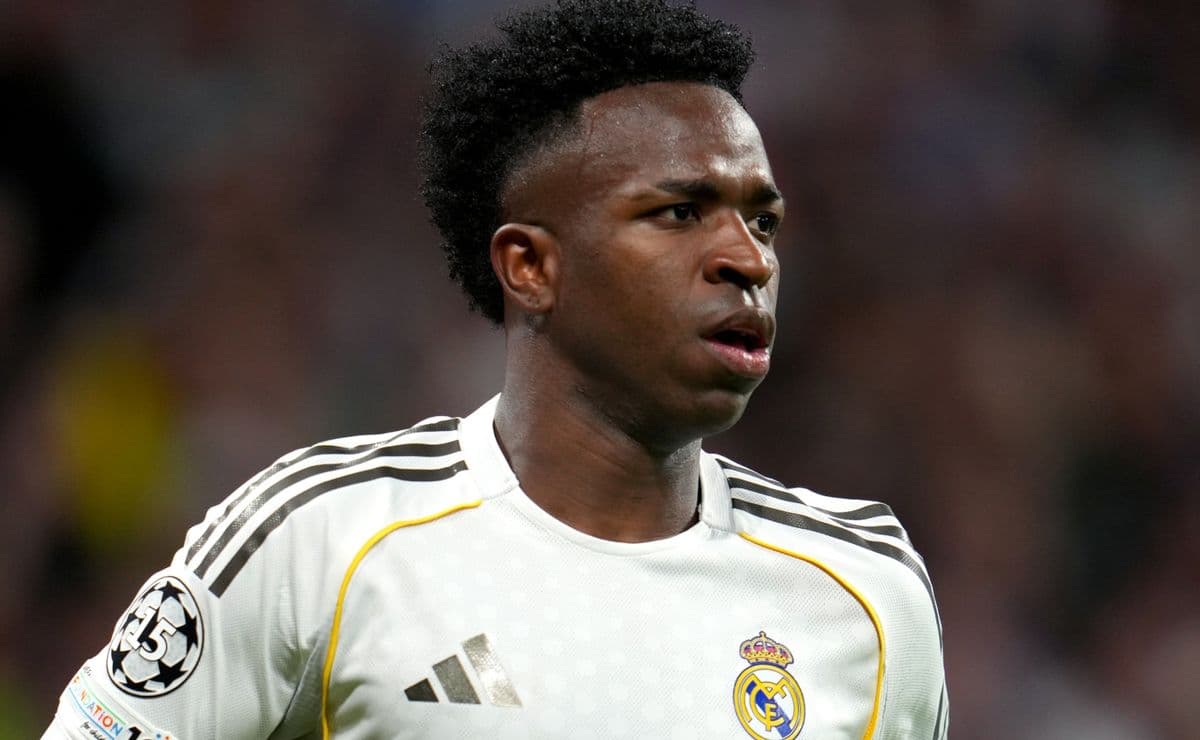
Despite its implementation in the 2026 World Cup, La Liga won't apply the "Vinicius rule" during the 2026-27 season, reportedly opting to target time-wasting methods. Real Madrid star Vinicius Junior found himself at the center of one of the 2025–26 season’s most controversial moments, prompting FIFA to test a new rule in response. However, despite its trial during the 2026 World Cup, La Liga will not adopt the regulation for the upcoming campaign, choosing instead to prioritize measures aimed at curbing time-wasting tactics. The controversy stems from a Feb. 17 Champions League fixture between Real Madrid and Benfica, when Vinicius accused Benfica’s Gianluca Prestianni of uttering a racial slur. Because the Argentine midfielder covered his mouth while speaking, officials lacked definitive proof, spurring soccer governing bodies to consider mandatory discipline for players who cover their mouths during altercations. Under the trial guidelines, any player who covered their mouth while confronting an opponent faced an automatic ejection. The policy made its global debut at the 2026 World Cup, where Paraguay’s Miguel Almiron and Ecuador’s Piero Hincapie became the first players sent off under the criteria, though the trial failed to convince Spanish officiating leadership. During pre-season meetings ahead of the 2026–27 La Liga campaign, Spain’s Technical Committee of Referees (CTA) elected to align with UEFA guidelines rather than implement the “Vinicius Rule.” As a result, players in Spain will not face match sanctions simply for covering their mouths during on-field confrontations. Gianluca Prestianni of Benfica speaks towards Vinicius Junior of Real Madrid covering his mouth. In an interview with Diario AS, CTA president Fran Soto explained the committee’s reluctance: “Leaving a team with ten players without having clear proof of whether he said it or not… We have to see if we can fight against such behavior this way or through other measures.“ La Liga targets delay-of-game tactics The 2026 World Cup served as a testing ground for several rule adjustments, most of which focused on eliminating delay-of-game tactics and preserving match flow. Looking ahead to the new domestic season, Spanish refereeing officials plan to follow the Premier League’s lead by targeting specific time-wasting techniques. According to Diario AS, the CTA has formally petitioned the International Football Association Board (IFAB) to trial new penalties for goalkeepers who feign or exaggerate injuries to stall play. To curb these prolonged stoppages, Spanish officials aim to mirror English soccer’s approach by requiring an outfield teammate to temporarily step off the pitch for one minute while the goalkeeper receives medical attention. The initiative builds on similar pace-of-play enforcement introduced in the Premier League. In addition to the goalkeeper protocol, La Liga plans to adopt strict countdown timers on throw-ins and goal kicks, a 10-second limit for substituted players exiting the pitch, and a mandatory one-minute sideline wait for outfield players evaluated by medical staff.

After referring the 2026 World Cup final between Spain and Argentina, the Football Association of Slovenia announced the retirement of Slavko Vincic. Slavko Vincic took center stage as the head referee for the 2026 World Cup final between Spain and Argentina on July 19 at MetLife Stadium. One week after officiating soccer’s biggest event, the Football Association of Slovenia (NZS) announced the veteran official’s retirement in an official statement. In a release on its official website, the NZS confirmed the end of the 46-year-old referee’s storied career on the pitch: “A week after the World Cup final in the USA, Slavko Vincic has officially concluded his historic refereeing career at the very top of the world.“ The Slovenian FA emphasized that calling the World Cup final solidified “his status as one of the greatest match officials in history.” The praise coincided with major honors, as the International Federation of Football History & Statistics (IFFHS) named him the best referee of the 2026 World Cup, while Italy’s Referee Association (AIA) awarded him the prestigious Giulio Campanati Award. An international referee since 2010, Vincic built a distinguished résumé overseeing high-stakes fixtures, including 50 UEFA Champions League matches. In European club competition, he was selected to handle the 2022 UEFA Europa League final between Eintracht Frankfurt and Rangers, followed by the 2024 Champions League final between Real Madrid and Borussia Dortmund at Wembley Stadium. Introducing your referee for the @FIFAWorldCup 2026 Final….🥁Congratulations, Slavko Vinčić! 👏 pic.twitter.com/OMLJ3oA31p— FIFA (@FIFAcom) July 17, 2026 When FIFA officially assigned Vincic to the final, the moment proved overwhelming for the Slovenian, who was visibly moved upon receiving the news. Officiating the World Cup final served as the absolute zenith of his career, the exact high point at which he chose to hang up his whistle. Vincic at the 2026 World Cup The 2022 World Cup in Qatar marked Vincic’s debut on international soccer’s grandest stage, where he refereed two group-stage fixtures: Argentina vs. Saudi Arabia and Wales vs. England. For the 2026 edition, however, his assignments extended well beyond the group stage, placing him in control of crucial knockout moments. His first two games of the tournament came in the group stage, starting with a 1-1 draw between Brazil and Morocco. He followed that with a group-stage clash between Jordan and Algeria, which saw the North African side capture a 2-1 victory. His knockout duties began in the Round of 32 at Estadio Azteca, overseeing a match between co-host Mexico and Ecuador. In a 2-0 win for Mexico, Vincic made headlines late in stoppage time by issuing a straight red card to Piero Hincapié under FIFA’s new rule prohibiting players from covering their mouths during confrontational exchanges. Referee Slavko Vincic shows a red card to Enzo Fernandez #24 of Argentina. His defining career assignment came on July 19 in the World Cup final between Spain and Argentina. During La Roja’s 1-0 victory, Vincic showed a second yellow card to Enzo Fernandez following a foul on Pau Cubarsi, an ejection that sealed Albiceleste’s fate against a dominant Spanish squad.
As the top two in the Fifa rankings prepare to meet in New Jersey on Sunday we look at the pointers that may help decide the gameSlavko Vincic becomes the first Slovene to referee a World Cup final. He oversaw the 2024 Champions League final at Wembley (Real Madrid beat Borussia Dortmund 2-0) as well as Spain’s 2-1 win over France at the 2024 Euros semi-final. The 46-year-old’s first World Cup match was Argentina’s opening loss to Saudi Arabia in 2022. At this tournament, Vincic showed Ecuador’s Piero Hincapié a red card for covering his mouth in the 95th minute against Mexico. He has averaged 2.33 yellow cards per game. Continue reading...
Thomas Tuchel’s team can tame the co-hosts by slowing things down and isolating Raúl Jiménez One of the question marks over Mexico’s team before this World Cup centred on a shortage of obvious star quality. That accusation does not hold any more. Gilberto Mora does not turn 18 until October but has played with the authority of a veteran since Javier Aguirre answered a nation’s prayers and plunged him into the starting lineup. Against Czechia and Ecuador he made a huge difference, adding depth and daring to Mexico’s previously functional attacking patterns. He was happy to get stuck in against a midfield that included Chelsea’s Moisés Caicedo, knowing he had solid backup from the more defensive Érik Lira. Mora has been compared with Andrés Iniesta; he certainly has the former Barcelona player’s quick feet and deftness of touch, and England will have to be wary of his right-sided combinations with Jorge Sánchez and the winger Roberto Alvarado. Continue reading...
With the World Cup in full swing, all eyes are shifting toward UEFA to see if European soccer's governing body will implement this exact same approach. The action on the pitch at the 2026 World Cup is thrilling, but it’s the strict new disciplinary rules that have everyone talking. Gianni Infantino has spearheaded a controversial new policy: handing out red cards to players who cover their mouths during confrontations to combat hidden abuse. With the World Cup in full swing, all eyes are on UEFA to see whether European soccer’s governing body will adopt the same approach. FIFA introduced the new regulation ahead of the 2026 World Cup following recommendations approved by the International Football Association Board (IFAB) in April. The measure was designed to address situations in which players deliberately conceal their mouths while confronting opponents, making it difficult for officials to determine whether abusive language had been used. The new law was enforced almost immediately during the tournament. Paraguay’s Miguel Almiron became the first player in World Cup history to receive a red card under the regulation during his country’s match against Turkey. The next week, Ecuador defender Piero Hincapie suffered the same fate following a VAR review against Mexico. The incident that changed soccer’s rulebook The controversy traces back to a UEFA Champions League match between Real Madrid and Benfica earlier this year. During the fixture, Benfica’s Gianluca Prestianni covered his mouth while speaking to Vinicius Junior, leading to allegations of racist abuse. Gianluca Prestianni of Benfica and Arda Guler of Real Madrid. Because officials were unable to determine exactly what had been said during the exchange, the incident proved difficult to judge. UEFA later concluded that Prestianni was guilty of homophobic conduct rather than racist abuse, issuing a six-match suspension, with three matches suspended. The episode ultimately became the catalyst for FIFA‘s push toward stricter disciplinary measures. The governing body argued that automatically punishing players who deliberately conceal conversations during confrontations would discourage abusive behavior and eliminate uncertainty during investigations. Breaking! The new anti-mouth-covering rule makes its World Cup debut. Paraguay star Miguel Almiron was handed an instant red card after hiding his mouth while talking to rivals.#2026WorldCup #Football #WorldCup #Paraguay pic.twitter.com/vx1tdg0zu9— Go Shandong (@DazhongDaily) June 20, 2026 UEFA confirms its stance While FIFA has already implemented the regulation on soccer’s biggest stage, UEFA has confirmed that players will not automatically receive red cards for covering their mouths during confrontations in its competitions. These Rule Mighty Look Filthy And Biased But Hincapie Deserved A Red Card There!!!pic.twitter.com/pwDO7IkZVl— ɢȏʋιηԀ ɢαԀε ♪ (@SirGovindGade) July 1, 2026 Instead, European soccer’s governing body has instructed referees to assess every situation individually. According to UEFA, officials should determine whether a yellow card is appropriate if covering the mouth is “an attempt to conceal communication as an act of unsporting behaviour.” The governing body believes each confrontation should be evaluated according to its own circumstances. That means officials can issue yellow cards when appropriate while still allowing post-match disciplinary investigations if evidence later emerges. Piero Hincapie #3 of Ecuador speaks to Santiago Gimenez #11 of Mexico leading to a red card UEFA also made clear that disciplinary action remains possible after matches if further investigations uncover misconduct. It added: “This is obviously without prejudice to any disciplinary investigation or proceedings that may follow as a consequence of, or in connection with, such behaviour.”
Mexico secured a crucial 2-0 win over Ecuador in the Round of 32 and booked a place among the 16 best teams at the 2026 World Cup. Mexico didn’t disappoint in front of their own fans at Mexico City Stadium, turning in a strong performance to beat Ecuador 2-0 and book their place in the Round of 16 of the 2026 World Cup. The co-hosts broke the deadlock through a well-worked attacking move that caught Ecuador off guard. Roberto Alvarado slipped a pass into space to spring Julian Quiñones, who took the ball in stride and fired it past goalkeeper Hernan Galindez to open the scoring — his third goal of the tournament. El Tri doubled their advantage soon after, when brilliant interplay between Quiñones and Raul Jiménez carved out space at the edge of the box, allowing Jiménez to curl a finish into the top corner to seal the game and give his team a spot in the next round. With the win, Javier Aguirre’s men keep alive their bid to match or better Mexico‘s best-ever World Cup showings, the quarterfinal runs they produced as hosts back in 1970 and 1986. ¡MÉXICO A OCTAVOS DE FINAL! 😤El verde seguirá pintando esta Copa del Mundo. TODOS JUNTOS.¡Vamooooooos! 👊#SomosMéxico 🇲🇽 pic.twitter.com/HhTNuFVkZR— Selección Nacional (@miseleccionmx) July 1, 2026 Mexico’s Round of 16 rival and venue After defeating Ecuador, Mexico will face the winner of England and DR Congo in the Round of 16 on July 5 at Mexico City Stadium, keeping El Tri on home turf for a second straight knockout match. On paper, England would appear to be the likely next opponent, as clear favorites over the African side. Should they come out on top, Mexico would have a chance at revenge, as the two sides have met only once before at a World Cup, back in 1966, when the Europeans won 2-0 in the group stage. If DR Congo pull off the upset, it would mark their first-ever World Cup meeting with Mexico. The two sides do have one prior meeting, though, a 2006 friendly that the North Americans won 2-1 in the buildup to that year’s World Cup in Germany.
Tap a headline to view metadata and excerpt fields in Sportra, then use the article website button to continue on the original publisher page.