
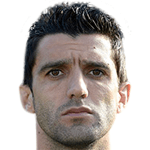
Ligue 1 · Midfielder · #0 · Brazil · 45 yrs
Fernando is a midfielder. Fernando is a Brazilian international, 45 years old, midfielder. Fernando was born in Anita Garibaldi, Brazil on 1981-05-03. Fernando is 186 cm cm tall and weighs 80 kg kg. Fernando's Sportra profile tracks season statistics across Ligue 1, UEFA Europa League, Jupiler Pro League. Fernando's page brings together career clubs, trophies, injury history, multi-competition stats, and related news headlines. On Sportra you can explore Fernando season statistics, transfer history, trophies, injury updates, and related news across every competition tracked in the profile.
Midfielder · #0
| Season | Team |
|---|---|
| 2014 |  Club Brugge KV CLU Club Brugge KV CLU |
| 2013 |  Al Shabab SHA Al Shabab SHA |
| 2012 | Al Shabab SHA |
| 2011 | Al Shabab SHA |
| 2010 |  Bordeaux BOR Bordeaux BOR |
| Date | Type | From | To |
|---|---|---|---|
| 2014-07-01 | Free | Al Shabab SHA | Club Brugge KV CLU |
| 2011-07-01 | € 6M | Bordeaux BOR | Al Shabab SHA |
| 2005-08-01 | N/A |  Robur Siena SIE Robur Siena SIE | Bordeaux BOR |
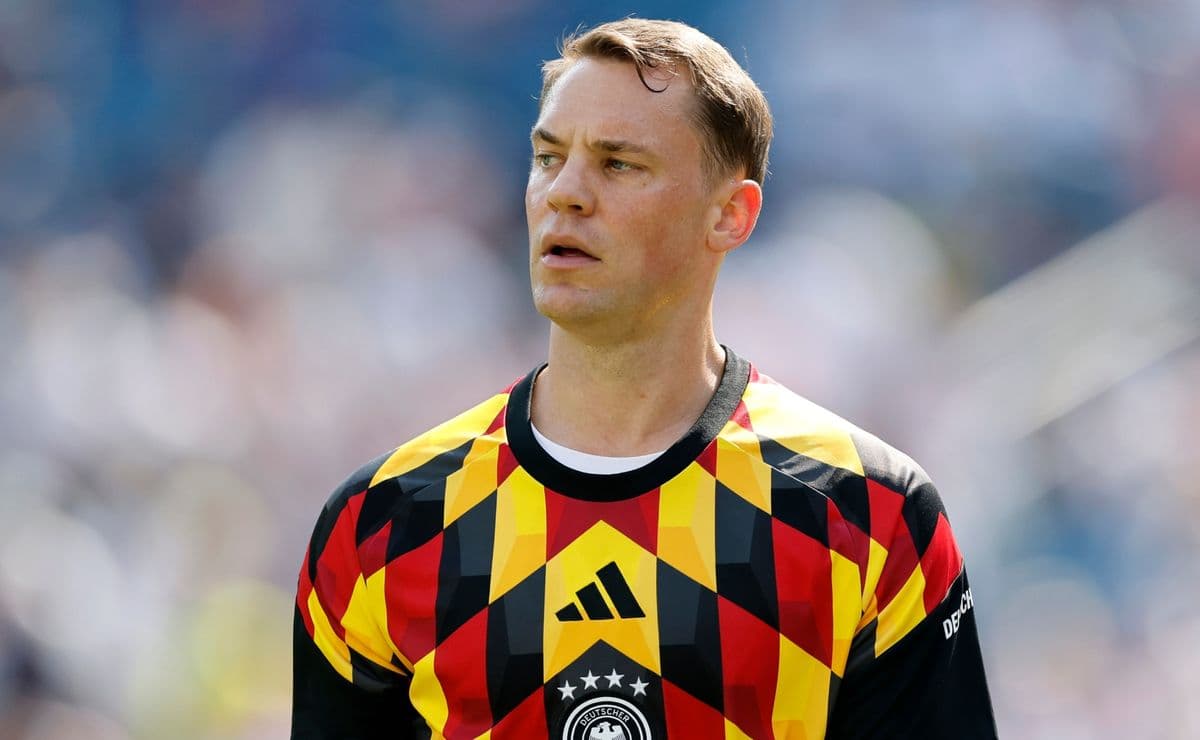
After making World Cup history in the 2026 edition, Manuel Neuer revealed his plans on retiring after the 2026-27 season. Manuel Neuer has long cemented his legacy as one of the greatest goalkeepers in soccer history, anchoring the position at an elite level for more than two decades while collecting every major trophy available. Now, coming off a record-breaking campaign at the 2026 World Cup, the German legend is preparing for the 2026–27 season to be his last as a professional player. The 40-year-old shot-stopper, who turns 41 next March, earned a contract extension with Bayern Munich and a surprise return to the German national team for the 2026 World Cup. His current deal runs through June 2027, marking what he expects will be his final month between the posts. Speaking to reporters from Bayern’s preseason training camp in Tegernsee, Neuer opened up about his future: “In 85% of cases, I probably would have retired, but with this team, the staff, and the coaching staff, it’s simply a joy. We always have the opportunity to compete for every title. We are right at the top with this team.” The veteran captain emphasized that the culture inside the Bayern locker room ultimately convinced him to return for one last run. “That’s why this squad, the team, and the structure we have at the club are part of the 15% that made me say: ‘I definitely have to keep going.’ It’s simply too much fun. I’m doing it for myself because I know I am still capable of helping the team when I’m needed. And I have the full support of my family and friends,” he added. Manuel Neuer and Bayern Munich prior to the summer training camp at Stadion am Birkenmoos. (Alexander Hassenstein/Getty Images) While young keeper Jonas Urbig was expected to gradually take over the reins, the veteran once again shouldered the bulk of the workload during the 2025-26 campaign. In a season where Bayern captured a domestic treble, winning the Bundesliga, DFB-Pokal, and German Super Cup, and reached the UEFA Champions League semifinals, Neuer logged 37 appearances, conceding 40 goals while keeping 11 clean sheets. Despite maintaining his status as Bayern’s undisputed No. 1, Neuer acknowledged that he is treating the upcoming season as a farewell tour. “I don’t go into matches thinking: ‘This is my last game,’ regardless of whether it might be my final appearance in one stadium or another. But certainly this time, it really does feel like I’m going to retire,” he affirmed. Neuer’s legacy as a World Cup legend Following Euro 2024, Neuer originally stepped away from international duty, seemingly closing a storybook chapter with Die Mannschaft that peaked with a 2014 World Cup title. However, his enduring form prompted head coach Julian Nagelsmann to recall him for the 2026 tournament in North America, a stint that etched his name into the record books. By taking the field in Germany’s group-stage match against Ivory Coast, Neuer became the all-time leader for World Cup appearances by a goalkeeper with 21. That performance pushed him past former French captain Hugo Lloris, who previously held the record with 20 matches across four tournaments. He also tied Lothar Matthaus’ national record by appearing in his fifth career World Cup, spanning from 2010 to 2026. Furthermore, at 40 years and 79 days old, he surpassed Matthaus as the oldest German player ever to feature in a major international tournament. Goalkeepers with the most FIFA World Cup appearances Manuel Neuer (Germany): 21 gamesHugo Lloris (France): 20 gamesClaudio Taffarel (Brazil): 18 gamesSepp Maier (Germany): 18 gamesIker Casillas (Spain): 17 gamesPeter Shilton (England): 17 gamesFabien Barthez (France): 17 gamesDino Zoff (Italy): 17 gamesAndoni Zubizarreta (Spain): 16 gamesFernando Muslera (Uruguay): 16 games

Lionel Messi will look to defend the title with Argentina in the 2026 World Cup final against Spain, who are chasing their second title in history. Lionel Messi is one win away from a second World Cup title, and to get there, Argentina will have to go through a country that shaped much of his own story. Argentina face Spain in the 2026 World Cup final on Sunday, July 19, at New Jork New Jersey Stadium — the first time in Messi’s career that he’ll face the Spanish national team at a World Cup, with the trophy itself on the line. The opponent carries extra weight for Messi personally. It was Barcelona that paid for the growth-hormone treatment he needed as a teenager and gave him his first-team debut, and Spain also explored the possibility of naturalizing him at one point, never realizing his heart was set on representing Argentina from a young age. At 39 years old, in what’s widely expected to be his final World Cup appearance, Messi arrives at this final looking to cap his international career with a second star for Argentina, four years after lifting the trophy in Qatar. Lionel Messi playing against Spain in 2009. (Getty Images) There’s one thing Sunday’s final could finally settle for him: despite everything he’s accomplished on the biggest stage, Messi’s personal history against Spain with Argentina isn’t a good one, and he’ll have the chance to change that for good. Messi’s record vs Spain During his whole career, Messi has faced Spain three times with Argentina, all in international friendlies, and the balance leans in the European’s favor: October 11, 2006 — Spain won 2-1 in Murcia. An 18-year-old Messi started but didn’t score, with Daniel Bilos netting Argentina’s goal against strikes from Xavi and David Villa.November 14, 2009 — Spain won 2-1 in Madrid. Messi scored Argentina’s only goal from the penalty spot, with Xabi Alonso scoring both goals for the hosts.September 7, 2010 — Argentina’s only win in the series, a 4-1 rout in Buenos Aires over the reigning world champions. Messi opened the scoring, with Gonzalo Higuain, Carlos Tevez, and Sergio Aguero also finding the net, while Fernando Llorente scored Spain’s consolation. DateResultVenueOctober 11, 20062-1 SpainMurciaNovember 14, 20092-1 SpainMadridSeptember 7, 20104-1 ArgentinaBuenos Ares Argentina’s full history vs Spain Beyond Messi’s individual record, the two nations have a long and even history dating back more than seven decades. Argentina and Spain have met 14 times since their first clash in 1952, with the series deadlocked at six wins apiece and two draws. The two sides have also crossed paths once before at a World Cup, back in 1966 in England, when Argentina came out on top 2-1. Their most recent meeting came in a 2018 friendly in Madrid, when Spain thrashed Argentina 6-1 just months before that year’s World Cup in Russia. Sunday’s final will be just the second time the two nations have met on football’s biggest stage, and the first with a title on the line.
Spain defeated Uruguay 1-0 after another goalkeeping mistake by Fernando Muslera, advancing to the knockout stage of the World Cup and eliminating the South American powerhouse on Friday in Guadalajara, Mexico.
Head coach to depart after Uruguay exit with Spain lossBielsa: ‘I am responsible for all the disappointment’Marcelo Bielsa said he had left nothing to Uruguayan football after overseeing their elimination from the World Cup.Uruguay failed to win a game in a group that included Cape Verde and Saudi Arabia and their exit was confirmed with a 1-0 defeat by Spain in Guadalajara during which the 40-year-old goalkeeper Fernando Muslera was withdrawn at half-time after his error handed Spain the only goal of the game. The 70-year-old Argentinian, who took over in 2023 and whose relationship with the players was poor, to the point of describing himself as “toxic”, will not continue in the post. Continue reading...
Tap a headline to view metadata and excerpt fields in Sportra, then use the article website button to continue on the original publisher page.