

UEFA Europa League · Attacker · #0 · Germany · 48 yrs
Miroslav Klose is an attacker. Miroslav Klose is a German international, 48 years old, attacker. Miroslav Klose was born in Opole, Poland on 1978-06-09. Miroslav Klose is 184 cm cm tall and weighs 84 kg kg. Miroslav Klose's Sportra profile tracks season statistics across UEFA Europa League, World Cup, UEFA Champions League, Serie A. Miroslav Klose's page brings together career clubs, trophies, injury history, multi-competition stats, and related news headlines. On Sportra you can explore Miroslav Klose season statistics, transfer history, trophies, injury updates, and related news across every competition tracked in the profile.

Attacker · #0
| Season | Team |
|---|---|
| 2015 | |
| 2014 | |
| 2014 | |
| 2013 | |
| 2013 |

Hertha Berlin continued their perfect start to the 2026/27 Bundesliga 2 season in an eight-goal thriller away to Eintracht Braunschweig, while Miroslav Klose's Nuremberg did the same with a convincing win over Arminia Bielefeld. Elsewhere, Kaiserslautern and Hannover secured their first wins of the campaign.

With his winning goal against Lionel Messi's Argentina, Spain's Ferran Torres repeated the World Cup feat only Mario Gotze was able to achieve. Ferran Torres emerged as Spain‘s unexpected hero in the 2026 World Cup final, scoring the decisive extra-time goal against Argentina to secure La Roja its second star. With the clutch strike, the Spanish forward joined a highly exclusive club alongside Mario Gotze as the only substitutes to ever crush Lionel Messi’s championship dreams in a final. Unable to break into Spain’s starting eleven for the match, Torres made his impact felt when it mattered most. Just minutes into the second half of extra time, the Barcelona forward tracked a precise header from Nico Williams into the center of the box and unleashed a clinical half-volley that stood as the lone goal of the match. By finding the back of the net against Argentina, Torres became just the second player in soccer history to come off the bench and score the definitive, trophy-winning goal in a World Cup final. Fascinatingly, the only other time a substitute decided a World Cup final occurred recently, and it was also Messi who suffered the heartbreaking blow. The pioneer of the feat was Germany’s Mario Gotze, who famously subbed into the 2014 final in Rio de Janeiro to net the extra-time winner that secured Die Mannschaft its fourth star. Ferran Torres speaks about the relief of scoring the game-winning goal in the FIFA World Cup Final 🇪🇸 pic.twitter.com/WFYK80wkR5— FOX Sports (@FOXSports) July 19, 2026 At the time, Gotze entered the field late in regulation, replacing legendary striker Miroslav Klose in the 88th minute. Following a precise cross from Andre Schurrle in the 113th minute, deep into the second half of extra time, Gotze controlled the ball with his chest before firing a brilliant volley past Sergio Romero at the far post. Ferran Torres takes home Man of the Match honors Defensively, Pau Cubarsi served as the team’s absolute cornerstone, ultimately earning honors as the tournament’s best young player, while midfield maestro Rodri controlled the tempo to capture the World Cup Golden Ball. However, before the breakthrough, Spain’s attacking unit had looked like the weakest link on the pitch throughout a cagey final. By delivering the tournament-winning goal, the Barcelona forward secured the World Cup Final Man of the Match award, celebrating the historic hardware alongside his teammates after validating his role as the ultimate super-sub for Spain’s second star.

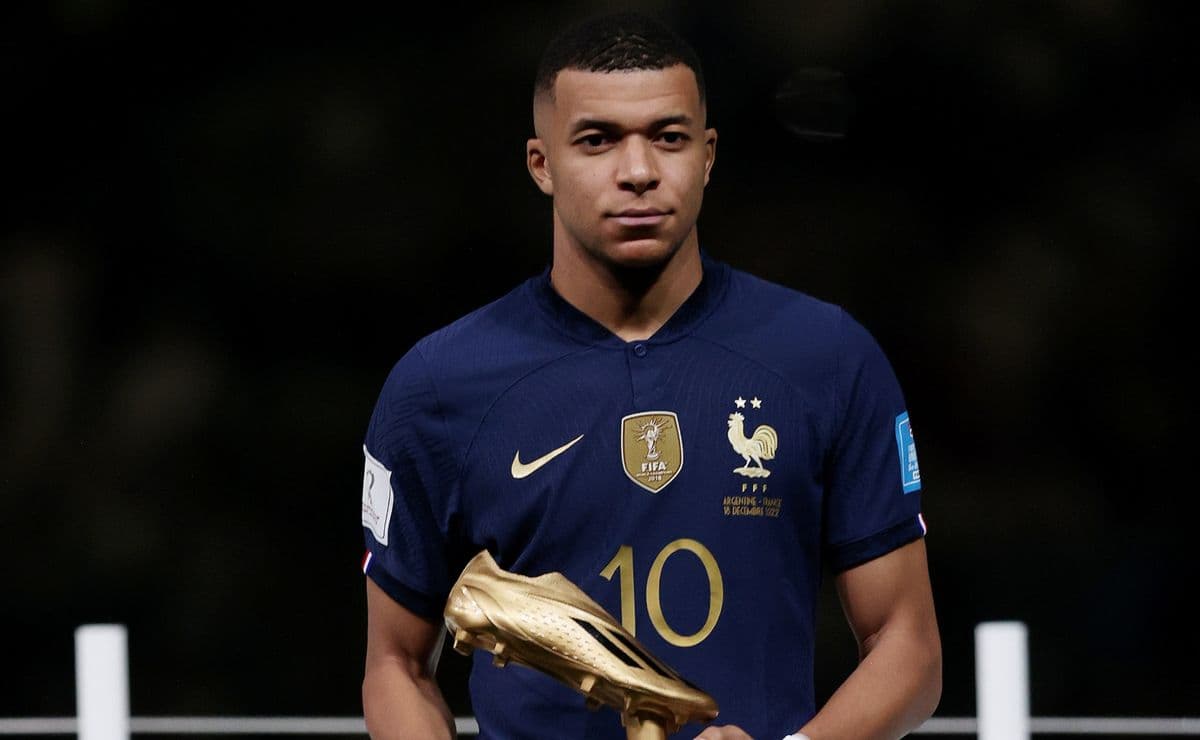
Amidst the glory and shattered expectations, one mythical scoring milestone remains stubbornly out of reach. The curtain has fallen on the 2026 World Cup, leaving behind a newly crowned champion, immortal performances, and a thrilling new chapter in the eternal clash between Lionel Messi and Kylian Mbappe. Yet, amidst the glory and shattered expectations, one mythical scoring milestone remains stubbornly out of reach. Standing like an ancient fortress, this decades-old record continues to defy the absolute greatest attacking titans the beautiful game has ever produced. The final between Spain and Argentina closed the curtain on one of the highest-quality World Cups in recent memory. While the spotlight naturally shifted toward the champion, the Golden Boot race, and Messi’s likely farewell on the World Cup stage, another historic achievement quietly survived yet another challenge. The answer lies with Just Fontaine, the legendary France striker whose astonishing haul of 13 goals in a single World Cup continues to stand alone nearly seven decades later. Even after an expanded 48-team tournament and more matches than ever before, nobody managed to erase the mark he established in Sweden in 1958. Fontaine’s achievement remains one of soccer’s most remarkable individual feats. He scored against Paraguay (three), Yugoslavia (two), Scotland (one), Northern Ireland (two), Brazil (one), and West Germany (four), averaging more than two goals per game across only six appearances. Ex-French international footballer Just Fontaine (C) receives the Adidas Platinum Boot award Messi and Mbappe came close, but history stood firm The 2026 tournament appeared to offer the perfect opportunity for Fontaine’s record to finally fall. Messi, Mbappe, Harry Kane, Erling Haaland, and Jude Bellingham all produced prolific campaigns, raising hopes that someone would finally rewrite soccer history. Instead, the record remained untouched after the final whistle. Mbappe finished as the tournament’s Golden Boot winner with 10 goals and four assists, while Messi concluded the World Cup with eight goals, leaving Fontaine’s incredible total safely intact. RankPlayerNational TeamGoalsAssists1.Kylian MbappeFrance1042.Lionel MessiArgentina843.Jude BellinghamEngland714.Erling HaalandNorway705.Ousmane DembeleFrance626.Harry KaneEngland61 One reason Fontaine’s accomplishment continues to amaze historians is the incredible story behind it. The French striker wasn’t even expected to start the tournament and famously ended up wearing borrowed boots after damaging his own pair during training. “I was devastated,” Fontaine once recalled in an interview with FIFA after tearing one of his boots before France’s opening match. “I thought my chance could be gone.” Fortunately for France, teammate Stephane Bruey wore the same shoe size and generously loaned Fontaine his boots. The rest quickly became soccer folklore as the striker exploded for 13 goals in just six matches, averaging a goal every 42 minutes. Record built in only one World Cup Perhaps the most astonishing detail is that Fontaine only played in one World Cup during his entire career. Unlike players such as Miroslav Klose, Ronaldo Nazario, Messi, or Mbappe, he never had multiple tournaments to build his numbers. Klose eventually became the men’s World Cup’s all-time leading scorer with 16 career goals, but those strikes came across four separate tournaments. Fontaine reached 13 goals during a single edition, making the feat even more remarkable. France striker Just Fontaine His scoring spree helped France finish third at the 1958 World Cup after victories over Paraguay, Yugoslavia, Scotland, Northern Ireland, and West Germany. The only team capable of stopping France was Pele’s Brazil in the semifinals. Why modern soccer makes the challenge even harder Many believed expanding the tournament from 32 to 48 teams would finally create the perfect conditions for someone to surpass Fontaine. In reality, the opposite may h
The Golden Boot is the award that goes to the top scorer of the competition, which began in 1930. While the main goal for every player competing in a World Cup is to lift the trophy, individual awards can also secure a place in history. While the Golden Ball is subjective because it recognizes the tournament’s best player, the Golden Boot is more objective, as it crowns the competition’s top scorer. Even if the greatest players have not always shined at the World Cup, the list of Golden Boot winners features many names that rank among the best in the history of the sport, even if some never won the tournament. The list also includes some surprising winners who produced the best month of their careers when it mattered most, such as James Rodriguez in 2014 and Salvatore Schillaci in 1990. World CupPlayer(s)CountryGoals1930Guillermo StábileArgentina81934Oldřich NejedlýCzechoslovakia51938LeônidasBrazil71950AdemirBrazil91954Sándor KocsisHungary111958Just FontaineFrance131962Garrincha, Vavá, Dražan Jerković, Leonel Sánchez, Flórián Albert, Valentin IvanovBrazil, Brazil, Yugoslavia, Chile, Hungary, Soviet Union41966EusébioPortugal91970Gerd MüllerWest Germany101974Grzegorz LatoPoland71978Mario KempesArgentina61982Paolo RossiItaly61986Gary LinekerEngland61990Salvatore SchillaciItaly61994Oleg Salenko, Hristo StoichkovRussia, Bulgaria61998Davor ŠukerCroatia62002RonaldoBrazil82006Miroslav KloseGermany52010Thomas MüllerGermany52014James RodríguezColombia62018Harry KaneEngland62022Kylian MbappéFrance82026Kylian MbappéFrance10
Over almost 100 years of history, the list of the World Cup all-time goalscorers has suffered several modifications, specially in recent editions. Since the first edition in 1930, the World Cup has featured hundreds of players lifting the iconic trophy, with only a select few etching their names among the all-time leading scorers. As history continues to be rewritten, the top of that list has shifted significantly in recent editions. Kylian Mbappe currently stands as the all-time leading scorer in World Cup history with 22 goals. The French star has been relentless in front of goal at every World Cup he has played, netting four times in Russia 2018, eight in Qatar 2022, and 10 in North America 2026. Lionel Messi is in second place before the 2026 World Cup final against Spain with 21 goals. After opening his account with one goal at the 2006 tournament, he added four in Brazil 2014, one in Russia 2018, seven in Qatar 2022, and eight in the 2026 edition across Canada, Mexico, and the United States. Before the 2026 tournament, Miroslav Klose had held the record for twelve years. The German legend scored five goals in Korea/Japan 2002, five more in Germany 2006, four in South Africa 2010, and two in Brazil 2014, reaching 16 and lifting the trophy in what turned out to be his final World Cup appearance. Miroslav Klose of Germany celebrates after scoring against Brazil. Rounding out the next tier are Ronaldo Nazario and Gerd Muller. The Brazilian icon scored 15 goals in 19 games while claiming two World Cup titles in 1994 and 2002, while “Der Bomber” found the net 14 times in just 13 games at a rate of better than one goal per match across the 1970 and 1974 editions, the latter of which West Germany won. Harry Kane is among the most active chasers of history in the current field. With six goals in 2018, two in 2022, and six more so far in 2026, the England captain sits fifth alongside Muller with 14 goals. With the Three Lions still alive in the tournament, Kane remains one of the headline acts of this edition alongside Mbappe and Messi in the race to extend his tally. All-time World Cup top scorers RankPlayerNational TeamGoalsGamesWorld Cups played1Kylian MbappeFrance222232Lionel MessiArgentina213463Miroslav KloseGermany162444RonaldoBrazil151945Gerd MullerGermany141326Harry KaneEngland141837Just FontaineFrance13618PeleBrazil121449Sandor KocsisHungary115110Jurgen KlinsmannGermany1117311Cristiano RonaldoPortugal1126612Helmut RahnGermany1010213Gabriel BatistutaArgentina1012314Gary LinekerEngland1012215Teofilo CubillasPeru1013316Thomas MullerGermany1019417Grzegorz LatoPoland10203
Lionel Messi will leave an immense legacy in World Cup history, having spent tournament after tournament with Argentina surpassing marks that once seemed impossible to reach. Lionel Messi is set to bring his World Cup career to a close on Sunday’s final between Argentina and Spain, and few players in the tournament’s history have left as deep a mark on its record books. Over six editions, spanning Argentina’s run from a promising teenager in 2006 to a champion in 2022 and now a closing chapter in 2026, Messi has built a resume that stretches well beyond the goals column. For years, the tournament’s most prestigious individual marks were scattered among some of the sport’s biggest icons. Miroslav Klose stood alone atop the all-time scoring charts, while Pele and Diego Maradona held court over the playmaking and knockout-stage categories. Messi entered this conversation gradually, adding to his tally tournament after tournament, until what once looked like a collection of separate records became a single, unmistakable takeover. By the time Argentina lifted the trophy in Qatar, most of those marks already belonged to him. Lionel Messi celebrates a goal for Argentina. (Getty Images) Even with the final against Spain still to be played, Messi has one last chance to overtake Kylian Mbappe as the all-time leading scorer in World Cup history, with the Frenchman topping the charts at 22 goals while the Argentine trails with 21. World Cup records before Messi’s appearance Most goals — Miroslav Klose.Most assists — Diego Maradona.Most goal contributions — Pele.Most dribbles — Diego Maradona.Most chances created — Diego Maradona.Most goal contributions in the knockout stages — Pele.Most Player of the Match awards — Wesley Sneijder.Most Golden Ball awards — Zinedine Zidane, tied with others. World Cup records now held by Messi Most assists — Lionel MessiMost goal contributions — Lionel MessiMost dribbles — Lionel MessiMost chances created — Lionel MessiMost goal contributions in the knockout stages — Lionel MessiMost Player of the Match awards — Lionel MessiMost Golden Ball awards — Lionel Messi
Kylian Mbappe scored a brace against England in the third-place match and surpassed Lionel Messi as the World Cup's all-time leading scorer. Kylian Mbappe picked the least glamorous stage imaginable to make history. In the third-place match between France and England at Miami Stadium, the French captain scored a brace in the second half to move to the top of the World Cup’s all-time scoring list with 22 goals, passing Lionel Messi in the process. England dominated the first half, with Bukayo Saka scoring twice by the 45th minute to help push the lead to 4-0 at the break. Mbappe pulled one back just after the restart, converting in the 48th minute to spark France’s comeback and surpass Messi atop the Golden Boot standings. France kept pushing, with Bradley Barcola making it 4-2 off a Mbappe assist, before Mbappe struck again in the 66th minute to complete the brace and drag his team right back into the match. With those two goals, Mbappe reached 10 goals for the 2026 World Cup alone, moving clear of Messi in the race for the Golden Boot, while also completing one of the most dramatic individual turnarounds of the tournament in a match that started as a rout. Kylian Mbappe celebrates a goal vs England. (Getty Images) Mbappe’s brace vs England Mbappé scores his 9th goal of the 2026 FIFA World Cup to put him on top of The Great Golden Boot Race 🇫🇷He is now level with Messi in all-time FIFA World Cup goals with 21! pic.twitter.com/M0KRzEIjYq— FOX Sports (@FOXSports) July 18, 2026 UNREAL SCENES IN MIAMI 😱After being down 4-0, Mbappé scores France’s third and takes the all-time lead over Messi in goals scored at the FIFA World Cup pic.twitter.com/klRmxtOUSZ— FOX Sports (@FOXSports) July 18, 2026 Messi still has a chance to reclaim the record Mbappe went into the match with 20 career World Cup goals, one behind Messi’s all-time record of 21. His brace against England pushes him to 22, putting him one clear at the top of the list, with Miroslav Klose a distant third on 16. Messi’s tournament isn’t over, though. Argentina still have Sunday’s final against Spain to play, meaning the Argentine captain has one more chance to respond. A single goal in the final would pull him level with Mbappe at 22, while two goals would be enough to reclaim the record outright before the 2026 World Cup comes to a close.
Tap a headline to view metadata and excerpt fields in Sportra, then use the article website button to continue on the original publisher page.