Goal efficiency
How clinical and direct the player was in front of goal — volume, accuracy, and conversion.

Premier League · Midfielder · #8 · Argentina · 27 yrs
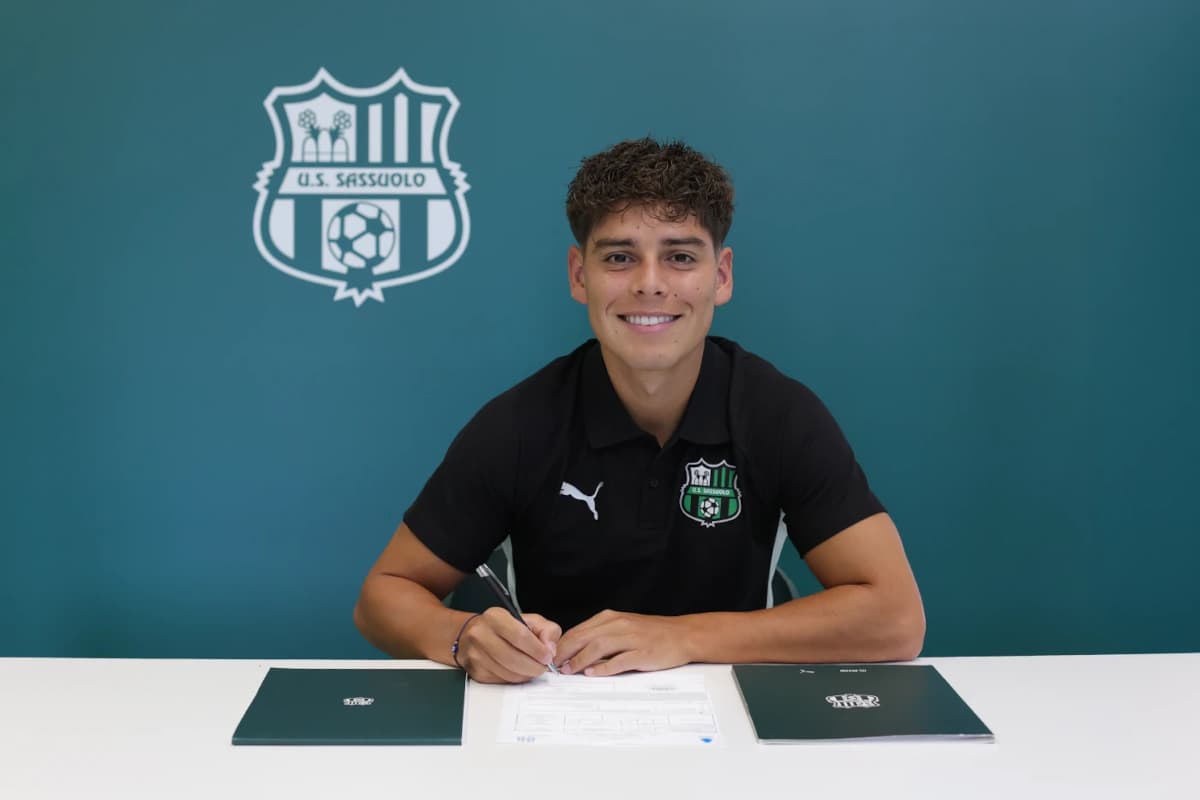
Nicolás Domínguez is a midfielder. Nicolás Domínguez is a Argentine international, 27 years old, midfielder. Nicolás Domínguez wears shirt number 8. Nicolás Domínguez was born in Buenos Aires, Argentina on 1998-06-28. Nicolás Domínguez is 179 cm tall and weighs 73 kg. Nicolás Domínguez's Sportra profile tracks season statistics across Liga Profesional Argentina, Friendlies, FA Cup, Premier League, and other leagues. Nicolás Domínguez's page brings together career clubs, trophies, injury history, multi-competition stats, and related news headlines. On Sportra you can explore Nicolás Domínguez season statistics, transfer history, trophies, injury updates, and related news across every competition tracked in the profile.
Midfielder · #8
| Season | Team |
|---|---|
| 2025 |  Nottingham Forest NOT Nottingham Forest NOT |
| 2024 | Nottingham Forest NOT |
| 2023 | Nottingham Forest NOT |
| 2022 |  Argentina ARG Argentina ARG |
| 2022 |  Bologna BOL Bologna BOL |
| Date | Type | From | To |
|---|---|---|---|
| 2023-09-01 | € 10M | Bologna BOL | Nottingham Forest NOT |
| 2020-01-01 | N/A |  Velez Sarsfield VEL Velez Sarsfield VEL | Bologna BOL |
| 2019-08-31 | Loan | Bologna BOL | Velez Sarsfield VEL |
Season intelligence
Profile as Midfielder: balanced output without a single dominant trait. Archetype: Balanced contributor.
Scaled 0–99 from season output — map to fantasy, comparisons, or scouting cards.
Per-90 rates, efficiency ratios, and Sportra indices from season totals.
How clinical and direct the player was in front of goal — volume, accuracy, and conversion.
Playmaking output: assists, key passes, and custom chance-creation signals.
Shot-stopping, goals conceded, and penalty saves.
Minutes, availability, and how central they were to the team.
Every tracked category for this league and season, grouped by Sportra.

Inter Miami were eliminated from the 2026 Leagues Cup after falling 3-2 to Club León, where Lionel Messi returned to action following the passing of his father. Inter Miami’s run in the 2026 Leagues Cup came to an end on Wednesday, falling 3-2 to Club Leon at Nu Stadium. But even in defeat, the story of the night belonged to Lionel Messi, who made an emotional return to the pitch just days after the passing of his father, Jorge Messi. Leon manager Javier Gandolfi didn’t hold back when asked about facing Messi under those circumstances. “For people to understand what Leo Messi is, I think it was proven today. I think words fall short. He’s a competitive animal, a player who, in my opinion, is the best in history. He’s the best in history on the field, and then with things we see from a distance,” he said during postgame press conference. Messi entered off the bench at the start of the second half with Miami leading 1-0, but Leon rallied behind a brace from Daniel Arcila and a goal from Juan Domínguez to complete the comeback, with Dániel Pintér and Yannick Bright scoring for Miami. The result sent Leon through to the knockout stage after winning all three of their group matches, while Miami’s Leagues Cup campaign ended with just one win in three outings. Este abrazo es de León, de todos, del futbol, y es para ti querido Lionel.RESPETO Y CARIÑO 💚@TeamMessi pic.twitter.com/D1Tdb03DOf— Club León (@clubleonfc) August 13, 2026 Even in a moment of personal grief, Messi’s decision to suit up resonated well beyond his own locker room, drawing praise from teammates and opponents alike for a display of commitment that few in the sport could match. Miami’s locker room rallies around Messi Inside Inter Miami‘s own squad, the reaction to Messi’s return was just as emotional. Casemiro called it an example for everyone around him: “He’s an example, because in the end he’s surely going through a very tough time… I had never seen anything like that in my life,” he said, adding that “the commitment he has to us and the commitment he has to the club is something to applaud”. Bright echoed that sentiment from his own perspective, admitting he didn’t expect to see Messi in the squad at all. “It’s incredible. I wasn’t expecting it and it shows how much he cares,” he said, before pledging to give “150%” for his captain going forward — a fitting response from a group that, despite the early exit, made clear where its focus truly was on the night.

Even though Lionel Messi made his return to the team, Inter Miami ended up being eliminated from the 2026 Leagues Cup in the first phase. Inter Miami entered Matchday 3 of the 2026 Leagues Cup requiring a victory and a favorable slate of out-of-town results across MLS to stay alive in the tournament. However, despite Lionel Messi making a surprise return to the pitch, the Herons suffered an early exit from the competition following one of the most grueling opening-stage finishes in recent history. On Wednesday, Miami hosted Club Leon needing a decisive win to climb into the top four of the standings, holding just three points following a 4-2 victory over Atletico San Luis and a tight 2-1 loss to CF Monterrey. Ultimately, the Mexican side proved superior at Nu Stadium, handing the Herons a devastating home defeat to end their campaign. Miami drew first blood when 19-year-old Daniel Pinter netted the opening goal in the 42nd minute. Club Leon pulled level through Daniel Arcila in the 50th minute, but Yannick Bright restored the host side’s lead just three minutes later. However, the visitors completed an impressive second-half comeback, as Juan Dominguez leveled in the 61st minute before Arcila completed his brace in the 83rd minute to seal a 3-2 victory. The primary highlight of the night for Inter Miami was the unexpected return of Messi following his brief leave of absence. Included among the substitutes, the Argentine superstar entered the match at halftime in place of Pinter, drawing a thunderous standing ovation from the crowd at Nu Stadium. We missed you, Messi. Welcome back. ❤️ pic.twitter.com/WE83EqfBx4— Major League Soccer (@MLS) August 13, 2026 Having missed the previous fixture against Monterrey following the passing of his father, during which he traveled to Argentina, Messi completed a rapid turnaround back to Florida after spending private time with his family. Arriving in Miami on Wednesday morning, the team captain shocked fans by appearing on the official matchday roster before taking the field. Despite playing only the second 45 minutes, Messi immediately impacted the match’s tempo against Club Leon. While unable to find the back of the net or record an assist, the forward created consistent danger, firing five shots (three on target), completing two successful dribbles, and delivering four key passes to advance the attack. Worst Leagues Cup campaign for Inter Miami in Messi era Since Messi arrived at Inter Miami in July 2023, the Leagues Cup had served as a primary stage for the club’s domestic dominance. During their inaugural tournament run in 2023, the team swept through the bracket to lift the trophy, fueled by an extraordinary performance from Messi, who tallied 10 goals in seven matches. In the 2024 edition, the Herons were unable to defend their crown, falling in the Round of 16 against the Columbus Crew during a tournament Messi missed entirely while recovering from an ankle injury sustained in the 2024 Copa America final. In 2025, despite managing lingering injuries to feature in four matches (two goals, two assists), Messi helped lead the Herons back to the final before falling 3-0 to the Seattle Sounders. The 2026 campaign produced a far different outcome. Following an opening 4-2 victory over Atletico San Luis and back-to-back losses to Monterrey and Club Leon, Inter Miami were officially eliminated in the opening phase. Finishing 15th in the tournament standings with three points, seven goals scored, and seven conceded, the exit marks the worst Leagues Cup campaign in franchise history.
The proposal has emerged at a time when world soccer is already dealing with controversy over FIFA's commercial plans, leaving the future shape of the sport's biggest tournament under intense scrutiny. Gianni Infantino continues to be at the center of another major debate after FIFA moved closer to additional potential expansion of the men’s World Cup, with a key decision process now underway. The proposal has emerged at a time when world soccer is already dealing with controversy over FIFA’s commercial plans, leaving the future shape of the sport’s biggest tournament under intense scrutiny. The governing body has begun evaluating whether the 2030 World Cup could increase from 48 participating national teams to 64, a move that would mark another historic transformation only one edition after the competition expanded from 32 to 48 teams in 2026. While FIFA insists the process is still at the evaluation stage, the pace of developments has caught many stakeholders by surprise. According to documents seen by multiple media outlets, including ESPN, FIFA has started a consultation process and plans to appoint an independent agency to assess the sporting, financial and logistical consequences of another expansion. “FIFA wishes to appoint an independent agency to determine whether and how expanding the FIFA World Cup from 48 to 64 participating national teams, starting with the 2030 edition, would impact on the tournament proposition”, states FIFA’s research brief. Lamine Yamal #19 of Spain lifts the FIFA World Cup Winner’s Trophy Rather than making an immediate decision, the governing body wants the external study to examine whether the larger tournament would genuinely benefit world soccer or create more problems than opportunities. Decision process moves quickly One of the most striking aspects of the proposal is how quickly FIFA wants the review completed, ESPN, The Guardian and Doble Amarilla have revealed. The governing body has already distributed research documents to potential agencies and is aiming to select one by August 14, before receiving the completed analysis on September 11. That accelerated timeline means FIFA could have the necessary information in hand well before member associations vote on other major proposals later in September, including the controversial FIFA Forward Enterprise project. Why 64 teams are back on agenda The idea of expanding to 64 national teams is not entirely new. South America’s governing body, CONMEBOL, officially proposed the format as part of celebrations marking the 100th anniversary of the FIFA World Cup in 2030. The tournament is already scheduled to be hosted primarily by Spain, Portugal and Morocco, while Argentina, Paraguay and Uruguay will each stage a centenary match to honor the inaugural World Cup played in Uruguay in 1930. Conmebol president Alejandro Dominguez. Under a 64-team format, FIFA could revert to 16 groups of four teams, with the top two from each group advancing directly to a round of 32. That structure would simplify qualification for the knockout stage compared to the current 48-team model, which introduced additional complexity. Expanding the competition would also create more matches, more ticket sales, additional sponsorship inventory and greater broadcasting revenue. The 2026 World Cup, featuring 48 national teams and 104 matches, became the most commercially successful edition in tournament history. Increasing the field to 64 teams would raise the total number of matches even further, reportedly reaching 128 games.
Tap a headline to view metadata and excerpt fields in Sportra, then use the article website button to continue on the original publisher page.