Ecuador defeated Panama 1-2 in Friendlies. The fixture is part of the Friendlies 1 stage in the 2018 season. The full-time result capped a Panama vs Ecuador meeting in Friendlies with detailed post-match statistics available on Sportra. This match centre covers lineups, live events, player ratings, team statistics, xG, head-to-head history, and related news for Panama and Ecuador. On Sportra you can view xG, lineups, match statistics, events, player ratings, predictions, head-to-head history, and related news for this fixture.
 Friendlies
Recorded meetings: 0 (available previous meetings, not necessarily all-time).
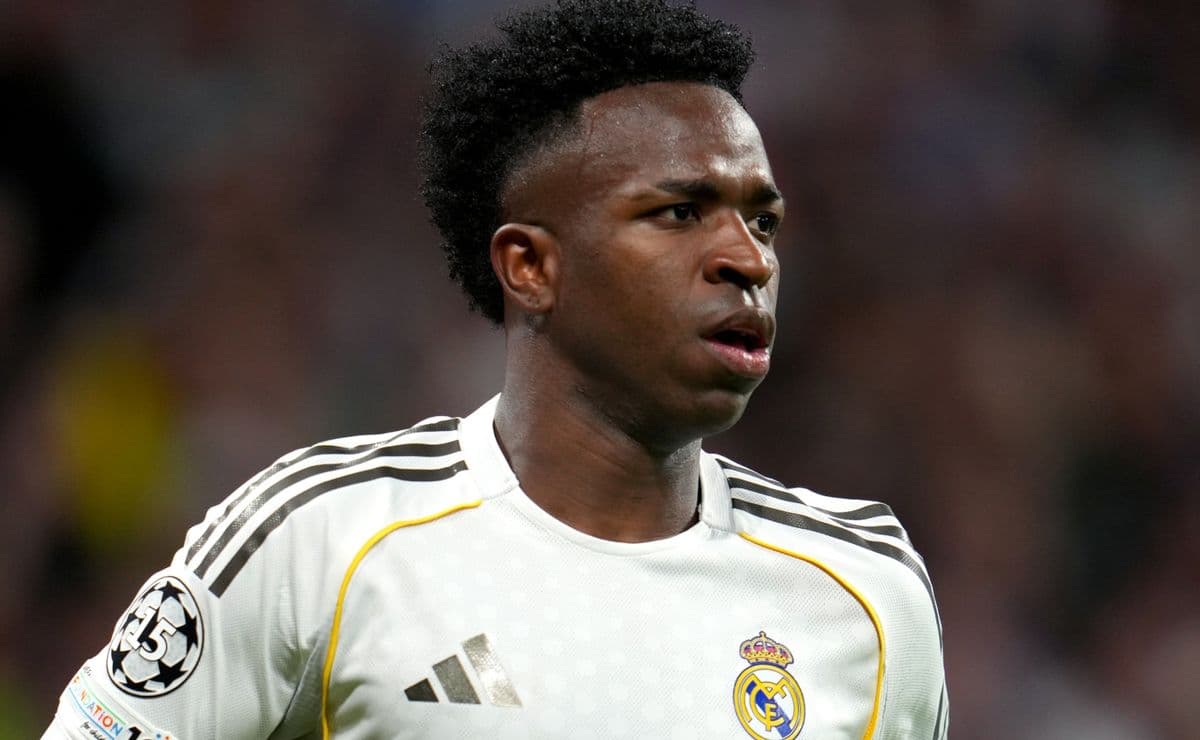
Despite its implementation in the 2026 World Cup, La Liga won't apply the "Vinicius rule" during the 2026-27 season, reportedly opting to target time-wasting methods. Real Madrid star Vinicius Junior found himself at the center of one of the 2025–26 season’s most controversial moments, prompting FIFA to test a new rule in response. However, despite its trial during the 2026 World Cup, La Liga will not adopt the regulation for the upcoming campaign, choosing instead to prioritize measures aimed at curbing time-wasting tactics. The controversy stems from a Feb. 17 Champions League fixture between Real Madrid and Benfica, when Vinicius accused Benfica’s Gianluca Prestianni of uttering a racial slur. Because the Argentine midfielder covered his mouth while speaking, officials lacked definitive proof, spurring soccer governing bodies to consider mandatory discipline for players who cover their mouths during altercations. Under the trial guidelines, any player who covered their mouth while confronting an opponent faced an automatic ejection. The policy made its global debut at the 2026 World Cup, where Paraguay’s Miguel Almiron and Ecuador’s Piero Hincapie became the first players sent off under the criteria, though the trial failed to convince Spanish officiating leadership. During pre-season meetings ahead of the 2026–27 La Liga campaign, Spain’s Technical Committee of Referees (CTA) elected to align with UEFA guidelines rather than implement the “Vinicius Rule.” As a result, players in Spain will not face match sanctions simply for covering their mouths during on-field confrontations. Gianluca Prestianni of Benfica speaks towards Vinicius Junior of Real Madrid covering his mouth. In an interview with Diario AS, CTA president Fran Soto explained the committee’s reluctance: “Leaving a team with ten players without having clear proof of whether he said it or not… We have to see if we can fight against such behavior this way or through other measures.“ La Liga targets delay-of-game tactics The 2026 World Cup served as a testing ground for several rule adjustments, most of which focused on eliminating delay-of-game tactics and preserving match flow. Looking ahead to the new domestic season, Spanish refereeing officials plan to follow the Premier League’s lead by targeting specific time-wasting techniques. According to Diario AS, the CTA has formally petitioned the International Football Association Board (IFAB) to trial new penalties for goalkeepers who feign or exaggerate injuries to stall play. To curb these prolonged stoppages, Spanish officials aim to mirror English soccer’s approach by requiring an outfield teammate to temporarily step off the pitch for one minute while the goalkeeper receives medical attention. The initiative builds on similar pace-of-play enforcement introduced in the Premier League. In addition to the goalkeeper protocol, La Liga plans to adopt strict countdown timers on throw-ins and goal kicks, a 10-second limit for substituted players exiting the pitch, and a mandatory one-minute sideline wait for outfield players evaluated by medical staff.

After referring the 2026 World Cup final between Spain and Argentina, the Football Association of Slovenia announced the retirement of Slavko Vincic. Slavko Vincic took center stage as the head referee for the 2026 World Cup final between Spain and Argentina on July 19 at MetLife Stadium. One week after officiating soccer’s biggest event, the Football Association of Slovenia (NZS) announced the veteran official’s retirement in an official statement. In a release on its official website, the NZS confirmed the end of the 46-year-old referee’s storied career on the pitch: “A week after the World Cup final in the USA, Slavko Vincic has officially concluded his historic refereeing career at the very top of the world.“ The Slovenian FA emphasized that calling the World Cup final solidified “his status as one of the greatest match officials in history.” The praise coincided with major honors, as the International Federation of Football History & Statistics (IFFHS) named him the best referee of the 2026 World Cup, while Italy’s Referee Association (AIA) awarded him the prestigious Giulio Campanati Award. An international referee since 2010, Vincic built a distinguished résumé overseeing high-stakes fixtures, including 50 UEFA Champions League matches. In European club competition, he was selected to handle the 2022 UEFA Europa League final between Eintracht Frankfurt and Rangers, followed by the 2024 Champions League final between Real Madrid and Borussia Dortmund at Wembley Stadium. Introducing your referee for the @FIFAWorldCup 2026 Final….🥁Congratulations, Slavko Vinčić! 👏 pic.twitter.com/OMLJ3oA31p— FIFA (@FIFAcom) July 17, 2026 When FIFA officially assigned Vincic to the final, the moment proved overwhelming for the Slovenian, who was visibly moved upon receiving the news. Officiating the World Cup final served as the absolute zenith of his career, the exact high point at which he chose to hang up his whistle. Vincic at the 2026 World Cup The 2022 World Cup in Qatar marked Vincic’s debut on international soccer’s grandest stage, where he refereed two group-stage fixtures: Argentina vs. Saudi Arabia and Wales vs. England. For the 2026 edition, however, his assignments extended well beyond the group stage, placing him in control of crucial knockout moments. His first two games of the tournament came in the group stage, starting with a 1-1 draw between Brazil and Morocco. He followed that with a group-stage clash between Jordan and Algeria, which saw the North African side capture a 2-1 victory. His knockout duties began in the Round of 32 at Estadio Azteca, overseeing a match between co-host Mexico and Ecuador. In a 2-0 win for Mexico, Vincic made headlines late in stoppage time by issuing a straight red card to Piero Hincapié under FIFA’s new rule prohibiting players from covering their mouths during confrontational exchanges. Referee Slavko Vincic shows a red card to Enzo Fernandez #24 of Argentina. His defining career assignment came on July 19 in the World Cup final between Spain and Argentina. During La Roja’s 1-0 victory, Vincic showed a second yellow card to Enzo Fernandez following a foul on Pau Cubarsi, an ejection that sealed Albiceleste’s fate against a dominant Spanish squad.
As the top two in the Fifa rankings prepare to meet in New Jersey on Sunday we look at the pointers that may help decide the gameSlavko Vincic becomes the first Slovene to referee a World Cup final. He oversaw the 2024 Champions League final at Wembley (Real Madrid beat Borussia Dortmund 2-0) as well as Spain’s 2-1 win over France at the 2024 Euros semi-final. The 46-year-old’s first World Cup match was Argentina’s opening loss to Saudi Arabia in 2022. At this tournament, Vincic showed Ecuador’s Piero Hincapié a red card for covering his mouth in the 95th minute against Mexico. He has averaged 2.33 yellow cards per game. Continue reading...
Football report Nick Ames answered your questions about Kane’s captaincy, Tuchel’s future, and England’s team psychology ohfffs asks: How many good performances did England manage in this World Cup? There was a really good half against Croatia and a good start against Mexico, but most of the rest was pretty poor. They were limp against Panama, dreadful against Ghana, just about hung on against Mexico and were very lucky to get past Norway. We know England can qualify but looked at objectively England were pretty underwhelming throughout.Nick says:“Good” is subjective but let’s say it means “controlled the game”. One thing I’d say is that – at club level too – there’s this expectation among fans for 90-minute performances that in reality only come around every so often. Most teams nowadays are good, brilliantly drilled, and will have their moments in a game. You would expect Croatia, Mexico, Norway and even DR Congo all to cause a few problems. You’d expect Ghana to spoil given Carlos Queiroz was in charge. So I’m not overly surprised these games were quite patchy. Spain or Argentina will win the World Cup and I’m not sure either will look back and say that, in terms of control, they really put it together over a consistent run of matches – although Spain’s masterclass against France was an exception. They’ve simply been better in the moments that mattered.Ultimately it stops with him. I can’t really look much further on this one. Maybe Messi’s cross shouldn’t be met by 5ft 9in Martinez with Stones jumping in front… maybe Bellingham should see the danger more quickly and be out to block Fernandez. But players are not going to get everything 100% right if you’re asked to park the bus for 40 minutes, especially not against a team with such cunning and craft. And ask yourself this – apart from Dan Burn maybe, how many of these England players are really used to manning a rearguard action at domestic level? It was one thing doing this with 10 men against a Mexico team whose one idea was to cross the ball badly. Quite another here. And even if shoring up the back line, why not retain some ball-carrying threat from wide, which would also have the effect of giving Argentina’s attacking full-backs something to think about? We could go on forever.I think Tuchel should stay, there is little point rolling the dice again when little broader vision is evident in any case. It’s not quite enough of a flop to cut ties now. But make no mistake – he was brought in to win things, nothing less, so if England do not win Euro 2028 then his appointment has been a failure. Continue reading...
Thomas Tuchel’s team can tame the co-hosts by slowing things down and isolating Raúl Jiménez One of the question marks over Mexico’s team before this World Cup centred on a shortage of obvious star quality. That accusation does not hold any more. Gilberto Mora does not turn 18 until October but has played with the authority of a veteran since Javier Aguirre answered a nation’s prayers and plunged him into the starting lineup. Against Czechia and Ecuador he made a huge difference, adding depth and daring to Mexico’s previously functional attacking patterns. He was happy to get stuck in against a midfield that included Chelsea’s Moisés Caicedo, knowing he had solid backup from the more defensive Érik Lira. Mora has been compared with Andrés Iniesta; he certainly has the former Barcelona player’s quick feet and deftness of touch, and England will have to be wary of his right-sided combinations with Jorge Sánchez and the winger Roberto Alvarado. Continue reading...
With the World Cup in full swing, all eyes are shifting toward UEFA to see if European soccer's governing body will implement this exact same approach. The action on the pitch at the 2026 World Cup is thrilling, but it’s the strict new disciplinary rules that have everyone talking. Gianni Infantino has spearheaded a controversial new policy: handing out red cards to players who cover their mouths during confrontations to combat hidden abuse. With the World Cup in full swing, all eyes are on UEFA to see whether European soccer’s governing body will adopt the same approach. FIFA introduced the new regulation ahead of the 2026 World Cup following recommendations approved by the International Football Association Board (IFAB) in April. The measure was designed to address situations in which players deliberately conceal their mouths while confronting opponents, making it difficult for officials to determine whether abusive language had been used. The new law was enforced almost immediately during the tournament. Paraguay’s Miguel Almiron became the first player in World Cup history to receive a red card under the regulation during his country’s match against Turkey. The next week, Ecuador defender Piero Hincapie suffered the same fate following a VAR review against Mexico. The incident that changed soccer’s rulebook The controversy traces back to a UEFA Champions League match between Real Madrid and Benfica earlier this year. During the fixture, Benfica’s Gianluca Prestianni covered his mouth while speaking to Vinicius Junior, leading to allegations of racist abuse. Gianluca Prestianni of Benfica and Arda Guler of Real Madrid. Because officials were unable to determine exactly what had been said during the exchange, the incident proved difficult to judge. UEFA later concluded that Prestianni was guilty of homophobic conduct rather than racist abuse, issuing a six-match suspension, with three matches suspended. The episode ultimately became the catalyst for FIFA‘s push toward stricter disciplinary measures. The governing body argued that automatically punishing players who deliberately conceal conversations during confrontations would discourage abusive behavior and eliminate uncertainty during investigations. Breaking! The new anti-mouth-covering rule makes its World Cup debut. Paraguay star Miguel Almiron was handed an instant red card after hiding his mouth while talking to rivals.#2026WorldCup #Football #WorldCup #Paraguay pic.twitter.com/vx1tdg0zu9— Go Shandong (@DazhongDaily) June 20, 2026 UEFA confirms its stance While FIFA has already implemented the regulation on soccer’s biggest stage, UEFA has confirmed that players will not automatically receive red cards for covering their mouths during confrontations in its competitions. These Rule Mighty Look Filthy And Biased But Hincapie Deserved A Red Card There!!!pic.twitter.com/pwDO7IkZVl— ɢȏʋιηԀ ɢαԀε ♪ (@SirGovindGade) July 1, 2026 Instead, European soccer’s governing body has instructed referees to assess every situation individually. According to UEFA, officials should determine whether a yellow card is appropriate if covering the mouth is “an attempt to conceal communication as an act of unsporting behaviour.” The governing body believes each confrontation should be evaluated according to its own circumstances. That means officials can issue yellow cards when appropriate while still allowing post-match disciplinary investigations if evidence later emerges. Piero Hincapie #3 of Ecuador speaks to Santiago Gimenez #11 of Mexico leading to a red card UEFA also made clear that disciplinary action remains possible after matches if further investigations uncover misconduct. It added: “This is obviously without prejudice to any disciplinary investigation or proceedings that may follow as a consequence of, or in connection with, such behaviour.”
This heavyweight clash between Cristiano Ronaldo and Luka Modric will directly alter the tournament landscape. Let's take a closer look at the knockout scenarios and how the ultimate victor will impact the rest of the bracket. In one of the most anticipated Round of 32 matchups of the 2026 World Cup, Portugal and Croatia are battling for much more than mere survival. This heavyweight clash between Cristiano Ronaldo and Luka Modric will directly alter the tournament landscape. Let’s take a closer look at the knockout scenarios and how the ultimate victor will impact the rest of the bracket. Both national teams arrive in Toronto after finishing as runners-up in their respective groups. Portugal secured second place in Group K behind Colombia, while Croatia recovered from an opening defeat to England to finish second in Group L, setting up the first-ever World Cup meeting between these European rivals. Portugal advanced through the group stage unbeaten but without completely convincing. Roberto Martinez’s side opened with a 1-1 draw against DR Congo, produced a dominant 5-0 victory over Uzbekistan thanks to Cristiano Ronaldo’s historic brace, and then played out a goalless draw with Colombia. Croatia also experienced mixed fortunes before finding momentum. Zlatko Dalic’s side suffered a 4-2 defeat against England before responding with narrow victories over Panama and Ghana to secure qualification for the knockout rounds. Pos.TeamPldW-D-LPtsStatus1.Colombia32-1-07Advanced2.Portugal31-2-05Advanced3.DR Congo31-1-14Advanced4.Uzbekistan30-0-30Eliminated The matchup also renews a rivalry that has largely favored Portugal. The Selecao das Quinas has won seven of the previous ten meetings between the two countries, although the Checkered Ones have built a reputation for thriving in World Cup knockout soccer regardless of previous records. PosTeamPldW-D-LPtsStatus1.England32-1-07Advanced2.Croatia32-0-16Advanced3.Ghana31-1-14Eliminated4.Panama30-0-30Eliminated What happens if Portugal wins and Croatia loses? A victory over Croatia would send Portugal into the Round of 16, where another demanding challenge would await. The national team would face the winner of Spain vs. Austria, with the opportunity to continue chasing a place in the quarter-finals. Cristiano Ronaldo #7 of Portugal celebrates with teammates after scoring. Should Portugal progress beyond that stage, the route becomes even more demanding. A potential quarter-final against Belgium or the United States could follow, while later rounds may feature European giants such as France, Germany, or the Netherlands, highlighting just how difficult this section of the bracket could become. Despite the challenge, Portugal would remain among the tournament favorites. With experienced stars and attacking quality throughout the squad, advancing against Croatia would keep the dream of another World Cup title very much alive. What happens if the match is tied after 90 minutes? A draw at the end of regulation would only be the beginning of the drama. Knockout matches cannot finish level, meaning the contest would move into 30 minutes of extra time, and if neither side finds a winner, a penalty shootout would decide who progresses. Cristiano Ronaldo #7 of Portugal drinks at the hydration break From a bracket perspective, the outcome remains identical regardless of whether qualification comes after 90 minutes, extra time, or penalties. The advancing team would continue along the same knockout path, while the defeated nation would see its World Cup campaign come to an immediate end. What happens if Croatia wins and Portugal loses? Should Croatia eliminate Portugal, one of the tournament’s leading contenders would exit far earlier than expected. Croatia would inherit Portugal’s position in the bracket and continue into the Round of 16 to face the winner of Spain versus Austria. Petar Musa #26 of Croatia celebrates with teammates. Such an upset would significantly alter the balance of power on this
As Cristiano Ronaldo and Luka Modric brace for a defining moment in their 2026 World Cup campaign, a hidden truth lies in the numbers. Old foes will cross paths once more as Portugal and Croatia prepare for a monumental Round of 32 battle beneath the lights of BMO Field in Toronto. As Cristiano Ronaldo and Luka Modric brace for a defining moment in their 2026 World Cup campaign, a hidden truth lies in the numbers. Portugal reached the knockout stage after finishing second in Group K, while Croatia also progressed as runner-up in Group L. Ronaldo and his teammates enter the contest with a strong historical record against their European rival, having won seven of the previous 10 meetings. However, Luka Modric’s side’s proven pedigree in major tournaments promises another demanding challenge. Roberto Martinez and his players’ group-stage campaign produced mixed emotions despite remaining unbeaten. The Selecao opened with a 1-1 draw against DR Congo before delivering an emphatic 5-0 victory over Uzbekistan, with Cristiano Ronaldo scoring twice, and then secured qualification after a goalless draw against Colombia. Croatia recovered impressively after suffering a 4-2 defeat to England in its opening fixture. Zlatko Dalic’s side responded with victories over Panama and Ghana to book a place in the Round of 32, reinforcing its reputation as one of international football’s toughest knockout opponents. osip Stanisic of Croatia and Joao Felix of Portugal compete for the ball during 2024 International Friendly Portugal’s current FIFA ranking revealed and how it compares to Croatia After building anticipation ahead of the match, Portugal currently sits eighth in the FIFA Men’s World Ranking with 1,764.86 ranking points, having slipped three places since the start of the tournament. Although it entered the World Cup among the highest-ranked nations, its inconsistent group-stage displays have resulted in a slight drop. Croatia, meanwhile, has dropped down to 13th in the latest rankings with 1,723.05 points, reflecting its mixed performances since the start. The Blazers entered the 2026 World Cup ranked 11th in the official FIFA Men’s World Ranking. TeamFIFA Ranking at Start of the World CupCurrent FIFA RankingCurrent FIFA PointsPortugal5th8th (-3)1,764.86Croatia11th13th (-2)1,723.05 That difference suggests Portugal holds the statistical edge, but it is not large enough to offer comfort. Both national teams are close enough in ranking to make the matchup feel like a true 50-50 knockout battle rather than a clear favorite-versus-underdog scenario. Cristiano Ronaldo #7 of Portugal drinks at the hydration break Last 16 place on the line With both national teams fully fit, experienced, and packed with world-class talent, the Round of 32 meeting promises to be one of the standout fixtures of the knockout stage. Portugal carries the higher FIFA ranking and a stronger recent head-to-head record, while Croatia brings proven tournament resilience and the ability to thrive under pressure.
Good value for money, can score goals and plays well off a good centre forward like the one we have. Martin: Cristian Jesus Martinez, Panamanian midfield player who impressed me when playing against England. As a back up player and maybe as a surprise buy, he is worth a couple of million.
Tap a headline to view metadata and excerpt fields in Sportra, then use the article website button to continue on the original publisher page.